
A few years ago, I was guiding a group in the High Sierras during what was supposed to be a “mild” shoulder season trip. The forecast called for sunny skies and lows in the 40s. Naturally, nature didn’t get the memo. By day two, the temperature plummeted to the teens, and we were hit with a mix of sleet and snow.
One of my clients, a fit guy who hit the gym five days a week, was shivering uncontrollably by dinner time. He was wearing a massive, expensive down parka—but underneath, he had on a cotton t-shirt soaked in sweat from the hike up. That single mistake compromised his entire system. We got him warmed up, but it was a close call.
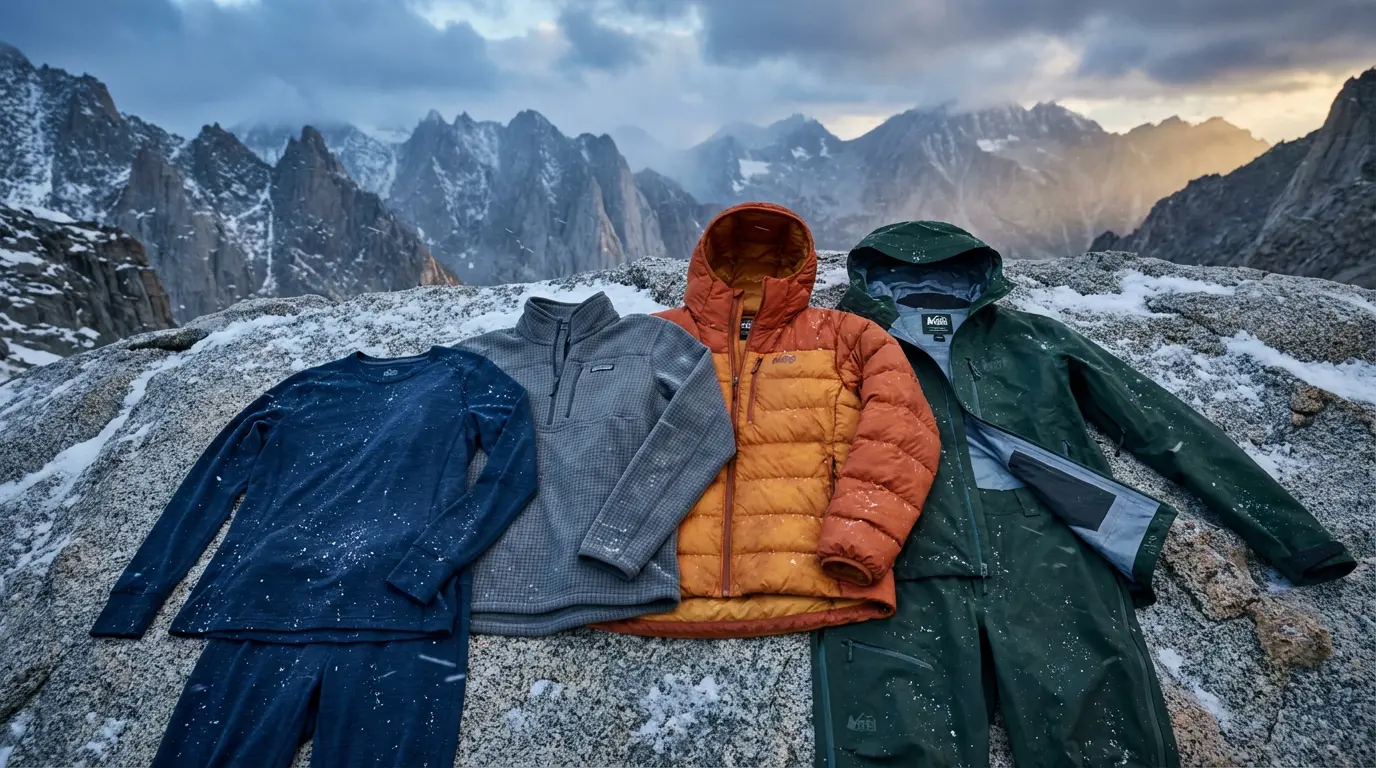
That’s the thing about the outdoors: you can’t control the weather, but you can control your microclimate. Over 12 years of guiding, I’ve learned that staying comfortable isn’t about having the thickest coat; it’s about mastering the art of layering. Let’s break down how to build a system that actually works when the temperature drops.
The Foundation: Your Base Layer
People obsess over jackets, but honestly, your base layer is the most critical piece of clothing you own. Its job isn’t to keep you warm—it’s to keep you dry.
When you hike, chop wood, or set up a tent, you sweat. If that moisture sits on your skin, it cools you down rapidly as soon as you stop moving. This is why I tell every single person who joins my workshops: Cotton kills. Cotton absorbs moisture and holds it against your skin like a cold, wet towel.
Instead, you need synthetics or merino wool.
- Synthetics (Polyester/Nylon): These are great because they dry incredibly fast and are durable. I usually wear synthetic base layers for high-output activities or in really wet climates like the Pacific Northwest, where nothing ever truly dries out.
- Merino Wool: This is my personal favorite for multi-day trips. It doesn’t stink after three days of wear (your tent-mates will thank you), and it stays warm even when it’s damp. Just be careful with durability—I’ve snagged and torn plenty of lightweight merino tops pushing through brush.
Fit matters here. Your base layer needs to be snug—hugging your skin so it can physically pull that moisture away. If it’s baggy, the sweat just drips down your back.
The Furnace: The Mid-Layer
Once you’ve moved moisture away from your skin, you need to trap body heat. This is the job of your mid-layer (or insulation layer). Think of this as the thermostat you can adjust.
I see a lot of campers bring one giant, heavy sweater. The problem is, you’re either freezing without it or sweating to death with it. I prefer having options.
Fleece: A simple grid fleece is often all you need while you’re moving. It breathes well, letting that moisture from your base layer continue its escape outward. It’s durable, cheap, and effective.
Puffy Jackets (Down vs. Synthetic): When you stop for lunch or get to camp, you need the “big guns.”
- Down: Nothing beats the warmth-to-weight ratio of down. It packs down to the size of a grapefruit. However, remember my story about the sleet? If down gets wet, it collapses and loses all insulating ability. It becomes useless.
- Synthetic Insulation: If I’m heading somewhere notoriously wet or humid, I grab my synthetic puffy. It’s heavier and doesn’t pack as small, but it keeps me warm even if I take a spill in a creek.
I usually carry a lightweight fleece and a puffy jacket. I hike in the fleece and throw the puffy on the second I stop moving to preserve that hard-earned heat.
The Shield: The Outer Shell
This is your protection against the elements—wind, rain, and snow. But here is the tricky part: your shell also needs to let moisture escape from the inside.
If you wear a rubber raincoat, you’re waterproof from the outside, but you’ll soak yourself from the inside with trapped sweat. You need a “breathable” waterproof shell (like Gore-Tex, eVent, or proprietary brand versions).
But let’s be real—even the most expensive breathable fabric can’t keep up if you’re hiking a steep grade with a heavy pack. That’s why I’m a huge advocate for mechanical venting. Look for jackets with pit zips (zippers under the armpits). Being able to physically open up the jacket to dump heat is a game-changer. I rarely buy a shell without them.
Don’t forget your legs! Rain pants are often an afterthought, but in a real downpour, wet legs lead to wet socks, which leads to misery. I prefer rain pants with full side zips so I can put them on without taking off my muddy hiking boots.
Putting It All Together: The “Be Bold, Start Cold” Rule
The biggest mistake I see isn’t buying the wrong gear—it’s using it wrong.
Picture this: It’s 7:00 AM at the trailhead. It’s chilly, maybe 40 degrees. You put on your base layer, your fleece, and your puffy jacket because you’re cold standing there. You start hiking. Ten minutes later, you’re sweating buckets. You’re now wet, and your layering system has failed before you even reached the first mile marker.
We use a phrase in the guiding world: “Be bold, start cold.”
When you start hiking, you should feel a little chilly. Trust that your body will generate heat within 15 minutes. By starting cool, you prevent that initial sweat-out.
Throughout the day, manage your layers proactively.
- Stop to add a layer before you get fully cold.
- Stop to strip a layer before you start sweating heavily.
It feels like a hassle to stop and change clothes, but it saves you energy and keeps you safe.
A Note on Extremities
Your core isn’t the only thing that needs layering. I always bring a thin pair of liner gloves and a thicker, waterproof shell mitt or glove. This gives me dexterity when I need to light a stove but warmth when I’m just sitting around.
And for socks? The layering principle applies there too. Some folks love a thin liner sock under a thick wool hiking sock to prevent blisters and manage moisture. I’ve found that a single, high-quality merino wool sock (like Darn Tough or Smartwool) usually does the trick, provided your boots aren’t too tight. If your boots are too tight, you cut off circulation, and no amount of wool will keep your toes warm.
The Bottom Line
There is no “perfect” layering system for every single trip. What I wear for a rainy week in the Olympics is totally different from what I pack for a dry desert trip in Utah.
But the principles remain the same: wick moisture, trap heat, block wind/rain.
Don’t get too hung up on having the absolute newest, most expensive tech. I’ve stayed warm in thrift store fleece and surplus wool. Focus on the fabrics and how they work together. Once you master the system, you stop worrying about the forecast and start enjoying the wild, regardless of what the sky is doing.