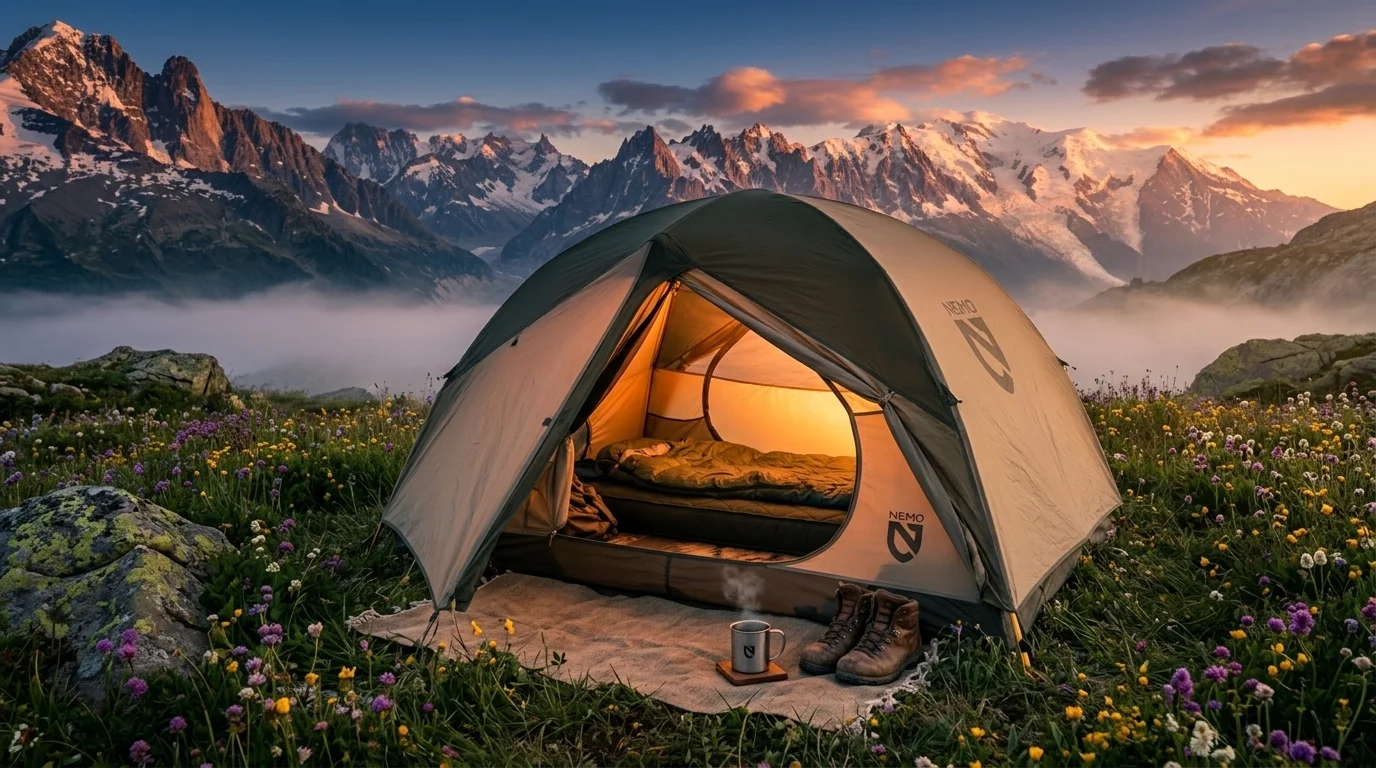
Let’s be honest. Every camping trip starts the same way, you scroll through Pinterest, imagine yourself sipping morning coffee in a sun-drenched meadow, and dream of waking up in what can only be described as a canvas luxury suite. Then reality arrives in the form of a surprise thunderstorm at 2 a.m., 40 mph wind gusts, and a tent that you’re desperately trying to re-stake in the dark while your partner shines a headlamp at you from inside a sleeping bag. That’s exactly why choosing the right tent matters.
Our team brings over 2500 collective nights of tent camping experience, having put more than 45 models through their paces across brands like NEMO, REI, The North Face, Kelty, Marmot, and Mountain Hardwear. We’ve set up tents in driving rain, post-snowstorm conditions, and sustained high winds to evaluate everything from vestibule storage to pole integrity under pressure. Our recommendations are 100% independent, no brand pays for placement here. What you’re reading is leads you to the right way to chose one of the best camping tents for your first or next adventure.
Quick Picks : The Best Tents at a Glance
Not everyone needs the full breakdown before making a decision. Here are our top picks across every major category. Click “Jump to Review” to go straight to the in-depth write-up.
Best Overall : The North Face Wawona 6 | $585
The gold standard for car camping. A jaw-dropping 44-square-foot vestibule, near-vertical walls, and 76-inch peak height make this the most livable tent we’ve ever tested.
Jump to Review→
Best Durable Camping Tent for Two : Mountain Hardwear Mineral King 3 | $400
The rare tent that genuinely pulls double duty, capable enough for serious backpacking, comfortable enough for car camping. Fully seam-taped and built to handle real weather.
Jump to Review→
Best Ease of Setup : NEMO Aurora Highrise 4 | $400
DAC Featherlite poles, reinforced stress points, and an intuitive clip system mean you’ll be inside and settled before neighboring campers are still untangling guy lines.
Jump to Review→
Best Luxury Tent : REI Wonderland 4 | $429
Stand-up headroom, a flowing tunnel shape, and an interior that feels more like a hotel room than a tent. If comfort is the mission, the Wonderland 4 delivers.
Jump to Review→
Best Crossover Camping & Backpacking : REI Half Dome 3 | $399
A dependable workhorse with an included footprint and a color-coded setup system. Season after season, it just shows up and performs.
Jump to Review→
Best Bang for Your Buck : Kelty Wireless 6 | $280
Premium-feeling materials, dual vestibules, and a 76-inch peak height, all for well under $300. The most surprising overperformer on this entire list.
Jump to Review→
Best Large Basecamp Tent : Mountainsmith Conifer 5+ | $450
When the group is big and the campsite is home for a week, this spacious basecamp shelter delivers the floor plan to match.
Jump to Review→
Best Low-Profile / Wind-Resistant : Marmot Tungsten 4 | $450
Low, aerodynamic, and built for exposed sites. When gusts roll in overnight, this is the tent you want above your head.
Jump to Review→
Best Light-Blocking Tent : Kelty Daydreamer 6 | $270
Twilight Tech blackout fabric keeps the 5 a.m. sunrise outside where it belongs. A game-changer for family trips and late sleepers.
Jump to Review→
Best Extreme Budget : Coleman Sundome 4 | $115
No frills, no fuss. For occasional mild-weather camping or first-timers testing the waters, this classic entry-level tent reliably gets the job done.
Jump to Review→
In-Depth Tent Reviews
Choosing a tent is one of the most personal decisions in outdoor gear, the wrong call shows up at the worst possible moment. We’ve put every tent on this list through hundreds of real-world setups across variable terrain, unpredictable weather, and the kind of conditions that expose a tent’s true character fast. What follows isn’t a spec-sheet comparison, it’s a field-tested breakdown of exactly what each tent does well, where it falls short, and who it’s genuinely right for. Read straight through or jump to the tent that matches your adventure style.
1. Best Overall Camping Tent : The North Face Wawona 6
Experts Rating: 4.9/5.0 | Price: $585 | Weight: 20 lb. 15 oz.
Dimensions (L×W×H): 120 × 86 × 76 in.
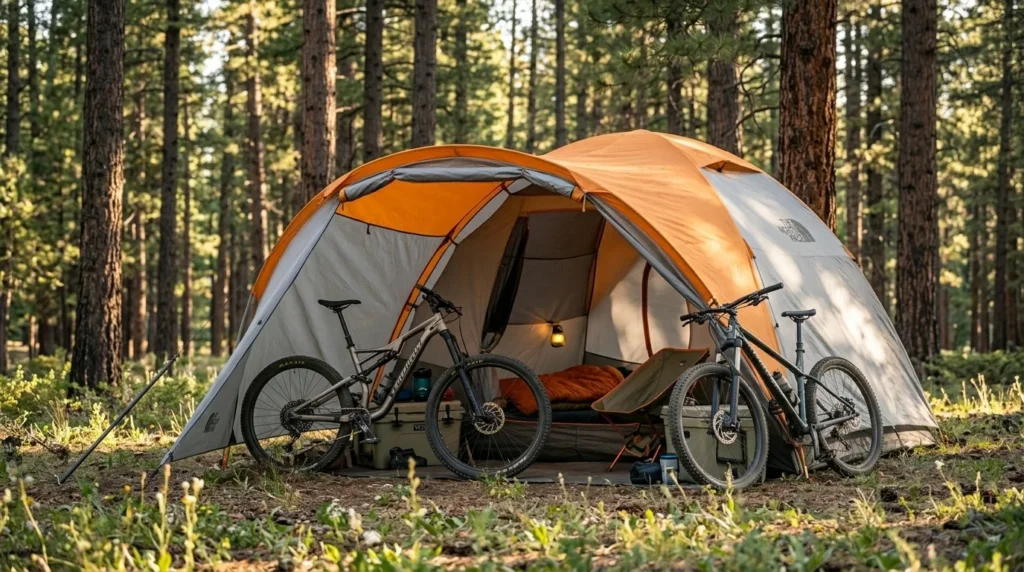
Walk up to a Wawona 6 at a campsite and you might do a double-take, this thing is enormous. But it’s not just big for the sake of big. The North Face Wawona 6 is our top overall pick because it nails the combination of space, weather resistance, and thoughtful design better than any other tent we’ve tested.
The real showstopper? That vestibule. The whopping 44-square-foot front vestibule isn’t just a glorified mud room, it’s a legitimate outdoor living space. We’ve stored two mountain bikes, four camp chairs, and a full cooler in there during a rainstorm without breaking a sweat. When the weather clears, roll back the fly and it becomes a shaded hangout zone. There is no other tent on this list that comes close to matching that utility.
Inside, the near-vertical walls and 76-inch peak height mean most people can walk around fully upright. An abundance of internal pockets keeps the gear clutter manageable, and the double doors mean no one has to crawl over a sleeping partner at 3 a.m. The mesh windows provide excellent airflow and genuinely beautiful stargazing views when conditions allow.
Pros:
- Largest vestibule on this list, fits bikes, chairs, and bulky gear
- Near-vertical walls maximize interior livable space
- 76-inch peak height, stand-up room for most adults
- Double doors for easy access; generous internal pocket storage
- Outstanding weather resistance for a tent this large
Cons:
- Setup requires time and ideally two people
- Partial-coverage rainfly leaves some mesh exposed in downpours
- Not a lightweight option, best suited for car camping
2. Best High-Quality Tent for Two (Crossover) : Mountain Hardwear Mineral King 3
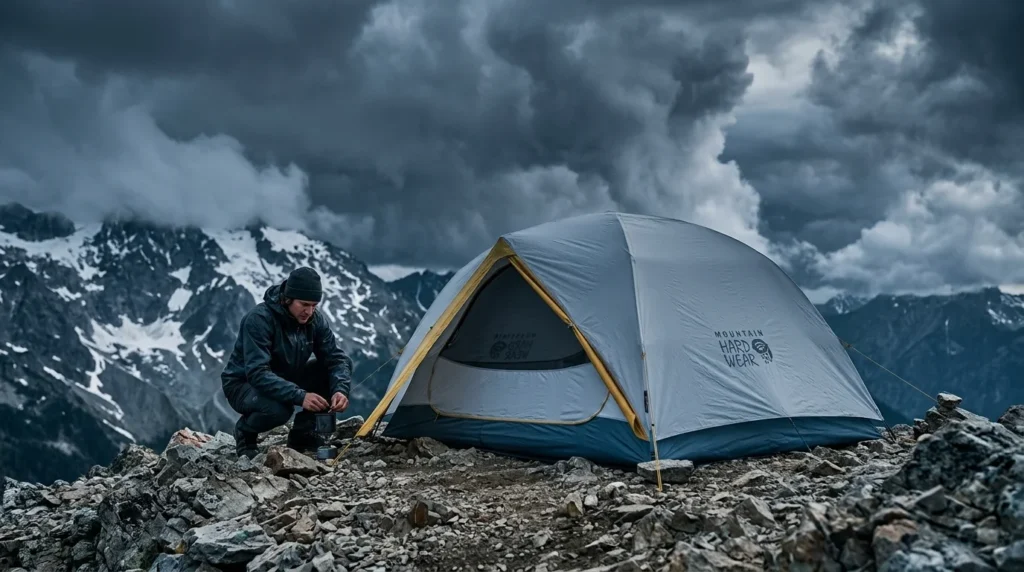
Experts Rating: 4.7/5.0 | Price: $400 | Weight: 7 lb. 13 oz.
Dimensions (L×W×H): 90 × 68 × 48 in.
Here’s the thing about the Mineral King 3, it’s the rare tent that genuinely works in two worlds. Car camping on Friday night, a last-minute backpacking trip Saturday morning? This one transitions without complaint.
The latest version arrives with some genuinely smart upgrades. The improved rainfly reduces sag in wet weather, which we noticed immediately during a sustained overnight rain session. The new zippered duffel-style stuff sack is a small change that makes a huge difference in the morning, no more wrestling a tent into a bag that was clearly designed by someone who’s never actually packed one up. Mountain Hardwear also redesigned the internal storage, with full-width mesh pockets running along both the head and foot walls, giving you a surprising amount of organization in a compact tent.
As one of the lowest-profile tents on this list, the Mineral King genuinely shines in high winds and nasty weather. The fully seam-taped rainfly and bathtub-style floor kept us completely dry through a summer thunderstorm that sent neighboring campers scrambling. The nearly 100% mesh interior also makes it one of the most breathable tents we’ve reviewed, you’ll appreciate that on warm summer nights.
Pros:
- Exceptional weather resistance, fully seam-taped, low-profile design
- Genuinely crossover-capable for backpacking and car camping
- Upgraded duffel-style stuff sack makes packing a breeze
- Color-coded pole system for fast, intuitive setup
- Dual vestibules nearly double the usable space
Cons:
- 48-inch peak height means no standing upright inside
- Genuinely tight for three adults, better as a two-person tent
- Slightly too heavy for serious ultralight backpacking
3. Best Easy-Setup Tent : NEMO Aurora Highrise 4
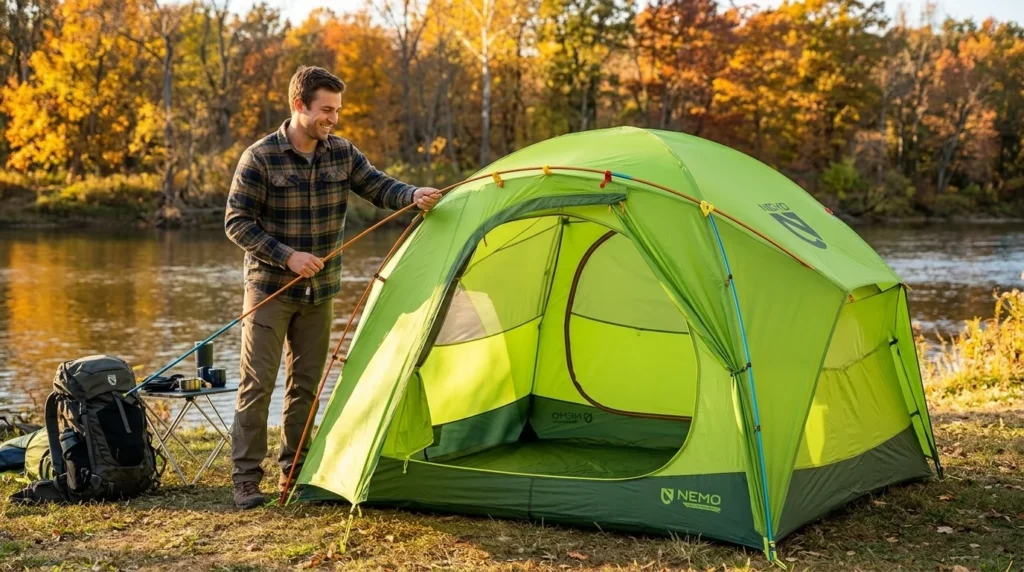
Experts Rating: 4.6/5.0 | Price: $400 | Weight: ~12 lb.
Dimensions (L×W×H): 100 × 90 × 75 in.
If there’s one tent on this list that consistently draws compliments from first-time campers, it’s the NEMO Aurora Highrise 4. The steep, near-vertical walls create a sense of interior space that honestly defies the tent’s footprint. Set it up, step inside, and your first instinct is to reach for the “how is this so big?” button.
What makes the Aurora Highrise stand out from competitors with similar floor plans is the DAC Featherlite pole architecture, these aren’t the bendy, questionable poles you’ll find on budget tents. They’re precision-engineered aluminum poles that clip and lock with satisfying confidence. Paired with NEMO’s reinforced stress points, this tent is built to last through hundreds of setups without the kind of wear that starts showing up at pole junctions and zipper corners. The white privacy mesh on the inner tent is a genuinely clever design touch, you get great ventilation without sacrificing that cozy, enclosed feeling.
Pros:
- Steep walls maximize livable space and headroom
- DAC Featherlite poles, lightweight and exceptionally durable
- Reinforced stress points for long-term durability
- White privacy mesh balances ventilation with intimacy
- Intuitive setup, genuinely beginner-friendly
Cons:
- Priced at $400, which is competitive but not a budget buy
- Slightly heavier than comparably-sized crossover tents
4. Best Luxury Camping Tent : REI Wonderland 4
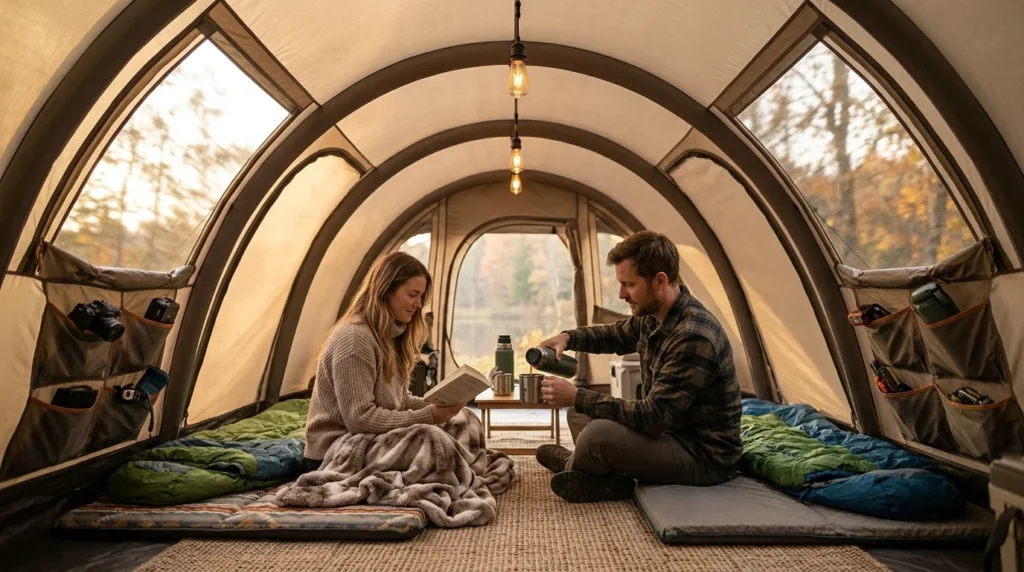
Experts Rating: 4.7/5.0 | Price: $429 | Weight: ~22 lb.
Dimensions (L×W×H): 100 × 90 × 75 in.
Honestly! We’ve started calling the REI Wonderland 4 “the tent hotel.” The tunnel-shaped architecture is what separates this from a standard dome, it creates a long, flowing interior that feels more like a cabin than a campsite shelter. With a 75-inch peak height, most adults can stand fully upright, change clothes without contorting themselves, and move around naturally.
The triangular mesh windows placed on the sides are a design feature we didn’t know we needed until we experienced them, excellent for cross-ventilation on warm nights and genuinely beautiful for watching a storm roll in from the safety of your sleeping bag. Near-vertical walls mean the corners are livable all the way to the edges, and the interior volume rivals tents with a significantly larger footprint. If you’re looking to genuinely enjoy the camping experience rather than simply survive it, the Wonderland 4 delivers.
Pros:
- Tunnel shape creates exceptional interior volume and flow
- 75-inch peak height, stand up and move around naturally
- Near-vertical walls maximize every inch of floor space
- Triangular mesh windows offer stellar ventilation and views
- Premium REI quality and lifetime customer support
Cons:
- At 22+ lbs., strictly a car camping tent
- More complex setup than dome-style alternatives
5. Best Crossover (Camping & Backpacking) : REI Half Dome 3
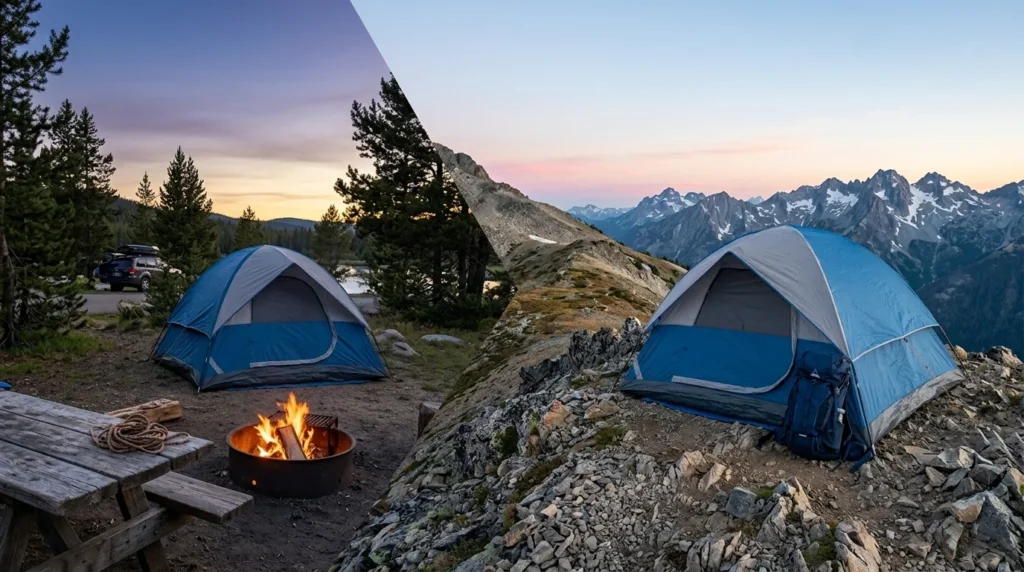
Experts Rating: 4.5/5.0 | Price: $399 | Weight: 7 lb. 2.5 oz.
Dimensions (L×W×H): 90 × 70 × 44 in.
We consider the REI Half Dome 3 the definition of a dependable workhorse. It’s not the flashiest tent on this list, but after years of use it continues to show up, set up, and perform, which is more than you can say for a lot of gear at this price point. The included footprint is a notable bonus, since most competitors charge separately for this valuable groundsheet. The color-coded clip system means setup is genuinely fast for a tent of this complexity, and the freestanding structure means you can pitch it on packed dirt, sand, or rocky ground without stakes.
Pros:
- Included footprint adds real value
- Reliable, proven performance season after season
- Compact enough to take backpacking in a pinch
- Color-coded setup system, fast and intuitive
Cons:
- Not the most spacious option for three adults
- Standard dome shape limits peak height vs. tunnel competitors
6. Best Bang for Your Buck : Kelty Wireless 6
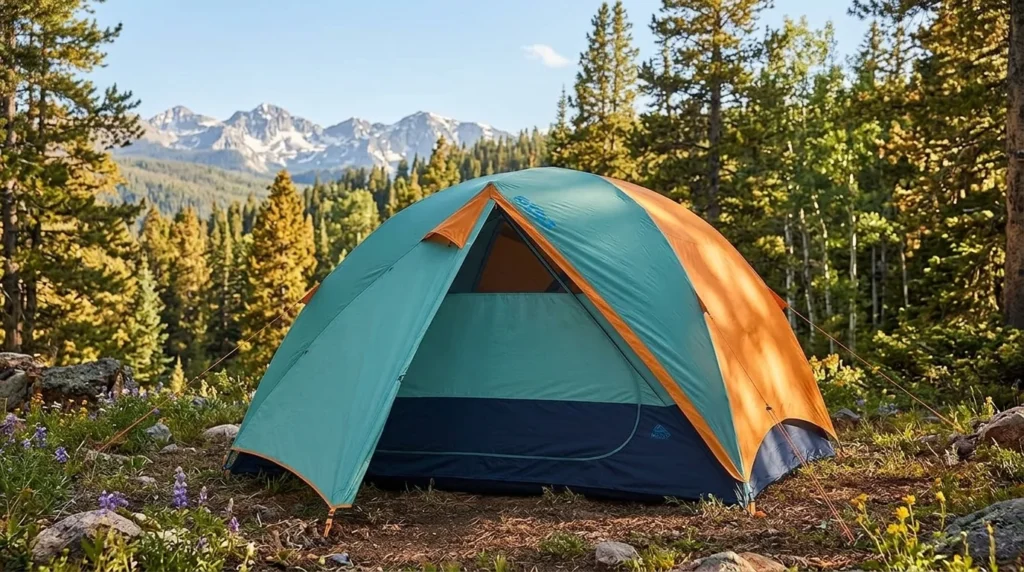
Experts Rating: 4.4/5.0 | Price: $280 | Weight: 17 lb. 3 oz.
Dimensions (L×W×H): 118 × 106 × 76 in.
Here’s what surprised us about the Kelty Wireless 6: it doesn’t feel like a budget tent. At $280, we walked in with modest expectations, and the Wireless 6 quietly defied all of them. The materials are surprisingly high-quality for the price, the dual vestibules provide genuine gear storage, and the 76-inch peak height is one of the tallest ceilings on this entire list, taller campers, you’re welcome.
The long brow pole is the structural secret weapon here. It pulls the inner tent walls nearly vertical, so you don’t lose that frustrating triangle of unusable space in the corners. We took the Wireless 6 on a six-week, eight-state road trip and it handled light-to-moderate wind and sustained rain with confidence. One honest note: with the rainfly fully deployed, ventilation can get limited on hot nights, pitch near airflow if you can.
Pros:
- Best value on the list, high-quality materials at a budget price
- 76-inch peak height, one of the tallest on this list
- Dual vestibules for gear storage
- Long brow pole keeps walls vertical and space maximized
- Color-coded poles for easy setup
Cons:
- Ventilation with full rainfly can be limited in heat
- At 17+ lbs., not suited for backpacking
- Struggles in high winds without a windbreak
7. Best Large Basecamp Tent : Mountainsmith Conifer 5+
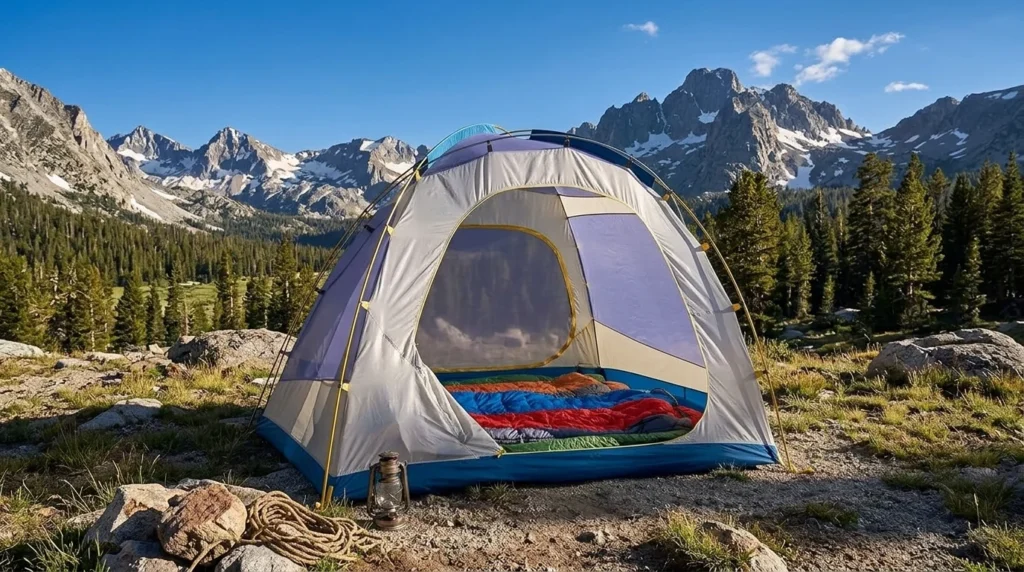
Experts Rating: 4.3/5.0 | Price: $450 | Weight: 15 lb.
Dimensions (L×W×H): 120 × 120 × 74 in.
For group camping where space is the priority, the Mountainsmith Conifer 5+ delivers a large, sturdy basecamp footprint that can house gear, people, and all the chaos that comes with group trips. It’s one of the more complex setups on the list, factor that in if you’re a solo camper, but once it’s up, the interior space justifies the effort.
Pros:
- Expansive floor plan
- solid weather protection
- quality construction
Cons:
- Complex setup
- for two-person assembly
- bulky to pack
8. Best Low-Profile, Wind-Resistant Tent : Marmot Tungsten 4
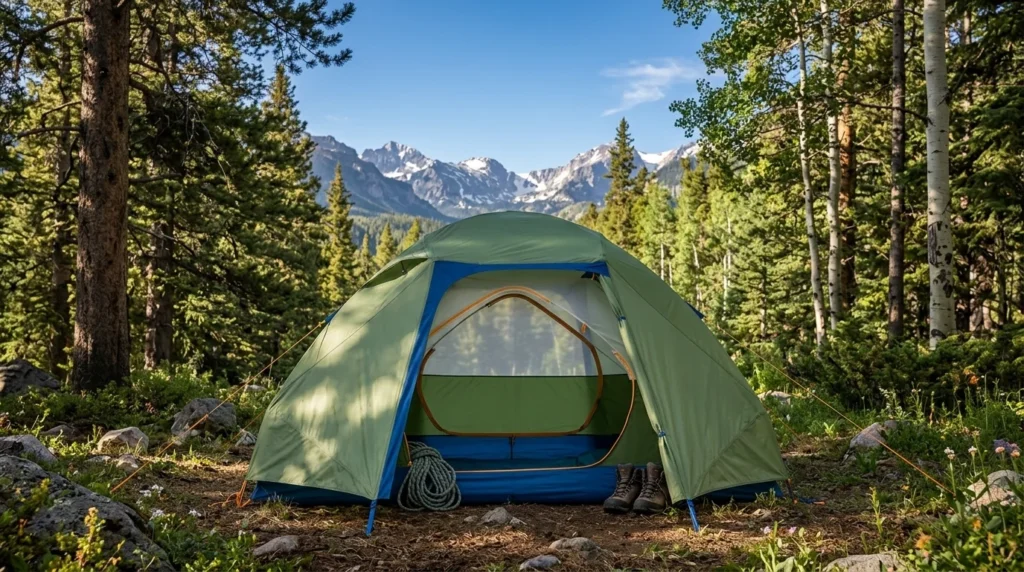
Experts Rating: 4.2/5.0 | Price: $450 | Weight: 9 lb. 3.8 oz.
Dimensions (L×W×H): 93 × 82 × 52 in.
When conditions turn seriously nasty, sustained winds, sideways rain, the Marmot Tungsten 4’s low-profile dome geometry does exactly what a tent should do: hold its shape and keep you dry. The aerodynamic design sheds wind rather than catching it, which pays dividends at exposed campsites. It’s not the most palatial interior, but it’s one of the most reassuring shelters when a front rolls through overnight.
Pros:
- Excellent wind and weather resistance
- Stable in exposed conditions
- Reliable quality
Cons:
- Lower peak height limits interior mobility
- Premium price for the size
9. Best Light-Blocking Tent : Kelty Daydreamer 6
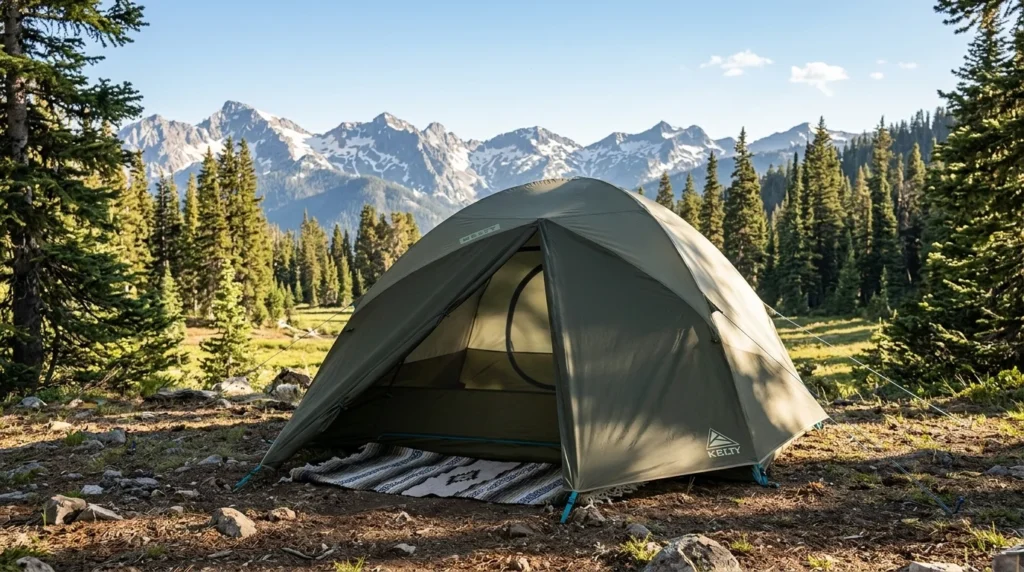
Experts Rating: 4.2/5.0 | Price: $270 | Weight: 19 lb. 12 oz.
Dimensions (L×W×H): 120 × 107 × 77 in.
For anyone who’s ever been jolted awake by 5 a.m. summer sunlight streaming through mesh, the Kelty Daydreamer 6 and its “Twilight Tech” blackout fabric is a revelation. The dark inner material dramatically reduces early-morning light intrusion, a genuinely underrated feature for family camping trips with kids, or for anyone who values sleeping in past sunrise.
Pros:
- Light-blocking Twilight Tech fabric
- Spacious 6-person capacity
- Great value
Cons:
- Heavier than standard tents
- Darker interior
- Feels warmer in summer heat
10. Best Extreme Budget : Coleman Sundome 4
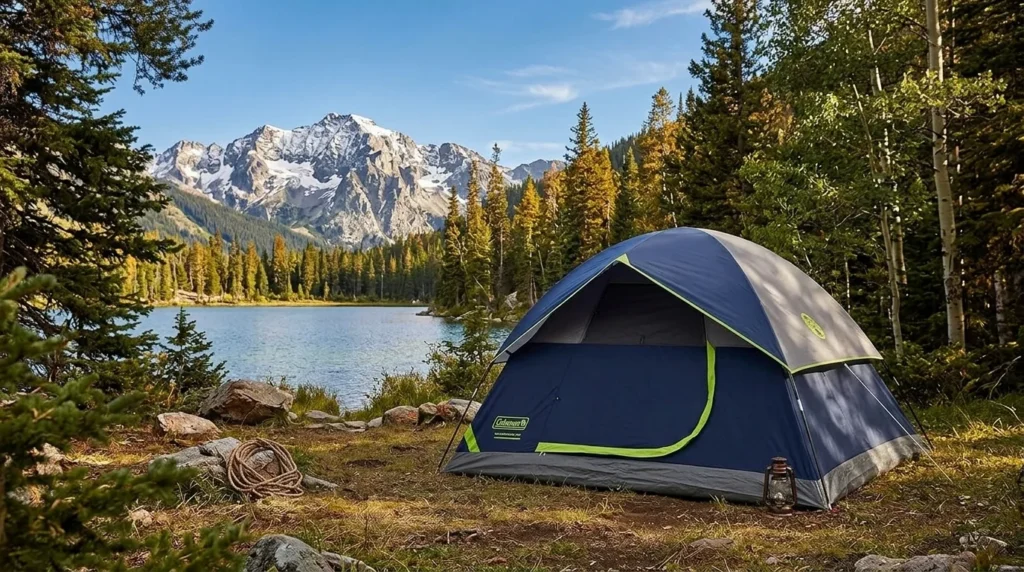
Experts Rating: 3.9/5.0 | Price: $115 | Weight: 10 lb. 3 oz.
Dimensions (L×W×H): 108 × 84 × 59 in.
Sometimes the mission is simply: keep rain off heads, stay under $100. The Coleman Sundome 4 is the tent equivalent of a reliable economy sedan, it’s not glamorous, but it gets the job done reliably enough for occasional weekend campers or those just getting started. We wouldn’t take it into a serious storm, but for mild weather three-season camping, it’s a perfectly respectable entry point.
Pros:
- Unbeatable price
- Quick and simple setup
- Widely available
Cons:
- Budget materials show wear quickly with regular use
- Limited weather protection
Comparative Analysis : How They Stack Up
Not all tents win on the same terms. The North Face Wawona 6 and the Kelty Wireless 6 are both outstanding, but for completely different reasons. Here’s how the full lineup stacks up when we measure what matters most: value, comfort, durability, weather performance, and setup speed.
Value : Why the Kelty Wireless 6 Wins on Price-to-Performance
Value isn’t just about cheapness, it’s about what you get relative to what you spend. The Kelty Wireless 6 offers some of the best value in the camping tent category, delivering high-quality materials, dual vestibules, and a color-coded setup system at $280. For casual campers and families who want a capable tent without spending $500+, it’s the clearest recommendation we can make.
Comfort : Wawona 6 vs. REI Wonderland 4
These two are the undisputed comfort kings of the list, but they win differently. The North Face Wawona 6 wins on raw floor space and vestibule utility, the 44-square-foot gear garage is simply unmatched. The REI Wonderland 4 wins on interior volume and that standing-height, walk-around quality that makes it feel like a proper room rather than a tent. Both are exceptional; your choice comes down to whether you prioritize storage space (Wawona) or interior livability (Wonderland).
Durability : NEMO Aurora Highrise’s Structural Edge
The NEMO Aurora Highrise earns its durability reputation through the quality of its components, starting with DAC Featherlite poles, the same pole architecture used in many premium backpacking tents. The reinforced stress points at high-wear areas like pole junctions and zipper corners mean the Aurora Highrise holds up through hundreds of setups without the degradation you’d see in lower-tier builds.
Weather Resistance : Mountain Hardwear Mineral King’s Low-Profile Advantage
In genuinely bad conditions, geometry matters. The Mineral King 3’s low-profile dome shape reduces wind resistance dramatically compared to taller, higher-volume tents. Its fully seam-taped rainfly and bathtub-style floor create a nearly water-tight envelope, and we trusted it through a summer storm that left nearby campers miserable. If you regularly camp in exposed sites or shoulder-season conditions, this distinction matters.
Ease of Setup : Color-Coded vs. Complex Systems
Most of our top picks use color-coded pole and clip systems that make assembly intuitive even in fading light. The Mountain Hardwear Mineral King 3 is arguably the fastest to pitch on the list, one person can set it up in under 10 minutes. The Mountainsmith Conifer 5+, by contrast, has a more complex structure that genuinely benefits from a two-person team and patience on the first couple of setups.
The Ultimate Camping Tent Buying Guide
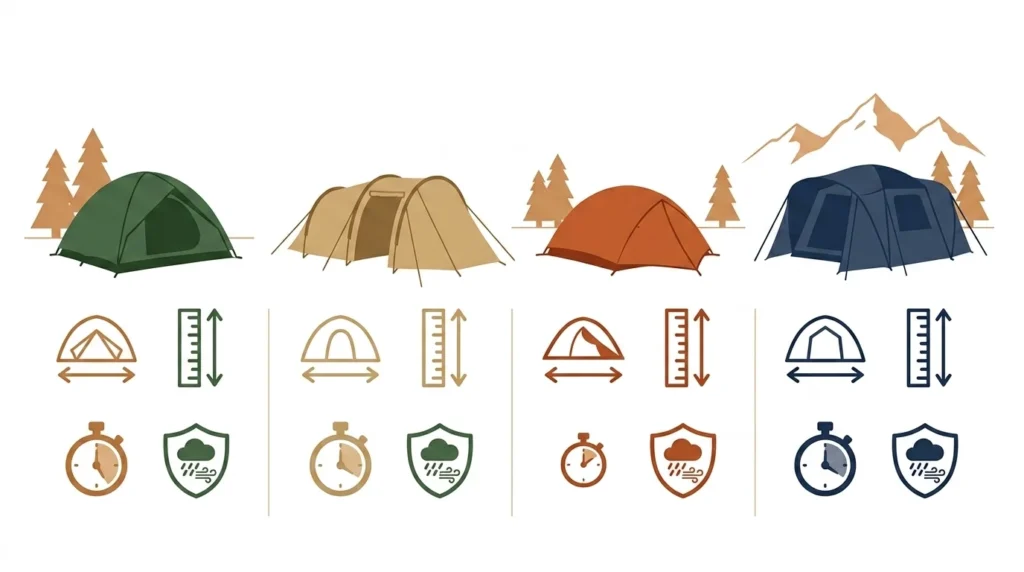
Even the best tent on this list is the wrong tent if it doesn’t match the way you actually camp. Capacity ratings, peak height, vestibule size, season ratings, these aren’t just marketing specs. They’re the variables that determine whether you wake up comfortable and dry, or spend the night staring at a sagging rainfly wondering where it all went wrong. This guide breaks down every key decision point in plain language, so your next tent purchase is one you won’t second-guess at the trailhead.
Capacity vs. Comfort : Always Size Up
Manufacturers rate tent capacity optimistically, charitably so. A tent listed as “4-person” is designed to fit four people sleeping shoulder-to-shoulder with zero gear inside. In real life? We recommend sizing up by one or two people from your actual group size to ensure genuine comfort. A 6-person tent for four adults is the sweet spot for most camping trips.
Peak Height : The Standing Room Question
Here’s the trade-off: taller tents are more comfortable to move around in, but lower-profile tents handle wind better. If you’re camping in exposed, high-wind areas, a lower peak height, like the Marmot Tungsten 4 or Mineral King 3, is the smarter choice. For sheltered forest camping or car campgrounds with windbreaks, go for the standing room and don’t look back.
Doors and Vestibules : Non-Negotiables for Groups
If you’re camping with more than one other person, multiple doors are essential, no one enjoys climbing over a sleeping partner to answer nature’s 2 a.m. call. Vestibules are equally critical: they serve as a covered zone to remove muddy boots, store wet gear, and keep the interior clean. The North Face Wawona 6’s 44-square-foot vestibule sets the standard; even a modest 15-square-foot vestibule will transform the camping experience.
Ventilation and Condensation : The Quiet Battle
Even in cold weather, bodies generate heat and moisture that condenses on tent walls. Look for roof vents, interior mesh panels, and interior-accessible kickstands that let you adjust airflow without leaving your sleeping bag. The Mineral King 3’s nearly full-mesh interior is an extreme example of this done right, exceptional on warm nights, though you’ll want the rainfly on when temperatures drop.
Season Ratings Explained
| Rating | Best For | Example |
|---|---|---|
| 3-Season | Spring, summer, fall – most camping trips | North Face Wawona 6 |
| 3-4 Season | Extended shoulder-season, higher elevations | Mountain Hardwear Mineral King 3 |
| 4-Season | Winter, snow loading, alpine conditions | Expedition-specific models |
Most campers never need a 4-season tent. A quality 3-season tent handles the overwhelming majority of conditions you’ll encounter, including serious summer thunderstorms.
Packaged Weight vs. Minimum Trail Weight
Packaged (or “Stated”) Weight is what the manufacturer lists and includes all components, poles, stakes, stuff sack, and sometimes a footprint. Minimum Trail Weight strips it down to the absolute essentials, tent body, fly, and poles only. For backpacking decisions, minimum trail weight is the relevant number. For car camping? Packaged weight is irrelevant, bring it all.
The Footprint Debate : Is It Worth It?
Short answer: yes. A footprint (groundsheet) extends the life of your tent floor by protecting it against abrasion from rocks, roots, and thorns. If you’re investing $400–$600 in a quality tent, spending $40–$60 on a footprint is basic math. Some tents include footprints (like the REI Half Dome 3), factor that into your total cost comparison.
Choosing the Right Tent for Your Adventure
There’s no single “best” tent, there’s the best tent for you. If you’re a family of four who camps every summer weekend, the North Face Wawona 6 delivers the space and livability that will make every trip genuinely enjoyable. If you’re a couple who wants versatility between car camping and the occasional backpacking trip, the Mountain Hardwear Mineral King 3 offers the best of both worlds. Working with a tighter budget? The Kelty Wireless 6 will genuinely surprise you.
Whatever your adventure style, invest in quality, size up from your actual group, and get yourself a footprint. The right tent doesn’t just keep you dry, it transforms an outdoor experience from something you endure into something you love.
Good to Know: Prices and product availability were verified as of April 2026. Check current pricing at each retailer, as seasonal sales and stock availability may vary.
FAQ – Best Camping Tents of 2026
What size camping tent do I actually need?
The golden rule is simple: always size up by at least one person from your actual group size. Tent manufacturers rate capacity based on people sleeping shoulder-to-shoulder with zero gear inside, not real-world camping. A “4-person” tent comfortably sleeps two or three adults with gear. If you’re camping with four people, look for a 5 or 6-person tent. For families with kids or anyone who values being able to sit up, change clothes, and breathe, the extra square footage is never wasted.
What is the difference between a 3-season and a 4-season camping tent?
A 3-season tent is designed for spring, summer, and fall camping, it handles rain, moderate wind, and mild cold, which covers the overwhelming majority of camping trips most people take. A 4-season (or winter) tent is engineered for heavy snow loading, sustained high winds, and sub-zero temperatures, typically using stronger poles, a fuller coverage rainfly, and heavier fabrics. Unless you’re planning alpine winter expeditions or cold-weather mountaineering, a quality 3-season tent is all you’ll ever need. The Mountain Hardwear Mineral King 3 bridges this gap as a “3-4 season” crossover, a smart choice for shoulder-season adventurers.
How do I keep my tent dry and prevent condensation inside?
Condensation is one of the most misunderstood camping problems, many campers assume their tent is leaking when it’s actually moisture from their own breath and body heat condensing on the inner walls. The best defense is ventilation: keep roof vents open even in cold weather, stake out your rainfly so it doesn’t press against the tent body, and crack a door or window slightly to encourage airflow. Tents with a high percentage of mesh inner panels, like the Mountain Hardwear Mineral King 3, dramatically reduce condensation buildup. On still, humid nights, pitch your tent in an open area where there is natural airflow rather than in a low-lying hollow where cold air pools.
Is buying a tent footprint really worth it?
Yes, consistently and without exception. A footprint (groundsheet) is a cut-to-fit protective layer that sits beneath your tent floor, shielding it from abrasion against rocks, roots, sharp gravel, and thorns. Tent floors are one of the most expensive components to repair or replace, and damage accumulates faster than most people expect. If you’ve spent $300–$600 on a quality tent, a $40–$60 footprint is one of the smartest investments you can make to protect it. Some tents, like the REI Half Dome 3, include a footprint in the box, which meaningfully adds to their overall value. For every other tent on this list, we strongly recommend purchasing one separately.