I’ve spent enough nights eating cold canned beans straight from the tin to know that your camp kitchen setup makes or breaks the experience. Last season, I watched a family pull up to a Yellowstone campsite with a brand-new $600 camp stove, but they’d forgotten a can opener. They ended up using a rock and a pocket knife to hack open their dinner. All the fancy gear in the world doesn’t matter if you skip the basics.
After 15 years as a backcountry ranger and countless nights cooking in everything from desert heat to alpine storms, I’ve learned that a functional camp kitchen isn’t about having the most expensive equipment. It’s about having the right tools that actually work when you need them. Let’s talk about what belongs in your kitchen bin and what’s just taking up space.
The Stove: Your Primary Heat Source
Skip the gimmicks and focus on reliability. I don’t care how “innovative” a stove looks, if it can’t boil water in the wind, it’s useless.
Propane Two-Burner Stoves
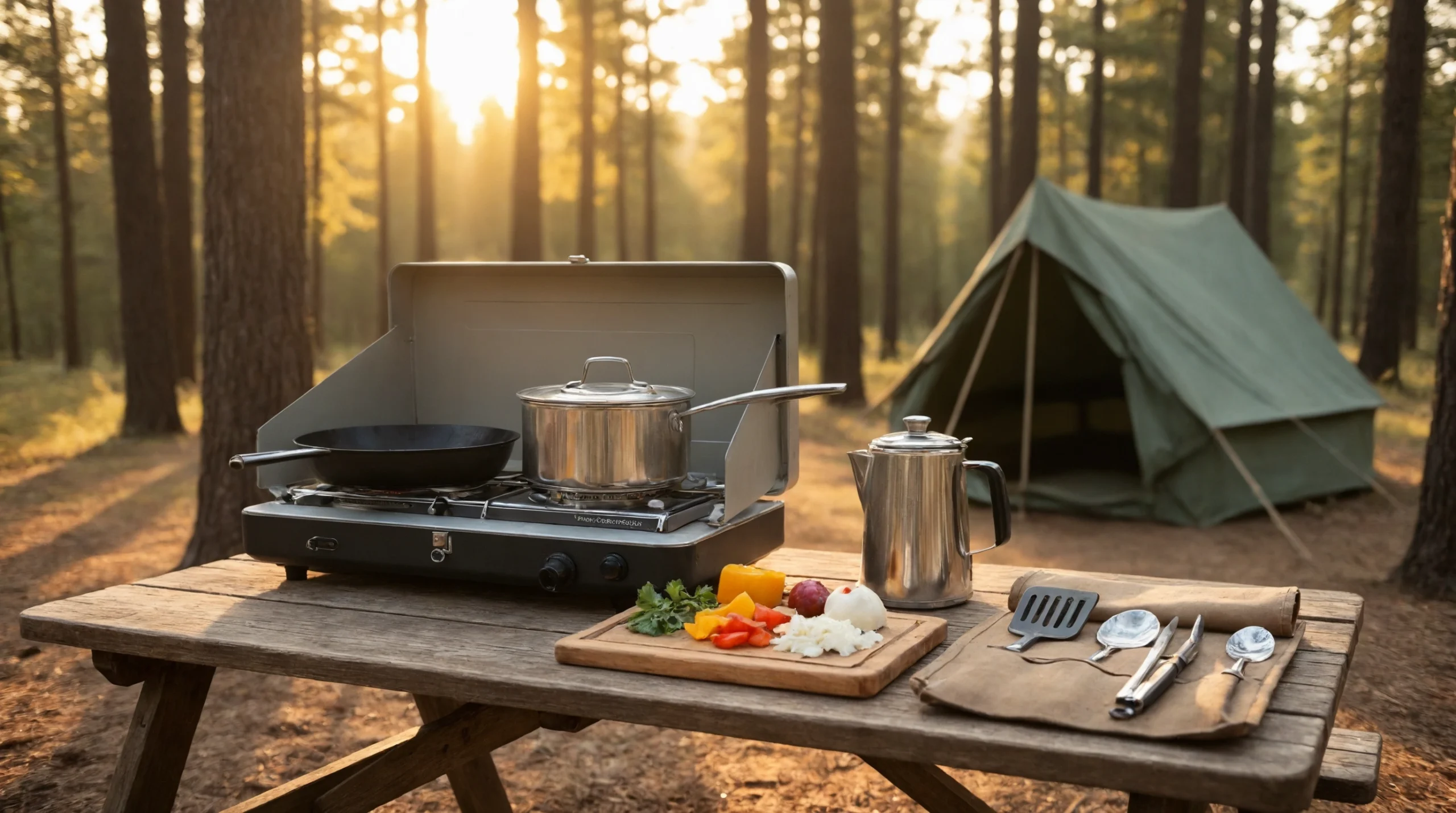
For car camping, these are the workhorses. They’re heavy (10-15 pounds), but you’re not carrying them far. The dual burners let you cook a protein on one side while heating water or warming beans on the other. Look for models with windscreens built in, they’re essential for maintaining consistent heat.
I run a basic Coleman two-burner that’s survived eight years of abuse. The fuel bottles are available at any gas station, which matters when you’re on the road and realize you’re running low.
Backpacking Stoves
If you’re hiking in, weight matters. Canister stoves (like the MSR PocketRocket or Jetboil) are compact and efficient. They screw directly onto small propane-isobutane canisters. However, these canisters lose pressure in freezing temperatures. For winter camping, you need a liquid fuel stove that runs on white gas.
The Fuel Reality
Always bring more fuel than you think you need. Running out of fuel on day two of a four-day trip means you’re eating trail mix for dinner. I pack an extra canister or bottle as insurance.
Cookware That Actually Performs
You don’t need a full kitchen’s worth of pots and pans. Here’s what actually matters:
Two Pots with Lids
A large pot (2-3 quarts) for pasta, stews, or boiling water, and a medium pot (1-2 quarts) for sauces or sides. Lids are non-negotiable, they cut cooking time in half and conserve fuel. Aluminum is lightweight but dents easily. Stainless steel is bombproof but heavier.
I prefer nesting cooksets where everything stacks inside each other. It saves pack space and keeps things organized.
One Skillet or Griddle
For eggs, pancakes, or searing meat, you need a flat cooking surface. Cast iron holds heat beautifully and lasts forever, but it’s heavy, only practical for car camping. For backpacking, hard-anodized aluminum or titanium skillets save weight without sacrificing performance.
Pot Holders and Heat-Resistant Gloves
Burnt fingers ruin meals fast. Leather welding gloves work better than flimsy silicone mitts and cost half as much at a hardware store.
Cutting and Prep Tools
This is where most campers overlook critical items.
A Sharp Knife (or Two)
You need one chef’s knife (6-8 inches) for chopping vegetables and meat, and one paring knife (3-4 inches) for detail work. Dull knives are dangerous, they slip and require more pressure. I sharpen mine before every trip.
Store knives in sheaths or blade guards. A loose knife rattling around your kitchen bin is an accident waiting to happen.
Cutting Board
Use a dedicated camping cutting board, not just a dinner plate. Plastic boards are lightweight and won’t absorb food odors like wood. Size matters: too small and you’re chasing vegetables off the edge, but too large and it won’t fit in your storage bin.
Can Opener and Bottle Opener
Honestly, these are the most forgotten items. If you’re bringing canned goods or beverages with caps, you need openers. A basic multi-tool with these functions lives permanently in my camp kitchen.
Utensils: The Overlooked Essentials
Don’t bring your nice kitchen utensils from home. Camp cooking is rough on gear.
Metal Spatula and Tongs
For flipping burgers or moving hot food around. Metal handles are sturdier than plastic and won’t melt if you set them down near the stove.
Large Spoon and Ladle
For stirring and serving soups, stews, or sauces. Wood or heat-resistant silicone won’t scratch your cookware.
Whisk (Optional but Useful)
If you make pancakes, scrambled eggs, or sauces, a small whisk saves effort.
Food Storage: Keep It Cold and Safe
A cooler is essential for anything perishable. But here’s what most people get wrong: ice melts, creating a soupy mess. Use block ice or reusable ice packs, they last longer and don’t waterlog your food.
Pack raw meat in sealed containers or heavy-duty bags at the bottom of the cooler where it’s coldest. Keep a separate cooler for beverages so you’re not constantly opening the food cooler and letting cold air escape.
For dry goods, use clear plastic bins with tight lids. This keeps out moisture, critters, and allows you to see what you have without digging through bags.
The Spice Kit: Don’t Eat Bland Food
This is where camping meals go from survival rations to actually enjoyable. I keep a small kit with salt, pepper, garlic powder, chili powder, olive oil, and a few dried herbs. Transfer spices into small, waterproof containers, those cardboard shakers from your home kitchen will disintegrate in the humidity.
Cleanup Gear: The Part Nobody Likes
Leave no trace includes washing your dishes properly.
Biodegradable Soap
Regular dish soap harms aquatic ecosystems. Use biodegradable versions and wash at least 200 feet from water sources.
Scrubber, Sponge, and Towels
A pot scraper removes stuck-on food without scratching. Bring a sponge for general washing and a dish towel for drying.
Wash Basin or Collapsible Sink
Don’t wash directly in a stream or lake. Use a basin, then scatter the greywater widely away from camp and water sources.
The Bottom Line
Your camp kitchen doesn’t need to be complicated. I’ve cooked incredible meals with just a single pot, a knife, and a spoon. But there’s a difference between minimalism and missing critical tools that make you miserable.
Build your kit around what you actually cook. If you’re a coffee fanatic, invest in a quality percolator or French press. If you never grill, skip the portable BBQ. The best camp kitchen is the one that lets you focus on the experience instead of fighting with inadequate gear