
Choosing Your Perfect Camp Sleep System

Last fall, I watched a couple in their sixties pull a twelve-pound canvas wall tent out of their Subaru at a Colorado trailhead. They were gearing up for a three-night backpacking trip—seven miles in, with 2,000 feet of elevation gain. I didn’t have the heart to tell them they’d made a terrible mistake.

Two hours later, they were back at the parking lot, defeated. The tent never made it past the first switchback.

Here’s the brutal truth I’ve learned after 18 years of sleeping outside: there is no “best” shelter. There’s only the right shelter for your style of camping. The gear that works for a weekend car camper is completely different from what a thru-hiker needs, and trying to use one for the other is a recipe for misery.

Let’s break down how to actually choose a sleep system that matches how you camp—not just what looks cool in a magazine ad.

Start With Your Camping Style, Not the Gear

Before you obsess over fabric weights and pole materials, answer this question honestly: What kind of camping do you actually do?

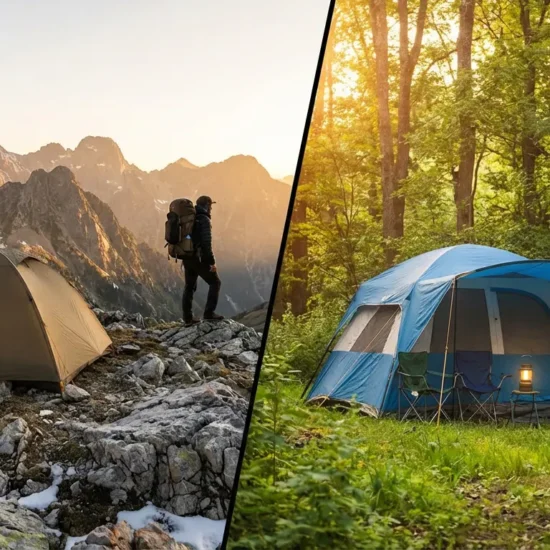
If you’re pulling up to a designated campsite with your vehicle 20 feet away, weight doesn’t matter. Comfort and space do. But if you’re hiking eight miles with everything on your back, every ounce becomes a negotiation.

I divide campers into four categories:

Car Campers: You drive to the site, set up camp, and stay put. Weight is irrelevant. Focus on comfort, space, and weather protection.

Backpackers: You carry everything on your back for miles. Weight and packed size are critical. You’ll sacrifice comfort for those savings.

Bike Packers/Paddlers: Similar to backpackers, but you have slightly more carrying capacity. You can afford a bit more weight if it means better comfort or durability.

Minimalists/Fast Hikers: You’re pushing big miles or going ultralight. You’ll strip every unnecessary feature to save grams. Shelter becomes almost an afterthought.

The Traditional Tent: Still the Standard for Good Reason

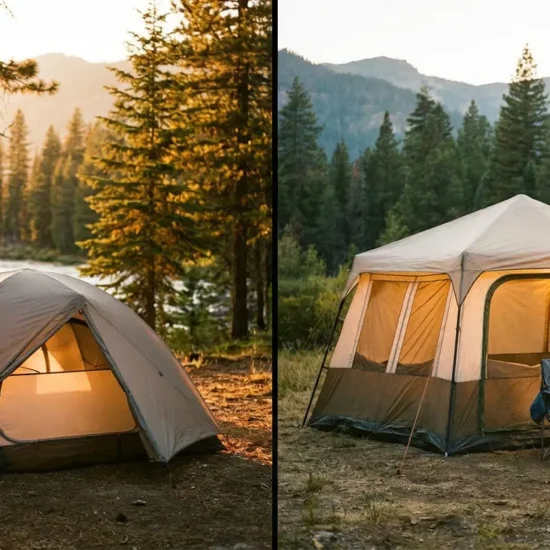
Let’s start with what most people think of when they hear “camping shelter”—the double-wall, freestanding tent.

Why they dominate:
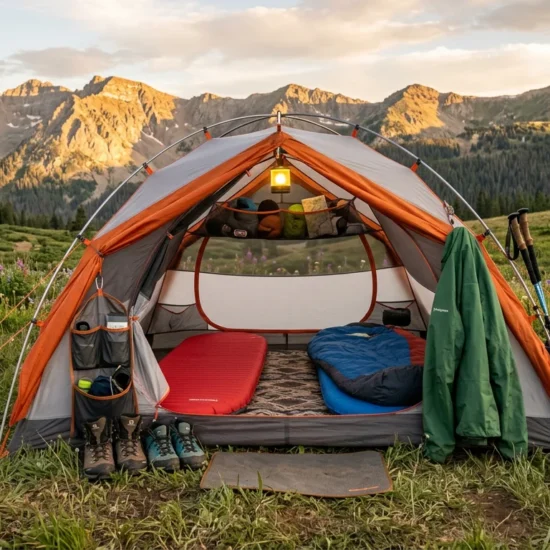
They’re foolproof. You can pitch them on any surface—sand, rock, packed dirt. No trees required. The inner mesh keeps bugs out while providing ventilation, and the rainfly protects you from weather. You get a clean floor, vestibules for gear storage, and enough space to sit up and change clothes comfortably.

For families, beginners, or anyone who wants a hassle-free experience, this is the answer. My parents are in their seventies, and I’d never recommend anything else for their annual camping trips. Setup is intuitive, and they work in virtually any conditions.

The trade-offs:
Weight. Even “lightweight” backpacking tents hover around 3-4 pounds for a two-person model. Poles add bulk. And let’s be honest—you’re sleeping in a nylon room. There’s something sterile about being completely enclosed. You miss the breeze, the sounds of the forest, the feeling of actually being outdoors.

What to look for:

  • Freestanding vs. Non-Freestanding: Freestanding tents use poles to create structure and can stand without stakes (though you should still stake them in wind). Non-freestanding tents require stakes and guy lines to pitch. Trade-off: freestanding tents are heavier but more versatile for site selection.
  • 3-Season vs. 4-Season: Three-season tents have more mesh for ventilation and are lighter. Four-season tents use heavier fabric, stronger poles, and less mesh to handle snow and high winds. Don’t buy a 4-season tent unless you’re actually winter camping—you’ll roast in summer.
  • Capacity: Tent capacities are optimistic. A “2-person” tent fits two people with zero room for gear. If you want space to move or store packs inside, go up one size.

Tarps: Freedom With a Learning Curve

A flat tarp is the most versatile shelter you can own—and the most intimidating for newcomers.

I converted to tarps about six years ago for most of my solo trips. The weight savings were incredible (my 8×10 Silnylon tarp weighs 10 ounces), but honestly, that wasn’t the main draw. It was the connection. Under a tarp, you feel the environment. You see the stars, hear the creek, smell the pine. It’s camping, not just sleeping outside.

The reality check:
Tarps require skill. You need to understand pitch configurations (A-frame, lean-to, flying diamond), know your knots, and read the terrain for wind direction and water drainage. A sloppy pitch in a storm means you’re getting wet.

I spent my first three nights with a tarp getting absolutely soaked because I didn’t tension the guy lines properly. There’s a learning curve, and you need to practice in good weather before trusting it in bad conditions.

What to look for:

  • Size matters: An 8×10 tarp works for solo trips. For two people, go 10×12. Bigger tarps give you more pitch options but add weight.
  • Catenary cuts: Look for tarps with curved edges (catenary cuts). They create cleaner pitches with less fabric sag when wet.
  • Attachment points: More tie-out points mean more pitch configurations. I won’t buy a tarp with fewer than eight attachment points.

Hammocks: The Comfort Champion (With Asterisks)

I have buddies who sold their sleeping pads and swear they’ll never sleep on the ground again. After testing hammocks in Central America and the Southeast U.S., I understand the appeal.

The advantages:
You don’t need flat ground. Rocky slopes, root-covered forest floors, muddy swamps—it doesn’t matter if you have two trees. Hammocks distribute weight evenly, eliminating pressure points that cause hip and shoulder pain. If you have back issues, this might be your answer.

The cold reality:
Air circulates beneath you, stealing heat faster than you’d believe. Even in 50-degree weather, you’ll freeze without proper insulation. You can’t just use a sleeping bag because you compress the insulation when you lie on it—it stops working on the bottom.

You need either an underquilt (a blanket that hangs under the hammock) or a sleeping pad designed for hammocks. Suddenly, your “simple” setup includes a suspension system, bug net, rain tarp, and insulation system. Weight and complexity climb fast, often matching or exceeding a traditional tent.

Bivy Sacks: The Minimalist’s Gamble

A bivy is essentially a waterproof shell for your sleeping bag. I use these for alpine climbs and fast-and-light missions where every ounce matters.

When they shine:
You don’t need a flat campsite. I’ve slept on narrow ledges where even a small tent wouldn’t fit. Setup is instant—unroll it and crawl in. In cold conditions, a bivy adds real warmth to your sleep system.

The psychological test:
Waiting out a storm in a bivy is claustrophobic torture. You can’t sit up, can’t read comfortably, can’t do anything but lie there. If you’re the type who likes hanging out in the tent playing cards or reading, stay far away. Bivies are for sleeping and nothing else.

Making Your Decision: The Honest Assessment

Here’s my framework. Answer these questions:

  1. How far are you carrying your gear? If less than a mile, prioritize comfort. If more than five miles, every ounce matters.
  2. What’s your experience level? Beginners should start with traditional tents. Master that before experimenting with tarps or hammocks.
  3. What environments do you camp in? Buggy forests need mesh. Exposed ridgelines need wind resistance. Wet climates demand full coverage.
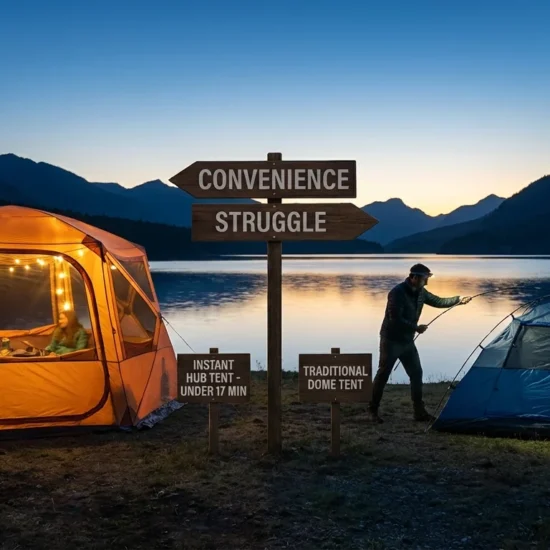
  4. How much setup time do you want? Freestanding tents win for speed. Tarps require time and adjustment.
  5. What’s your budget? Tarps are cheap ($50-$150). Quality tents run $200-$500. Hammock systems with all accessories can hit $300-$400.

Don’t let the gear nerds shame you into thinking you need the lightest, most technical setup. I’ve guided trips where the happiest campers had 6-pound REI tents while the miserable ones shivered in their ultralight tarps because they didn’t know how to pitch them properly.

The perfect sleep system is the one that lets you wake up rested, dry, and ready to enjoy the day—regardless of what it weighs or costs.

Related Posts