

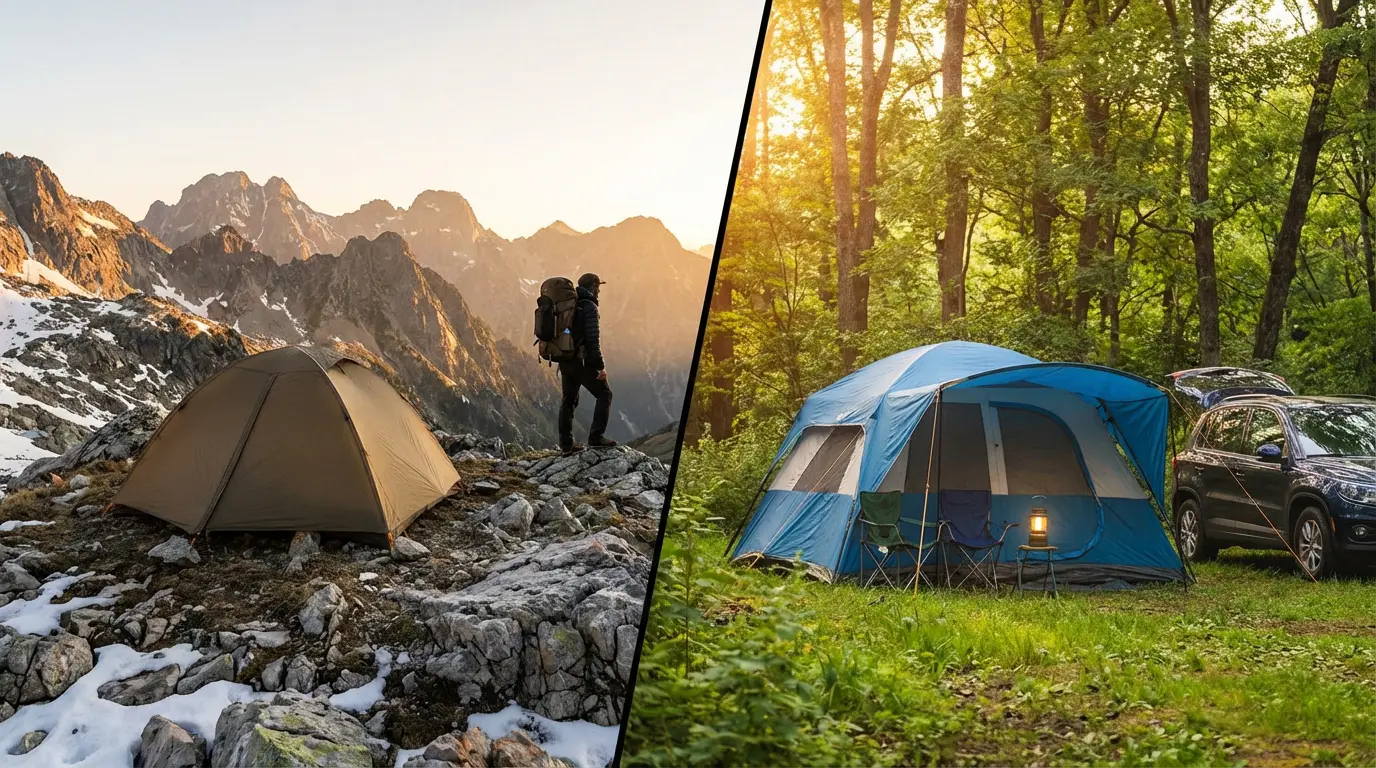
Weight is either the most important number on a tent’s spec sheet or completely irrelevant. Which one depends entirely on whether your car is parked 30 feet from your campsite or 12 miles behind you.
That single variable how far you carry your shelter drives almost every meaningful design decision that separates backpacking tents from car camping tents. Fabric thickness, pole material, packed volume, interior headroom, feature count: all of it flows from the same question. Are you hauling this on your back, or loading it into a trunk?
After nearly two decades of sleeping outside and five years designing tents professionally, I’ve developed strong opinions about this distinction. Most campers muddy the line between these two categories and end up with a tent that half-fits their life. Let’s fix that.
Why These Two Tents Exist as Separate Categories
Here’s what the marketing doesn’t tell you: a car camping tent used for backpacking doesn’t just make you miserable it actively damages the tent faster and puts real physical strain on your body. Car camping tents aren’t engineered to bounce around inside a pack, compress against a frame, and get rained on for three consecutive days at altitude.
Conversely, using an ultralight backpacking tent for car camping creates unnecessary wear on expensive technical fabrics and components designed for minimal use, not extended base camps. You’re paying a premium for grams you don’t need to save, and sacrificing the living space you actually have room for.
The categories exist for good reason. Respecting that distinction saves money, improves comfort, and gets you home safely.
The Weight Divide: Numbers That Actually Matter
This is the sharpest line between the two categories.
Backpacking tents typically weigh between 2 and 5 pounds for a two-person model. Ultralight options from brands like Big Agnes, Zpacks, and MSR push below that threshold. Every ounce matters when you’re covering 15 miles of switchbacks with 3,500 feet of elevation gain. A pound saved in your shelter means a pound available for water, food, or emergency gear.
Car camping tents tell a completely different story. Weight ranges from 10 to 20-plus pounds for family-sized models, and nobody cares because the trunk does the carrying. That extra weight buys you thick fabric, robust frames, standing headroom, and features that make a multi-night stay genuinely comfortable rather than merely survivable.
To put it plainly: if you’re shopping for a backpacking tent and the manufacturer doesn’t prominently list the packed weight, keep scrolling.
Materials and Construction: Where the Engineering Diverges
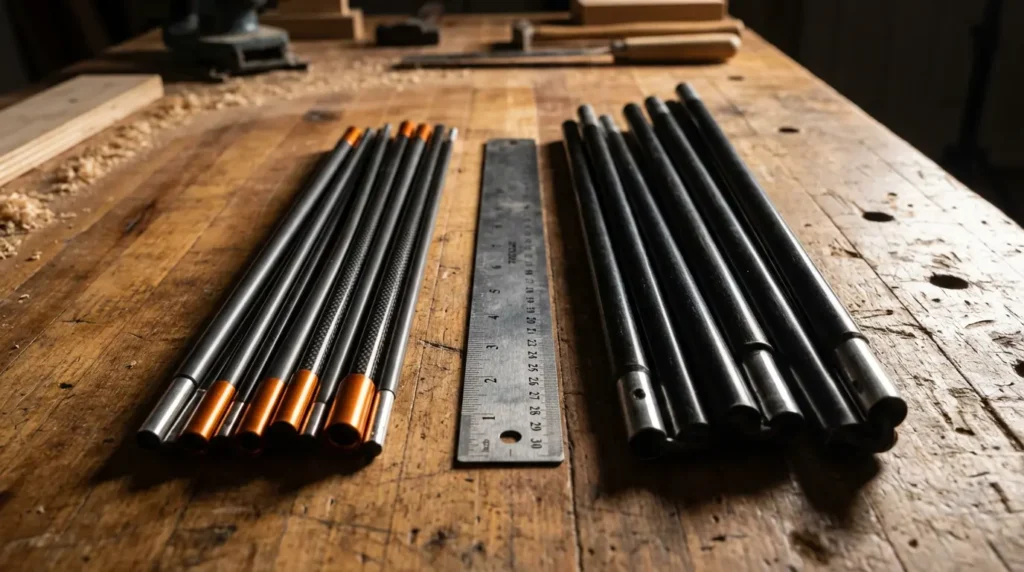
The physical materials inside these tents reflect their very different design priorities.
Backpacking tent fabrics run 20D to 40D nylon or polyester denier ratings indicating thread thickness. Lower denier means lighter and thinner, which means you need to be careful with sharp rocks, sticks, and rough ground. Poles are aluminum or carbon fiber, chosen specifically to minimize weight without sacrificing flex strength under wind load.
Car camping tent fabrics typically run 60D and higher, often with polyester or canvas options that laugh at abrasion and UV exposure. Steel or fiberglass poles prioritize rigidity over weight savings, and reinforced seams and oversized zippers are standard because nobody is counting grams. These materials genuinely absorb harder use over longer seasons.
I ran durability tests on both categories professionally, and the gap is significant. A quality car camping tent pitched at the same site three weekends in a row will show almost no wear. A backpacking tent subjected to the same treatment starts showing stress at the pole clips and seams within a season it’s just not built for that kind of static abuse.
Packed Size: The Backpack Test
Packed size is the physical manifestation of every engineering decision made in a backpacking tent’s design.
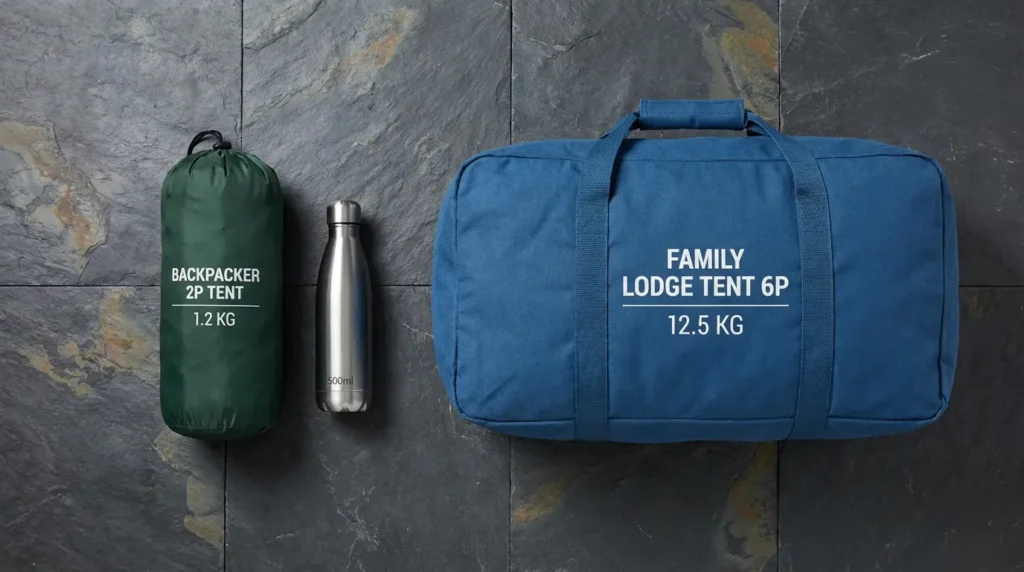
A properly designed backpacking tent compresses into a stuff sack roughly the size of a large water bottle. It needs to fit inside a 50-65L pack alongside a sleeping bag, food, water, clothing, and safety gear. This requires not just light fabric, but collapsible poles in short segments, minimalist pole counts, and stuff sacks engineered for compression rather than organization.
Car camping tents pack into bags that require trunk or roof storage. No hiker is carrying that. The packed size reflects the reality that the tent will travel horizontally in a vehicle, not vertically on a back. For car campers, this is a non-issue for backpackers, it’s disqualifying.
If you’re building a complete camp sleep system for trail use, your tent’s packed size dictates how everything else fits into your pack. It’s not just about the tent; it’s about your entire loadout.
Setup Time and Complexity
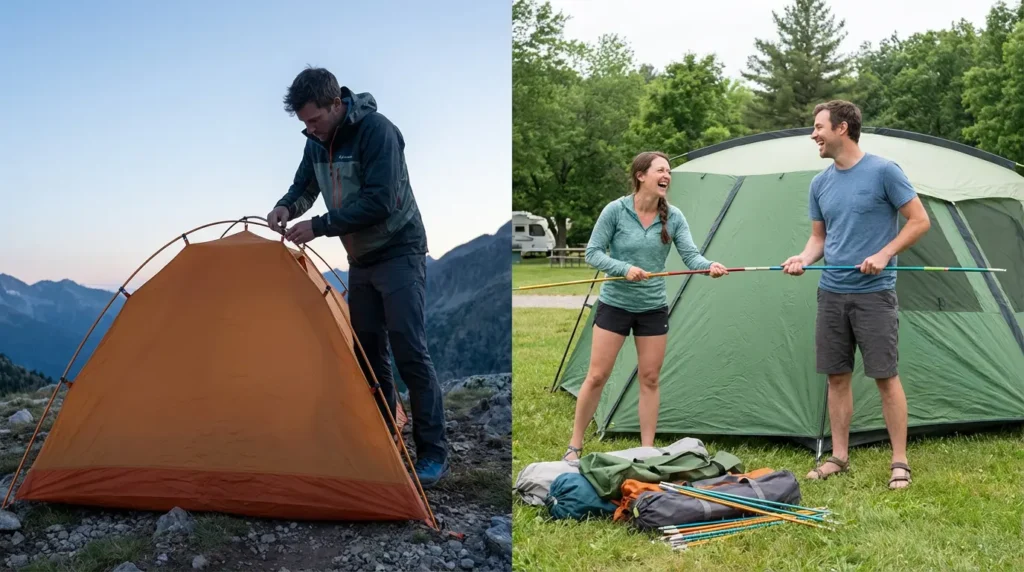
Exhausted at 8 PM after a long trail day, you don’t want a shelter that requires instructions and a second person.
Backpacking tents are engineered for solo, rapid deployment. Color-coded poles, clip-on systems, and minimal components mean most can go from stuff sack to fully pitched in 5 to 10 minutes. I’ve pitched my MSR Hubba in under four minutes in the dark. That’s the benchmark.
Car camping tents trade speed for space. Setup realistically takes 10 to 20 minutes for larger models and works better with two people. Multiple poles, room dividers, awnings, and gear vestibules add steps. This is a reasonable trade when you’re settled at a campsite for three nights, but it becomes frustrating on trips where you’re moving camp daily.
Weather Performance: Different Threats, Different Design
Both tent types handle weather but they’re optimized for different conditions and risks.
Backpacking tents are built low and aerodynamic to handle exposed, high-elevation terrain where wind is the primary threat. Flexible poles absorb gusts rather than snapping under them. The low profile reduces wind resistance dramatically. If you’re camping above treeline, on ridge lines, or in Patagonian conditions, this geometry keeps you alive.
Car camping tents are taller with more vertical wall exposure, making them more vulnerable to sustained high winds. However, they compensate with thicker materials, more robust stake systems, and additional guy-out points. They handle rain and mild weather conditions extremely well for their intended use in established campgrounds with natural windbreaks.
Understanding your typical environment matters enormously here. If you’re regularly camping in exposed mountain conditions, even as a car camper, consider a dome-style design with a lower profile. For more on structural performance under wind and rain, the differences I covered in the dome tent vs. cabin tent guide apply directly to understanding weatherproofing geometry.
Interior Space and Comfort Features
This is where car camping tents stop apologizing and simply win.
Backpacking tents offer just enough interior for sleeping and storing gear. Headroom is limited to the center point. You’re not standing up, entertaining, or setting up a cot. You’re sleeping, and that’s the honest extent of it.
Car camping tents are built for living. Multiple doors, large windows, room dividers for privacy, gear lofts, internal pockets, and full standing headroom transform a tent into a functional outdoor room. For families with children, this isn’t a luxury it’s the difference between enjoying a rainy day and dreading it.
The features list in car camping tents also reflects the longer stays they’re designed for: e-cable ports for running power inside, vestibules large enough for storage, and even screened-room attachments for bug-free outdoor living.
Regardless of which tent style you choose, the experience inside depends heavily on your camping layering system for warmth, and your camping lighting and power gear for usability after dark. The tent provides the shell; everything else fills it.
The Spec Sheet at a Glance
How to Choose: Three Honest Questions
Forget the marketing language. Answer these three questions and your decision is essentially made:
1. How far are you physically carrying this tent?
More than one mile on your back? You need a backpacking tent, full stop. Zero miles from the car? Weight is irrelevant prioritize comfort and durability.
2. What conditions will you regularly face?
Exposed ridgelines, high elevation, wind, and unpredictable weather demand the aerodynamic geometry and light flex-pole systems of backpacking tents. If you’re camping in established campgrounds with trees and natural windbreaks, car camping tent materials handle that environment perfectly well.
3. How many nights are you staying?
One or two nights: setup speed and portability matter most. Three nights or more: living space, comfort features, and durability become the priority.
If your camping life genuinely spans both trail and car site use, don’t compromise with one tent that does both poorly. Consider the alternative camping shelters guide for lightweight options like tarps and bivy systems that complement a heavier base camp tent letting you own two targeted tools instead of one inadequate compromise.
The right tent is the one that disappears into the background of your trip. When the shelter fits the adventure perfectly, you stop thinking about it which means you’re free to think about everything that actually matters.