


You know the feeling. You wake up at 5 a.m., back aching, hips protesting every move, having spent the last six hours basically lying on a glorified yoga mat while a rogue pebble made its presence known through two inches of foam. Coffee helps, barely. The hike you planned feels like a death march before it even starts. Now contrast that with crawling out of a genuinely great camping mattress, stretching like a happy golden retriever, watching the sun crack gold over a ridgeline, and thinking, “I could live out here.” That’s not a minor upgrade. That’s the difference between a camping trip you endure and one you remember fondly for years.
Choosing the right camping mattress is honestly one of the highest-return gear investments you can make. We dug deep into the 2026 lineup, cross-referencing expert field reports, real user data, and hands-on spec analysis across nine top models, to bring you this complete guide. Whether you’re a weekend car camper, a couple sharing a tent, or someone who camps in conditions that would make most people stay home, there’s a perfect mattress in here for you.
Quick Picks at a Glance
| Category | Product | R-Value | Approx. Price |
|---|---|---|---|
| Best Overall | Exped MegaMat 10 LXW | 8.1 | ~$260 |
| Most Luxurious | Therm-a-Rest MondoKing 3D XXL | 7.0 | ~$290 |
| Best All-Foam | HEST Foamy Wide | 8.8 | ~$379 |
| Best for Couples | NEMO Roamer Double | 6.0 | ~$400 |
| Best Budget | REI Campwell XL | 7.0 | ~$140 |
| Best Lightweight Crossover | Paria Recharge XL | 4.7 | ~$100 |
Best camping sleeping bags – pair any of these with the right sleeping bag for a complete, well-matched sleep system.
How We Evaluate These Camping Mattresses
Every mattress on this list was assessed across the same four criteria. We don’t play favorites or let marketing language cloud the analysis, if something underperforms in the real world, we say so.
Our Evaluation Criteria
Comfort : We looked at material softness, internal foam structure, and how each mattress performs for different sleep positions. A mattress that’s bliss for a back sleeper can be a pressure-point nightmare for a side sleeper. Thickness, edge stability, and resistance to “bottoming out” on uneven ground all factored into the score.
Ease of Use : Nobody wants to spend 20 minutes wrestling with a confusing valve system in the dark after a long drive. We assessed setup time, valve design logic, and how easily each mattress deflated and packed back into its stuff sack the following morning. Frustration factor is real, and we weighted it accordingly.
Warmth (R-Value) : R-value is the standardized measure of a mattress’s resistance to heat loss through the ground. We cross-referenced manufacturer R-value claims against independent lab testing data and real-world user reports across a range of temperatures. Cold ground is a silent sleep killer, and the R-value section of this guide will help you match insulation to your conditions.
Packed Size : For car camping, packed size matters less than for backpacking, but it still needs to fit in a trunk alongside a cooler, a tent, and everyone’s bags. We noted real-world packed dimensions and flagged any products where the spec sheet was more optimistic than reality.
The Gold Standard: Our Top Overall Best Camping Mattresses
These two are the cream of the 2026 crop. If budget isn’t the primary concern, either of these will genuinely change how you feel about sleeping outdoors.
The All-Around Champion: Exped MegaMat 10 LXW
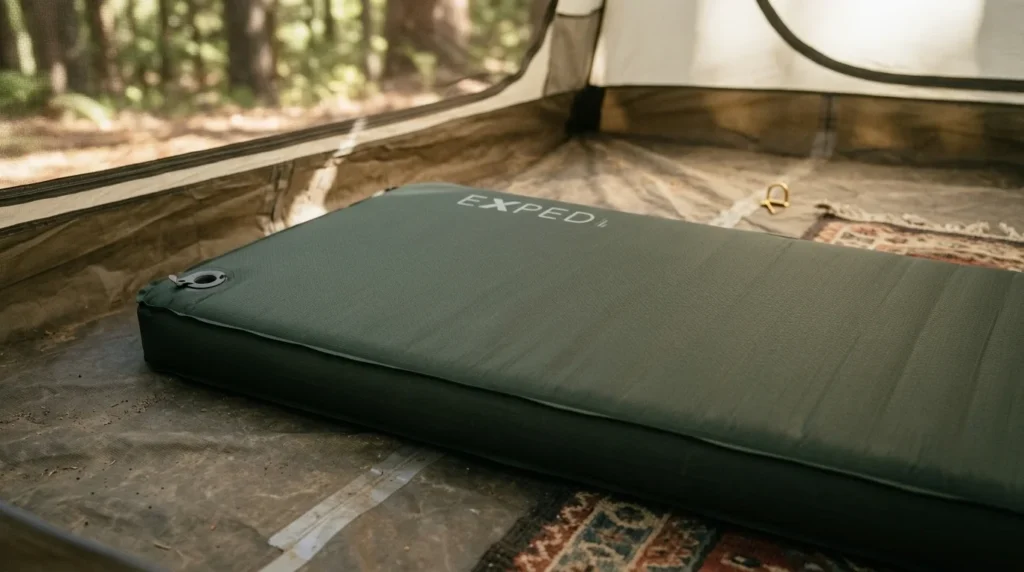
The Exped MegaMat has held a top-ranking position across multiple gear publications for years, and the 2026 edition continues that streak without compromise. This is the mattress we point people to when they ask for the absolute best without caveats. It’s thicker than most alternatives, warmer than anything near its price point, and thoughtfully designed down to the stuff sack.
Specs: Self-inflating | R-Value: 8.1 | Thickness: 4 inches | Weight: 5 lb 11.7 oz | Price: ~$260
Pros:
- Four inches of open-cell foam with cored channels delivers exceptional cushion, rocks and roots simply vanish beneath you
- Vertical sidewalls mimic an actual mattress edge and prevent rolling off during the night, a genuine game-changer for restless sleepers
- R-value of 8.1 makes it legitimately four-season capable, handling freezing temperatures without complaint
- Brushed polyester surface is noticeably soft against bare skin
- The stuff sack doubles as a partial inflation pump, useful for topping off air after self-inflation
- Deflation valve is simple and fast, pack-up typically takes under five minutes
Cons:
- At ~$260, it’s an investment rather than an impulse buy
- Packed size (roughly 26 x 7 inches) is bulkier than air-only alternatives
- Heavier than manual air options at nearly 6 pounds
- Self-inflation takes 10–15 minutes to fully complete; patience required
Best for: The camper who wants the absolute best sleep possible and is happy to trade a bit of trunk space for hotel-quality rest every single night outdoors.
Quick tip: Open the MegaMat’s valve as soon as you set up your tent. By the time you’ve eaten dinner and sorted your gear, it’ll be almost fully inflated, zero effort, zero lung capacity required.
The Ultimate Luxury : Therm-a-Rest MondoKing 3D XXL
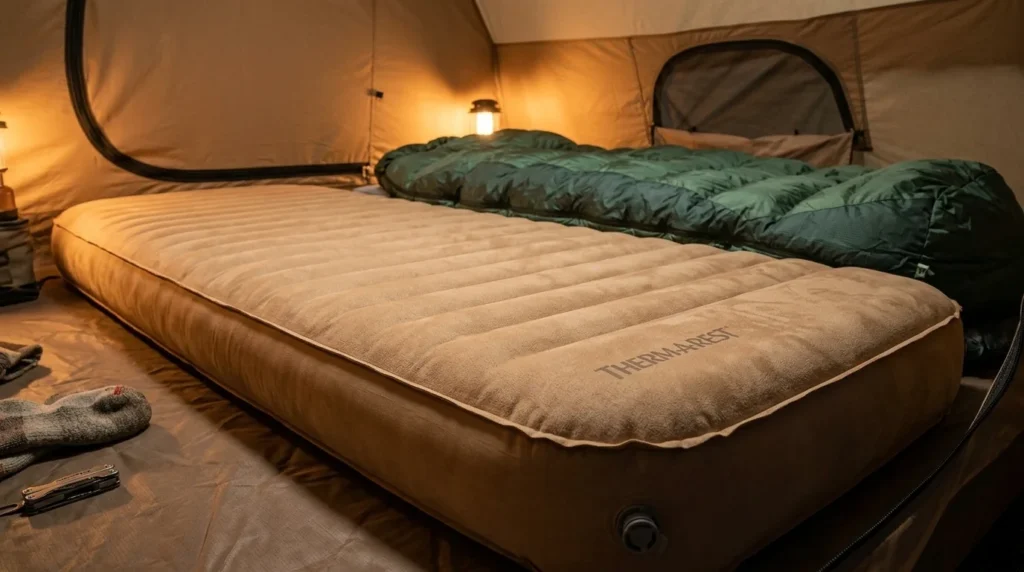
If the MegaMat is a great hotel bed, the MondoKing 3D XXL is the presidential suite. At 4.25 inches thick, it’s the chunkiest single-person mattress in our 2026 lineup, and at 80 inches long it finally gives tall campers the full-length coverage they’ve been denied by shorter options. The chamois-like surface texture is something you have to feel to understand, it’s genuinely luxurious.
Specs: Self-inflating | R-Value: 7 | Thickness: 4.25 inches | Weight: 5 lb 8 oz | Price: ~$290
Pros:
- Thickest mattress in the 2026 lineup at 4.25 inches, complete isolation from uneven ground
- 80-inch length accommodates sleepers up to 6’5″ with room to spare
- Chamois-like surface is plush against skin, especially on cold nights
- Dual-valve system inflates quickly and deflates even faster
- R-value of 7 handles three-season and most shoulder-season camping without issue
Cons:
- The priciest single-person option at ~$290
- Pump sack nozzle can be fiddly to attach securely, especially in low light
- Long packed cylinder can be awkward in tighter trunk configurations
- At nearly 5.5 pounds, it’s not featherlight even by car camping standards
Best for: Tall sleepers and anyone who treats maximum plush comfort as a non-negotiable priority. One long-term user described it simply as “the best outdoor sleep I’ve ever had.”
Specialists: Best for Couples, Cold Weather, and Durability
Not every camper fits the same mold, some need a mattress that laughs at freezing temperatures, others are shopping for two, and a few have simply had one too many inflatable mattresses die on them mid-trip. The three picks below are purpose-built for those specific situations, each doing one thing exceptionally well rather than trying to be everything to everyone.
The “No-Air” Indestructible Choice : HEST Foamy Wide
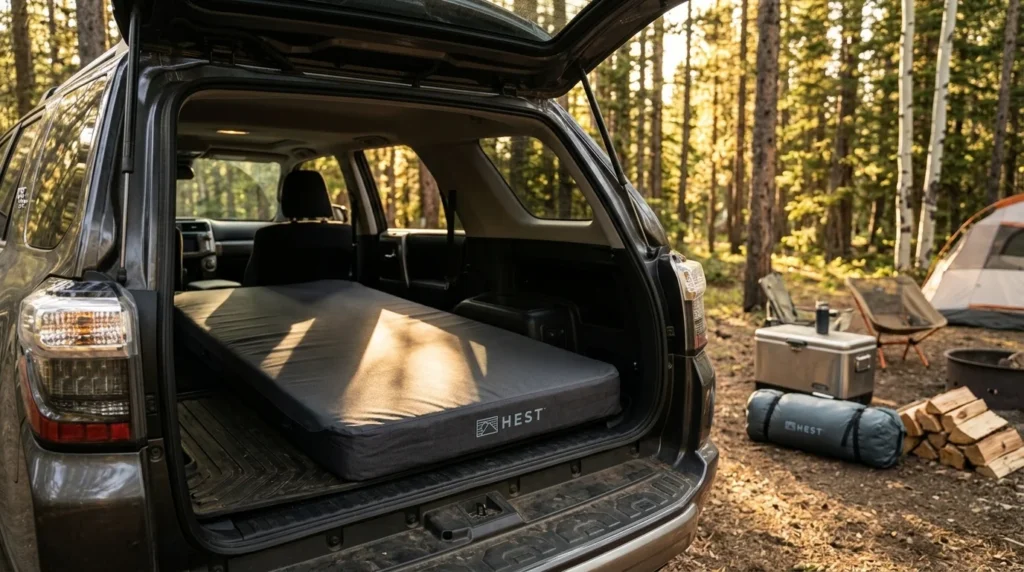
Here’s the honest truth about inflatable camping mattresses, they can and do develop leaks. A slow puncture discovered at 2 a.m. on a cold desert floor is a miserable way to spend a night. The HEST Foamy is the antidote to that anxiety: solid memory foam, zero inflation, zero failure points, and an R-value higher than anything else on this list.
Specs: Solid foam | R-Value: 8.8 | Thickness: 4 inches | Weight: 13 lb | Price: ~$379
Pros:
- Highest R-value in our lineup at 8.8, exceptional warmth retention even on genuinely cold ground
- No inflation means no chance of a mid-night deflation disaster, ever
- Memory foam molds to body contours like a proper mattress at home
- Claw-resistant and easy to wipe clean, the only mattress we’d confidently recommend for trips with dogs
- Long-term durability vastly outlasts any inflatable design over multi-year use
Cons:
- Heaviest option by a large margin at 13 pounds, strictly a car camping or truck camping item
- Largest packed footprint on the list; needs a roof rack bag or dedicated truck bed space
- Premium price for a product that is, at its core, a high-quality foam slab
- Doesn’t compress meaningfully for storage
Best for: Basecamps, truck camping, SUV overlanding setups, and families with pets who’ve written off inflatable mattresses for good.
Quick tip: Roll the HEST Foamy tightly with the integrated straps the evening before your trip. It straps cleanly to an SUV roof rack or sits flat in a truck bed, keeping it out of your main packing space entirely.
The Luxury Duo : NEMO Roamer Double
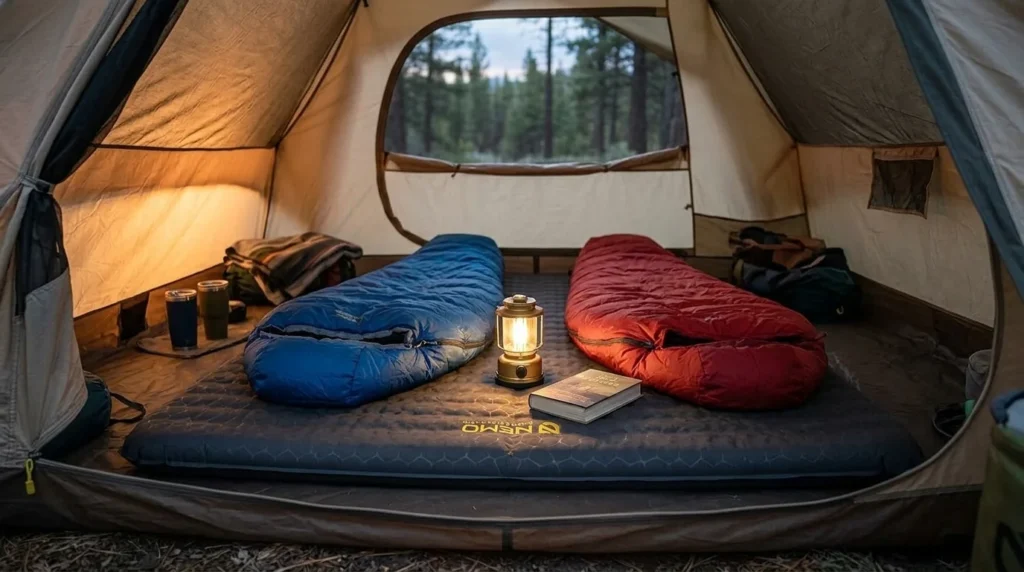
Finding a genuinely good double camping mattress for couples is harder than it sounds. Too many options are weirdly thin, comically unstable when one person shifts, or the size of a small aircraft carrier when rolled up. The NEMO Roamer Double solves all three problems better than anything else at this price point, and it does it quietly, which matters more than you think at midnight.
Specs: Self-inflating | R-Value: 6 | Thickness: 4 inches | Weight: 7 lb 8 oz | Price: ~$400
Pros:
- 52-inch width gives two adults a genuinely spacious shared sleep surface
- Foam-over-air construction eliminates the crinkly noise that plagues most air-based double options, your partner shifting won’t wake you up
- R-value of 6 handles temperatures down to around 20°F when paired with appropriate sleeping bags
- Packs substantially smaller than comparable all-foam double designs
- 75D polyester shell is both durable and soft to the touch
Cons:
- At ~$400, it’s the most expensive single item on this list
- 7.5 pounds may feel heavy loading a compact vehicle
- R-value of 6 starts to feel marginal below 20°F without a well-rated sleeping bag complement
Best for: Couples who want a true bed-away-from-home experience, especially inside a spacious family or couple’s tent.
Real-world example: Two campers using the Roamer Double during a late October trip in southern Utah faced overnight lows of 28°F. Paired with 20°F-rated sleeping bags, both slept soundly through to sunrise without any sensation of cold coming up from the ground.
The Best Value & Budget Camping Mattresses
A great sleep doesn’t require spending $300. These two options prove that a budget camping mattress can still be a genuinely comfortable camping mattress, you just need to know what to look for.
The Smart Budget Pick : REI Campwell XL
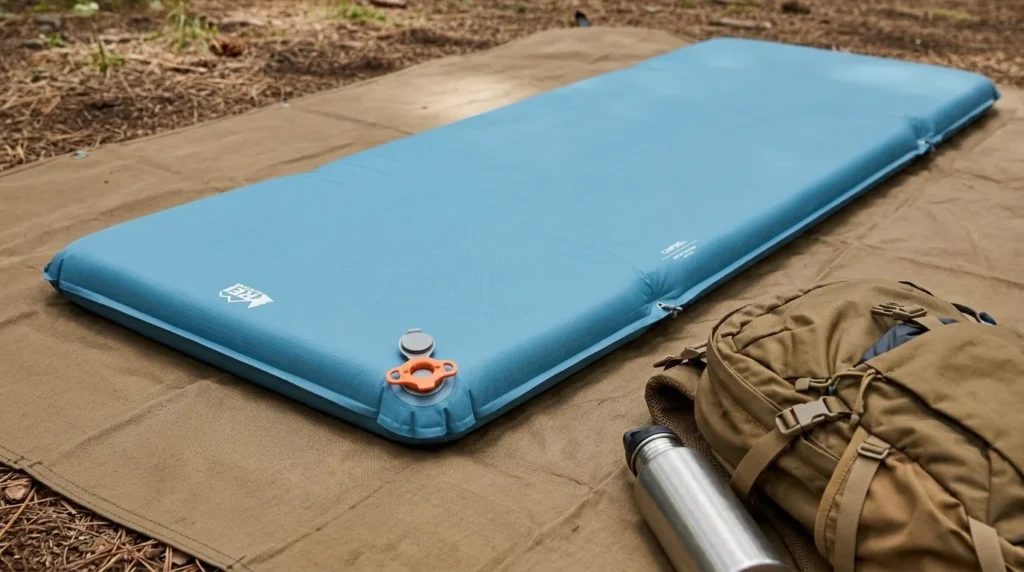
The REI Campwell XL is the standout value story of the 2026 lineup. Its R-value of 7 matches mattresses costing nearly twice as much, its self-inflating design keeps setup simple, and REI’s return policy makes it a low-risk first purchase for campers upgrading from something truly terrible. At ~$140, it’s hard to argue with.
Specs: Self-inflating | R-Value: 7 | Thickness: 2.5 inches | Weight: 4 lb 8 oz | Price: ~$140
Pros:
- R-value of 7 punches dramatically above its price bracket, warm enough for most shoulder-season camping
- Lower 2.5-inch profile fits cleanly under low-clearance cots and in compact car trunks
- Lightweight for a self-inflating design at 4.5 pounds
- Flat valve design is straightforward and intuitive, no learning curve
- REI’s generous return policy is a meaningful safety net for first-time buyers
Cons:
- 2.5-inch thickness is less forgiving on rocky or root-heavy terrain than 4-inch options
- Surface texture feels less premium compared to higher-end picks
- Side sleepers needing extra hip and shoulder cushion may find it slightly firm
- Doesn’t carry the same feel of indulgence as the top-tier options
Best for: Beginners, occasional campers, and anyone who needs a slim, warm option for a compact car or cot-compatible setup.
The Lightweight Crossover : Paria Recharge XL
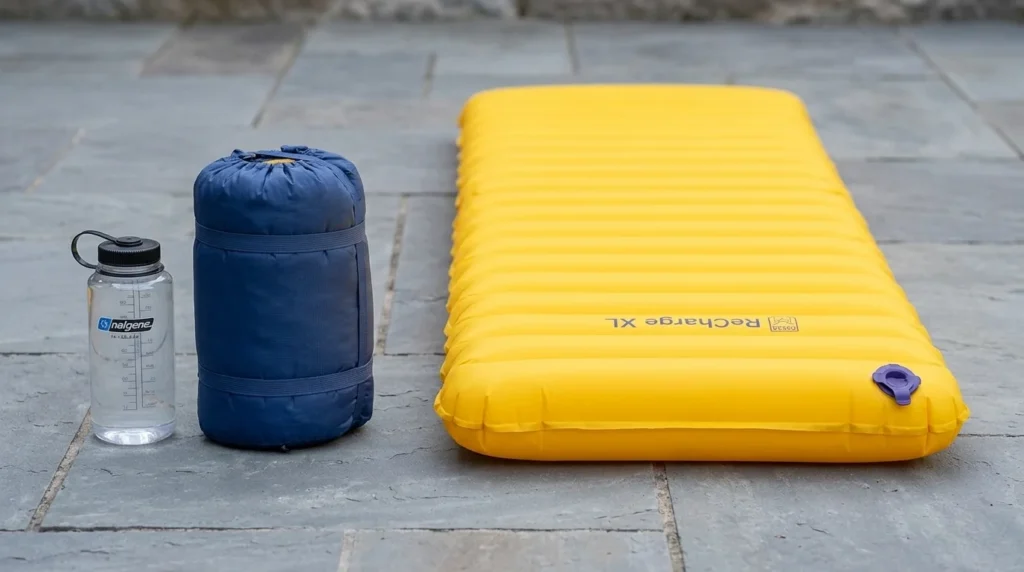
Most camping mattresses live permanently in the car. The Paria Recharge XL is the rare exception, at just 1 lb 10 oz, it’s light enough to slip into a backpack for an overnight trail trip, yet thick enough to feel like a proper comfortable camping mattress on a car camping weekend. At $100, it’s the best value per ounce on this list.
Specs: Manual air inflation | R-Value: 4.7 | Thickness: 4 inches | Weight: 1 lb 10 oz | Price: ~$100
Pros:
- Under 2 pounds, a viable option for short backpacking trips, not just car camping
- Full 4 inches of inflation depth for a cushioned, thick sleep surface
- Most affordable “thick air” option on the entire list
- Packs down to roughly the size of a 1-liter water bottle
Cons:
- Requires manual inflation, expect 10–15 breath puffs or a small pump bag
- R-value of 4.7 is comfortable for three seasons but marginal below 25°F
- Air-only construction is slightly noisier than foam-core designs when shifting at night
- Less long-term durability than self-inflating designs under heavy repeated use
Best for: Budget-conscious campers who split time between car camping and occasional overnight hikes and want one versatile mattress that handles both.
Real-world example: A solo hiker using the Paria Recharge XL on a two-night loop through the Jemez Mountains in New Mexico at 8,500 feet elevation found that paired with a 20°F sleeping bag, the R-value of 4.7 was entirely sufficient through nights that dropped to 34°F, no cold floor intrusion whatsoever.
Buying Guide : How to Choose Your Perfect 2026 Camping Mattress
The Three Types of Camping Mattresses Explained
Understanding the core design differences is the fastest shortcut to making the right call for your situation.
Solid foam mattresses like the HEST Foamy are indestructible, highly insulative, and require zero setup, but they’re heavy and bulky, making them exclusively a car camping tool. Self-inflating mattresses like the MegaMat and Campwell XL combine open-cell foam with an air chamber. They partially inflate on their own, offer excellent insulation, and strike the best balance of comfort and packability for most car campers. Manual air mattresses like the Paria Recharge XL are the lightest and pack the smallest, but require active inflation and are more susceptible to puncture over time.
Most car campers land happiest with a self-inflating design. If you have dogs or kids, go foam.
R-Value for Camping Mattresses: A Practical Guide
R-value is the single most important insulation specification on any camping mattress. The ground steals body heat faster than cold air does, a fact that surprises many people on their first chilly-night camping trip. Here’s a practical breakdown:
- R-value 1–2: Summer camping only, temperatures consistently above 55°F
- R-value 3–4: Three-season camping down to around 35°F
- R-value 5–7: Cold weather and shoulder-season camping below 30°F
- R-value 8+: Winter camping and snow camping
Don’t assume a warm sleeping bag covers you. It doesn’t insulate your underside. Your camping mattress handles the thermal blocking from below, and your bag handles everything above. They work as a system, which is exactly why matching them matters.
Choosing by Camper Type
Car campers and weekend warriors should prioritize comfort and R-value over weight. The MegaMat 10 LXW or MondoKing 3D XXL are the right calls here. You’ll never regret the extra thickness after a long hiking day.
Couples should look seriously at the NEMO Roamer Double before buying two separate mattresses. The stability, noise reduction, and sheer comfort of sharing a purpose-built double unit generally outperforms two singles pushed together.
Side sleepers need at least 3.5 inches of thickness to prevent hips and shoulders from pressing through to the ground. The MondoKing 3D XXL and MegaMat are the strongest picks in this category.
Budget campers will get the most from the REI Campwell XL. The warmth-per-dollar ratio is genuinely impressive, and it’s a solid upgrade from any entry-level mattress you may have been tolerating.
Families and pet owners should go straight to the HEST Foamy. It’s the only mattress on this list that laughs at dog claws, kid elbows, and years of abuse without developing a slow leak.
Quick tip: Always carry a self-adhesive repair patch kit regardless of which mattress you choose. Clear your tent floor of debris before laying any inflatable mattress down, and keep sharp objects away from the sleeping area. A puncture at midnight is entirely avoidable with five minutes of tent-floor prep.
Frequently Asked Questions About Camping Mattresses
What is the best camping mattress for car camping in 2026?
For most car campers, the Exped MegaMat 10 LXW is the best overall choice, it combines a 4-inch thickness, an R-value of 8.1, and a self-inflating design that makes setup effortless. If you want maximum luxury, the Therm-a-Rest MondoKing 3D XXL at 4.25 inches thick is even more indulgent.
What thickness do I need in a camping mattress?
For car camping on mixed or uneven terrain, 3.5 to 4 inches is the sweet spot. You’ll never feel rocks or roots through it, and it’s thick enough to support side sleepers properly. Thinner than 2.5 inches is only really acceptable on perfectly flat, smooth ground.
What R-value should my camping mattress have for cold-weather camping?
For shoulder-season camping in temperatures down to around 30°F, aim for R-value 5 or above. For camping below 25°F, you want R-value 7 or higher. For snow camping or winter basecamp use, R-value 8+ is the standard.
What’s the difference between foam, self-inflating, and air camping mattresses?
Foam is the most durable and warmest but also the heaviest. Self-inflating combines foam and air for a balanced, packable solution that’s ideal for most car campers. Air-only options are the lightest and most packable but require active inflation and carry a higher puncture risk over time.
How do I keep my camping mattress from getting punctured?
Clear your tent floor of sticks, rocks, and sharp debris before laying the mattress down. Use a tent footprint or interior groundsheet. Keep knives, keys, and pet claws away from the sleeping surface. And always carry a small adhesive patch kit, they’re inexpensive, lightweight, and genuinely lifesaving when you need one.