

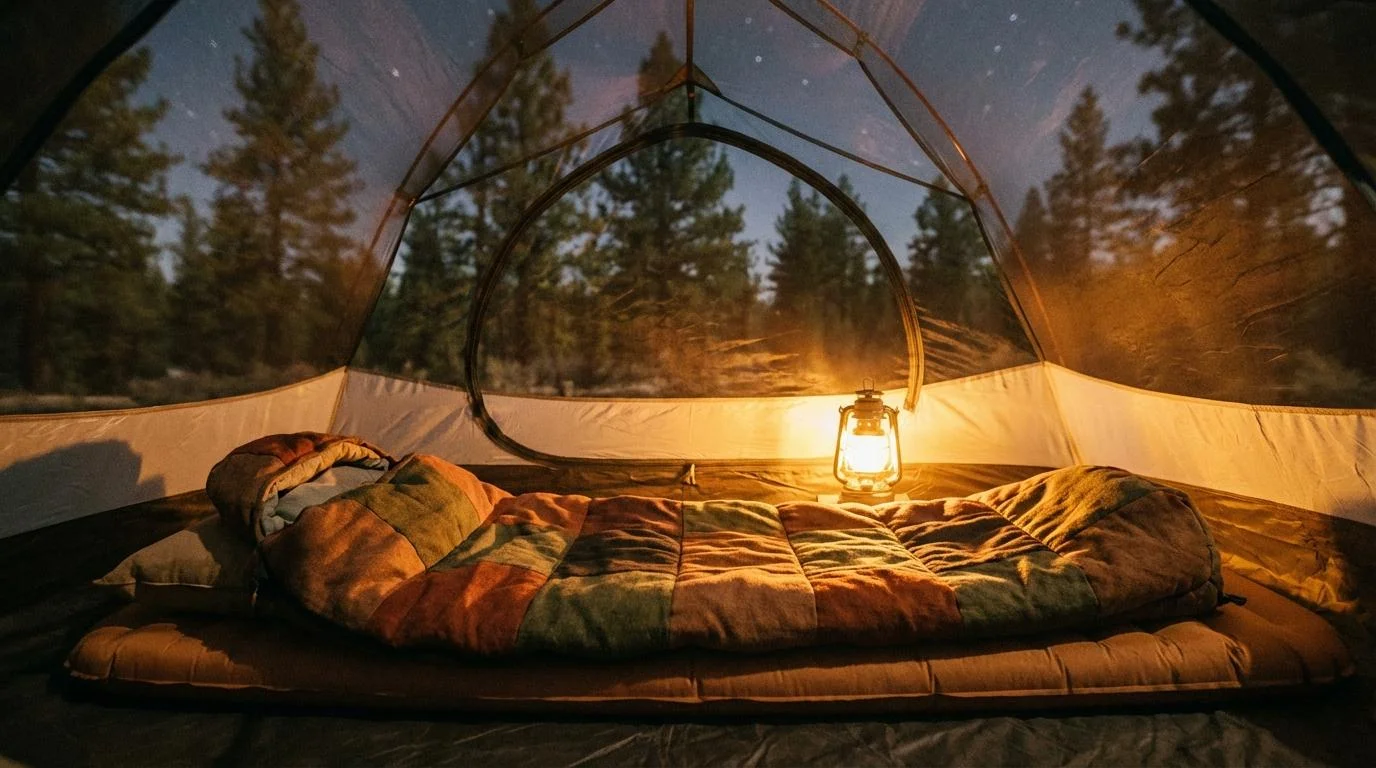
Most campers don’t realize they’ve bought the wrong sleeping bag until it’s 2 AM and they’re wide awake, pulling a fleece over their face and wondering why they ever thought camping was fun. The bag is flat. The ground is cold. Every layer they packed is already on their body. That’s not bad luck, that’s what happens when you grab a bag based on price tag alone without understanding what actually makes the best camping sleeping bags worth owning.
Now picture a completely different night. The temperature outside your tent has dropped into the low 40s, but you’re cocooned in a lofted, flannel-lined sleeping bag with a draft collar sealed snug around your neck and a hood roomy enough for the pillow you brought from home. Your warm camping sleeping bag does exactly what it promised. You’re asleep in minutes.
The gap between those two nights comes down to one decision, and it’s not about spending more, it’s about spending smart. Whether you’re eyeing a budget camping sleeping bags for weekend car camping or ready to invest in a premium double camping sleeping bag for couples, the right pick exists at every price point. Understanding temperature ratings for camping sleeping bags, the real difference in a down vs synthetic sleeping bag, and which shape fits how you actually sleep is all it takes. We’ve done the research across dozens of models so you can walk into your next trip with the right bag the first time.
Top Picks at a Glance
| Category | Our Pick | Temp Rating | Fill Type | Price Range |
|---|---|---|---|---|
| Best Overall | REI Co-op Siesta Hooded 20 | 20°F | Synthetic | ~$149 |
| Warmest Pick | ALPS OutdoorZ Redwood | -10°F | Synthetic/Flannel | ~$170 |
| Best Budget | Coleman Brazos | 30°F | Synthetic | ~$59 |
| Best Double | NEMO Jazz 30 Double | 30°F | Recycled Synthetic | ~$380 |
| Best Crossover | NEMO Disco 15 | 15°F | 650fp Down | ~$280 |
| Best Luxury | Feathered Friends Penguin YF 20 | 20°F | 900+ fp Down | ~$619 |
How We Evaluate the Best Camping Sleeping Bags
Choosing what earns a spot on this list goes well beyond reading the label. We cross-reference performance data, pore over expert reviews from leading outlets, analyze EN/ISO temperature certification details, and weigh real camper feedback across multiple seasons. Bags are evaluated across a wide temperature spectrum, from sub-zero alpine overnights to sticky 70°F summer nights, covering diverse conditions from damp Pacific Northwest campgrounds to dry high-desert sites.
We don’t just accept a manufacturer’s claims at face value, because many brands still print survival ratings on their bags, not comfort ratings. The difference between those two numbers can mean the difference between a great night’s sleep and the shiver-fest described above.
Key Metrics We Score On
- Warmth : Does the bag deliver near its rated temperature, especially in humid or damp conditions where synthetic and down insulation behave very differently?
- Comfort : How does the interior fabric feel after hours of contact? Is there room to roll over without that trapped, mummified sensation?
- Build Quality : Zipper durability, baffle stitching integrity, draft collar construction, and how well the bag holds its loft after repeated washings.
- Value : Not who’s cheapest, but which bags deliver the most performance per dollar for the actual needs of a weekend car camper. Most bags are labeled with a “lower limit” rating, the coldest temperature at which a cold-adapted adult male won’t freeze. For the average camper, especially anyone who runs cold, add 10–15°F to whatever’s printed on the bag to find your real comfort threshold. That “20°F bag” is actually comfortable around 30–35°F for most people.
Best Overall Camping Sleeping Bag : REI Co-op Siesta Hooded 20
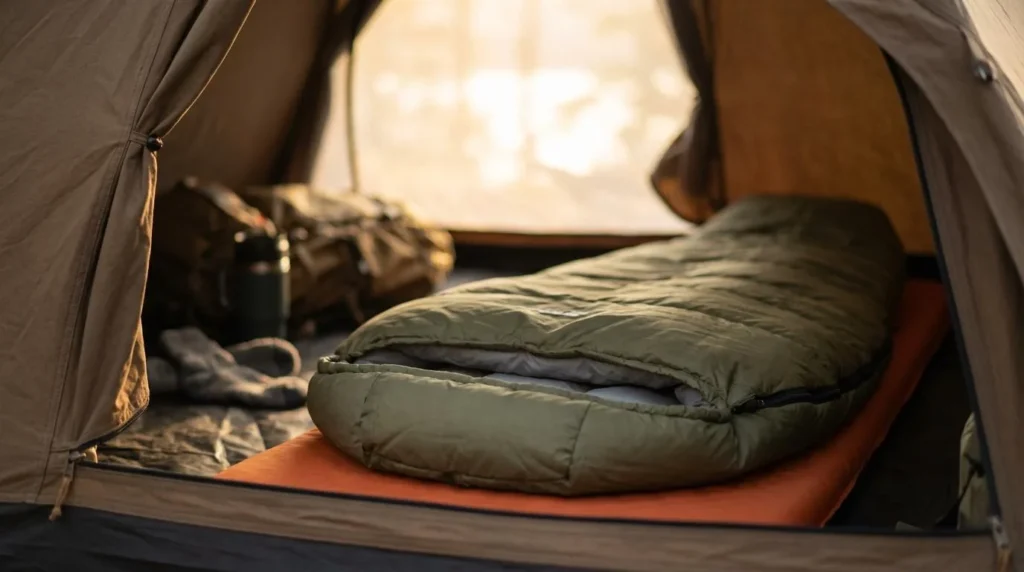
The REI Co-op Siesta Hooded 20 is the bag we’d recommend to just about any three-season car camper who asks us where to start. It strikes an unusually well-balanced combination of plushness, genuine warmth, and honest value, all without demanding backpacking-level spend. The spacious rectangular cut with an integrated hood large enough for a real pillow from home is the kind of detail that separates good camping bags from great ones.
Quick Specs : 20°F temperature rating | Recycled synthetic fill | Rectangular hooded shape | ~5 lbs 5 oz | Available in Regular, Long, Regular Wide, and Long Wide | Full-length draft tube | Anti-snag zipper | Mini side zipper for venting.
Pros:
- Oversized hood accommodates a full-size pillow, a genuine comfort game-changer at the campsite
- Quilted baffle design virtually eliminates cold spots throughout the sleeping surface
- Inclusive sizing lineup covers petite through tall and wide builds
- Mini side zipper folds back the top for a “open blanket” feel on warm nights
- Machine washable with standard detergent, minimal maintenance required
Cons:
- Synthetic fill won’t compress anywhere close to a down bag, bulky to store and haul
- Zipper can snag on the shell fabric if you’re rushing in the dark
- On very cold nights below 25°F, cold sleepers will want a liner for extra insurance
Best for: The camper who wants one reliable, go-everywhere bag for late spring through early fall adventures, someone who values all-night comfort over lightweight packability.
The Warmest Pick for Cold Sleepers : ALPS OutdoorZ Redwood
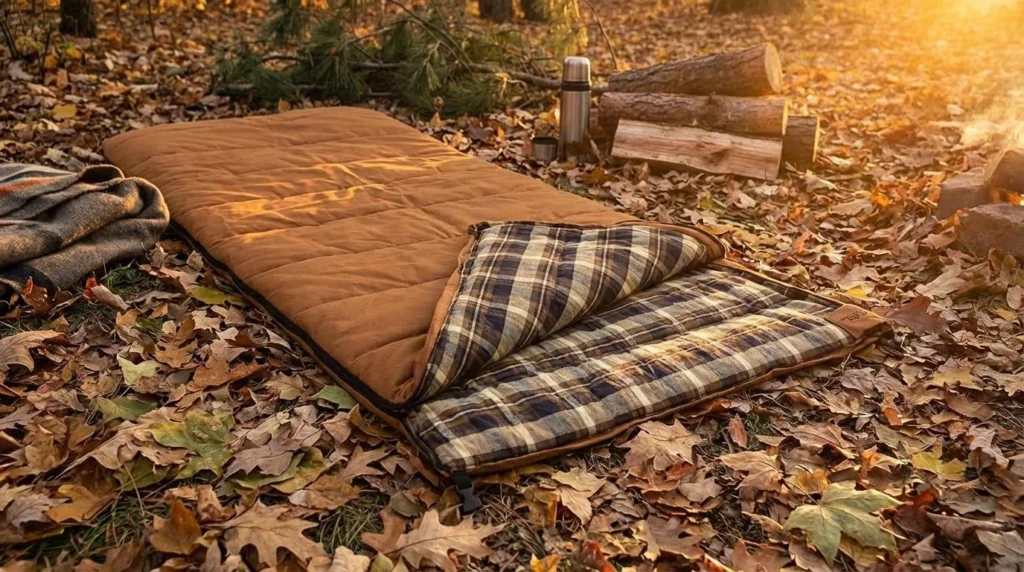
If staying warm is your single non-negotiable priority and you couldn’t care less about packed size, the ALPS OutdoorZ Redwood is the warm camping sleeping bag you’ve been looking for. Its 100% cotton flannel lining and rugged canvas exterior produce a “weighted blanket” sensation that’s genuinely unlike anything a standard polyester bag delivers, and the construction is built to shrug off the punishment of serious, frequent camping.
Quick Specs: -10°F claimed rating (real comfort closer to 15–20°F for average sleepers) | TechLoft synthetic fill | Rectangular shape | ~11.5 lbs | 80″L × 38″W | Canvas outer shell | Cotton flannel lining | Hood cinch cord.
Pros:
- Flannel lining is the most comfortable single-bag interior in its class, genuinely cozy against bare skin
- Heavy canvas exterior resists snags, campfire embers, and general camp abuse better than polyester shells
- “Weighted blanket” feel from the substantial fill helps restless sleepers settle faster
- Warm enough to confidently handle shoulder-season and autumn car camping trips
- Even heat distribution across the entire bag surface, no cold patches
Cons:
- At nearly 12 pounds, this is a strictly car-camping bag, not a candidate for any trail carry
- Packed size is enormous and won’t compress meaningfully
- Cotton flannel absorbs moisture; avoid using in consistently wet climates without a waterproof tent setup
- Shell temperature claims reflect survival ratings, not genuine comfort ratings
Best for: Cold sleepers tackling high-elevation campsites in September or October, or anyone who treats camping comfort as a priority and wants the coziest single-sleeper bag money can buy at this price point.
Quick Tip: Even the warmest sleeping bag won’t save you from cold ground. A significant portion of your body heat escapes downward into the earth overnight. Always pair your bag with a sleeping pad rated R-value 3.0 or higher for three-season car camping, your bag is only half the insulation equation.
Best Budget Camping Sleeping Bag : Coleman Brazos
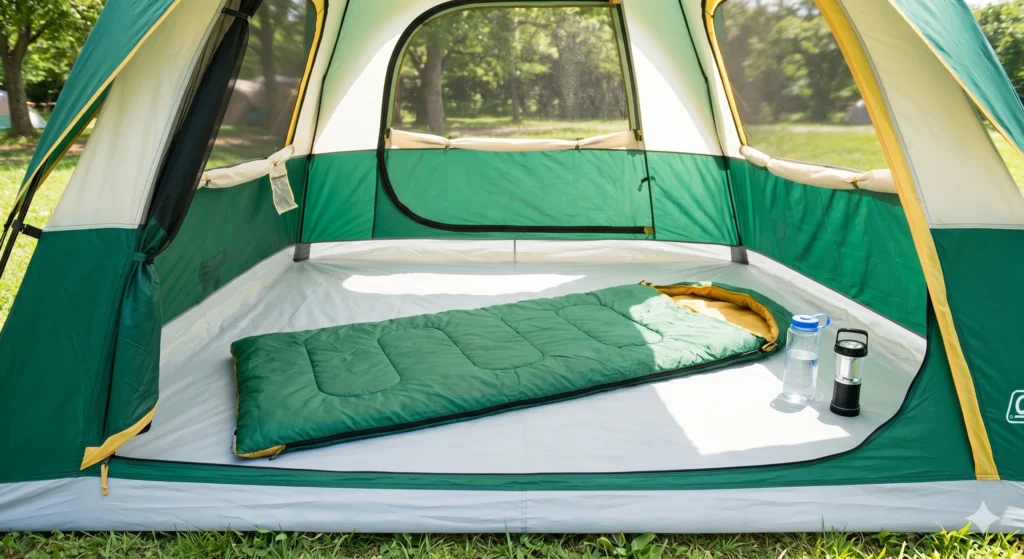
Don’t let the sub-$60 price fool you, the Coleman Brazos has earned a multi-year reputation as one of the toughest budget camping sleeping bags on the market, and it continues to outperform competitors that cost considerably more in real warmth tests. It’s no-frills by design, but for a few weekend trips per summer, it delivers exactly what most casual campers actually need without any unnecessary spend.
Quick Specs: 30°F temperature rating | Polyester synthetic fill | Rectangular shape | ~5 lbs | 75″L × 33″W | DWR-coated outer shell.
Pros:
- Under $60, the most accessible entry point into legitimate camping warmth
- DWR-treated exterior resists light morning condensation and dew
- Polyester insulation holds its shape across multiple seasons of use
- Classic rectangular shape gives tossers and turners full room to sprawl
- Year after year, consistently praised for durability at this price tier
Cons:
- Narrower cut can feel restrictive for taller or broader campers
- Polyester interior liner can feel “grabby” and noisy when rolling over during the night
- 30°F rating is a lower limit, not a comfort rating, on genuinely cold nights, you’ll want base layers
- No hood means head and neck get cold below 45°F
Best for: First-time campers, music festival-goers, backyard campouts, families outfitting multiple kids on a budget, or anyone who camps two or three weekends a summer and doesn’t want to over-invest.
Best Double Camping Sleeping Bag for Couples : NEMO Jazz 30 Double
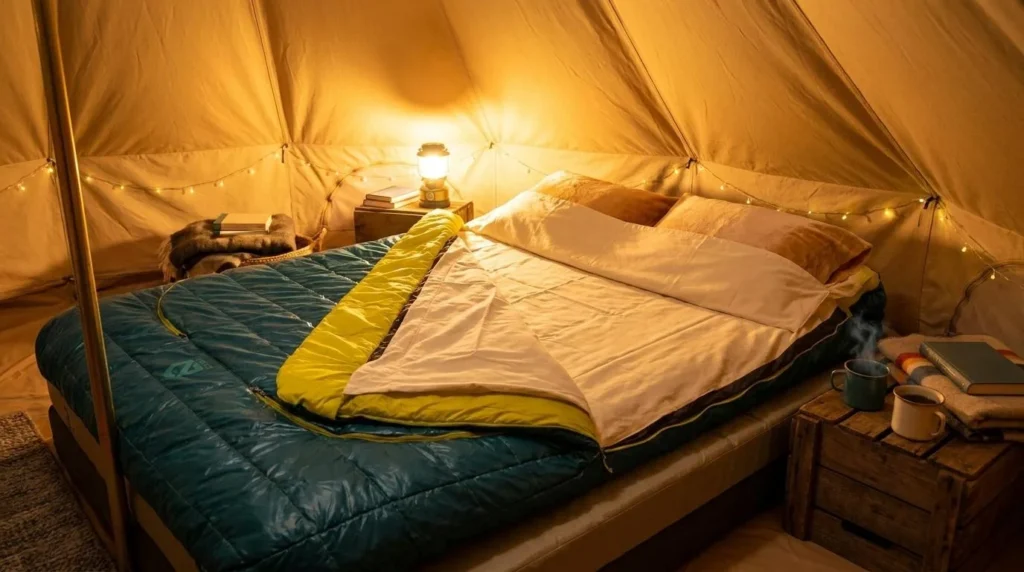
A shared sleep system that genuinely rivals a queen bed, the NEMO Jazz 30 is the best double camping sleeping bag we’ve come across, full stop. Its signature removable, button-attached inner sheet, featherbed-style quilted bottom, and wide pillow pocket transform the experience from “we’re camping” to “we somehow brought our bedroom.” Couples who’ve been tolerating squeezed-together single bags will feel the difference immediately.
Quick Specs: 30°F temperature rating | 100% recycled Stratofiber synthetic fill | Rectangular double shape | ~9 lbs 5 oz | Removable washable inner sheet | Dual side zippers | Integrated sleeping pad sleeve | Full-width pillow pocket.
Pros:
- Removable, machine-washable inner sheet keeps it feeling perpetually fresh, a feature most camping bags skip entirely
- BlanketFold draft collar prevents cold air at the face without either sleeper hogging the covers
- Dual side zippers allow independent temperature adjustment for each person
- Featherbed-style quilted bottom creates a genuinely luxurious sleeping surface
- Full-width pillow pocket holds two standard pillows in place throughout the night
Cons:
- 9+ lbs and 138L packed volume, this lives in your car, not your backpack
- At ~$380, it’s a bigger investment than two budget singles, though it rivals the comfort of two quality bags
- 30°F lower limit means cold sleepers on late-autumn trips may want extra layers
Best for: Couples who want genuine bed-sharing warmth and comfort at camp, dog owners who need sprawl room, or families with young kids who insist on snuggling in.
Quick Tip: Two people sharing a double bag produce substantially more combined body heat than a single sleeper. On shoulder-season trips where nights dip to the low 40s, you’ll often find a 30°F double bag performs warmer than its rating suggests, the equivalent of a 20°F single for most couples.
Best Crossover Sleeping Bag for Camping and Backpacking : NEMO Disco 15
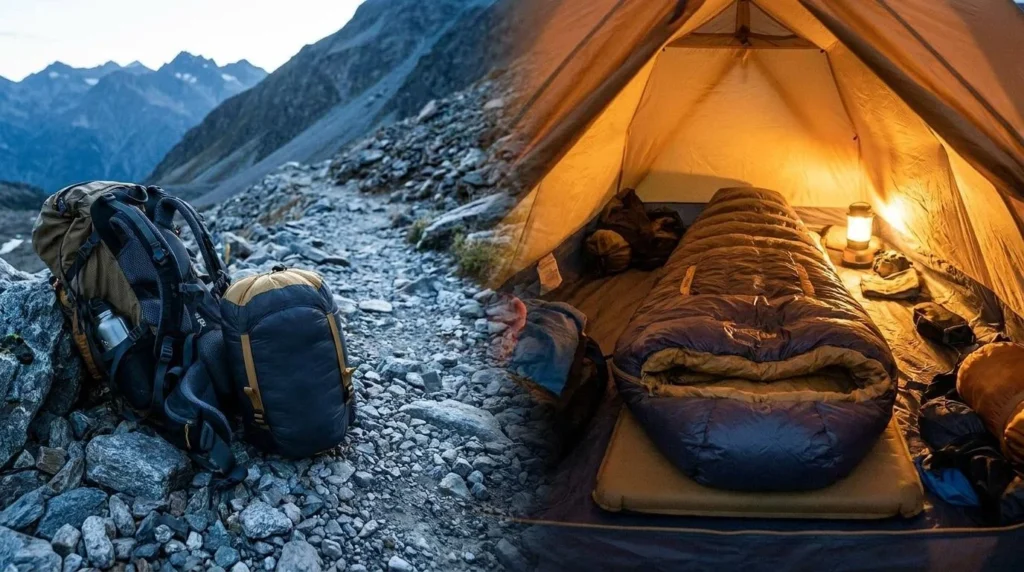
If you want exactly one sleeping bag that handles everything from a lazy car camping weekend to a three-day backpacking loop, the NEMO Disco 15 is that bag. Its “spoon shape”, wider at the knees and shoulders than a standard mummy, is a specific design decision for side sleepers and restless sleepers who’ve always found traditional mummy bags claustrophobic but don’t want to sacrifice warmth. At just under three pounds, it carries on your back or stuffs easily into a car trunk.
Quick Specs: 15°F temperature rating (30°F version also available) | 650-fill power duck down | Spoon-shaped mummy | ~2 lbs 11 oz | 6.4L packed volume | Thermo Gill vents | Oversized draft collar | Zip-together compatible.
Pros:
- Spoon shape creates real knee and shoulder room, finally solves the “sleeping bag straitjacket” problem for side sleepers
- Thermo Gill vents open and close to dump heat without unzipping the whole bag on warmer nights
- 650fp down compresses to a compact 6.4L, fits easily in most daypacks
- 100% recyclable at end of life, among the most sustainable bags in this class
- Rated to 15°F, covering genuine three-season versatility from summer to early winter
Cons:
- Down requires more careful washing, front-loading machine only, with down-specific soap
- Priced like a backpacking bag; it’s an investment if you’re purely a car camper
- No foot-box venting option for genuinely warm nights above 60°F
Best for: The adventure generalist, someone who car camps one weekend and backpacks the next, and wants a single “quiver-of-one” bag that never lets them down in either setting.
High-End Feature-Rich Bag : Feathered Friends Penguin YF 20
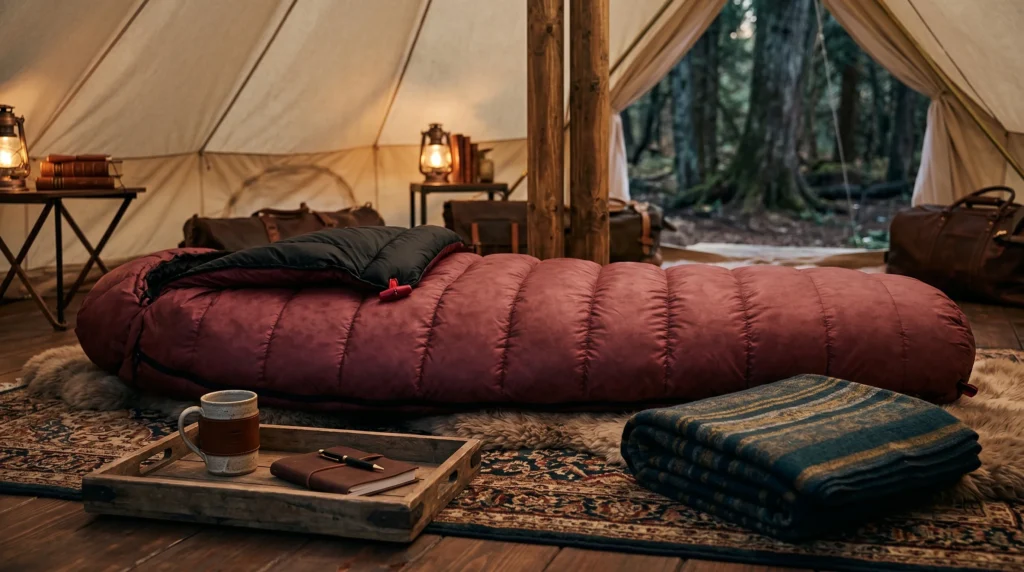
When budget is no object and you want the absolute pinnacle of what a camping sleeping bag can be, the Feathered Friends Penguin YF 20 delivers in a league of its own. Stuffed with 900+ fill-power goose down, the highest-quality insulation available in any production sleeping bag, it produces seven full inches of loft at its 20°F rating, with twin draft tubes that seal out cold air from every angle. It’s also available across four temperature ratings and can be configured as a double system with an optional groundsheet.
Quick Specs: 20°F rating (also available in 0°F, 30°F, 40°F) | 900+ fill-power goose down | Semi-rectangular cut | Twin draft tubes | Optional convertible hood and groundsheet for doubles configuration | Multiple temperature and sizing options.
Pros:
- 900+ FP down delivers extraordinary loft and warmth-to-weight, nothing in its temperature class is lighter for the warmth provided
- Semi-rectangular cut is generously roomy without the drafty inefficiency of a full rectangle
- Twin draft tubes create a two-layer seal against cold air ingress, even in wind
- Converts to a two-person system with optional accessories, genuine versatility at the premium tier
- Built to last decades with proper storage and washing, a true gear investment
Cons:
- Base price of ~$619 is a serious commitment; fully configured as a doubles system, it can exceed $800
- 900+ FP down demands careful long-term storage (never compressed) and front-loader washing
- Complex zipper system in doubles configuration has a learning curve
- Significantly more than most weekend car campers need to spend
Best for: Year-round campers and serious gear enthusiasts who view a sleeping bag as a multi-decade purchase, and couples who want one premium, adaptable system rather than two separate bags.
Quick Tip: Never store any down bag compressed in its stuff sack between trips. Extended compression permanently destroys the loft that makes down warm. Store it loosely in the large mesh storage sack it came with, or any breathable cotton pillowcase, in a cool dry spot away from direct sunlight. Proper storage alone can double the life of a quality down bag.
How to Choose a Camping Sleeping Bag : The Complete Buying Guide
Temperature Ratings for Camping Sleeping Bags
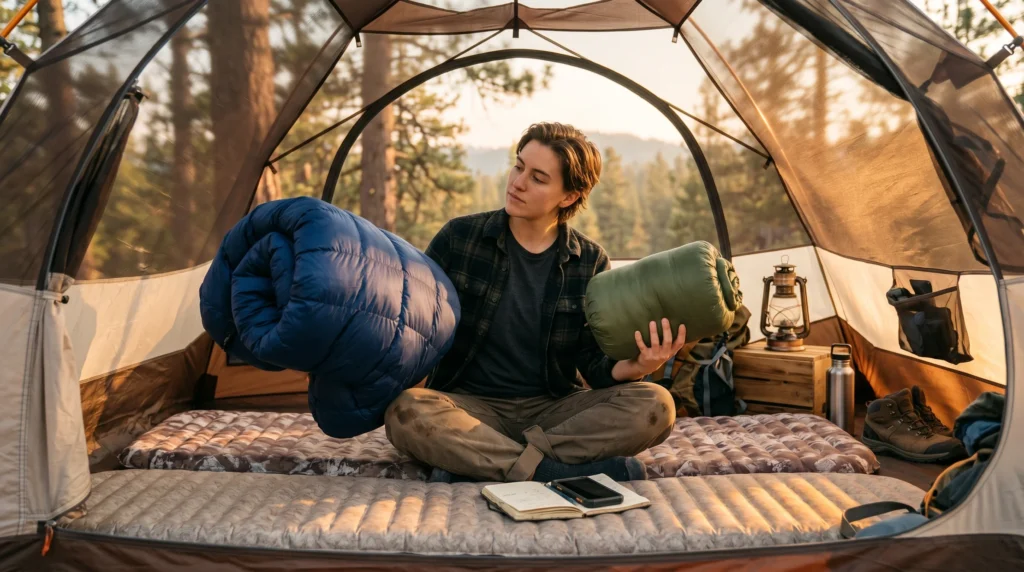
Understanding temperature ratings for camping sleeping bags is the single most important thing you can do before pulling out your wallet, and it’s also where most shoppers go wrong. The number printed on the bag is almost never the number that predicts your actual comfort.
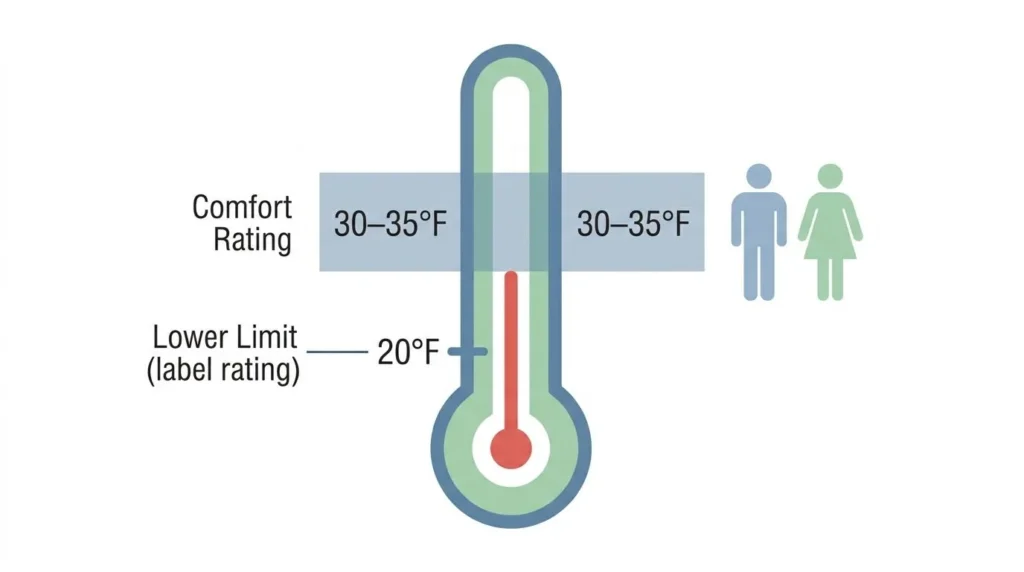
Reputable brands use the EN/ISO standard, which generates two ratings:
- Comfort Rating : The temperature at which an average female sleeper stays warm in a relaxed position. This is the number you should actually shop by.
- Lower Limit Rating : The temperature at which an average male sleeper survives six hours without waking. This is the number many brands print on the label.
The practical rule of thumb: add 10–15°F to the labeled rating to find your real comfort threshold. A bag labeled 20°F keeps most average sleepers genuinely comfortable around 30–35°F. Cold sleepers, women, and anyone camping at elevation should go even warmer.
| Rating on Label | Men’s Realistic Comfort | Women’s Realistic Comfort |
|---|---|---|
| 20°F | ~30–35°F | ~35–40°F |
| 0°F | ~10–15°F | ~15–20°F |
| 30°F | ~40–45°F | ~45–50°F |
Women’s-specific bags address this directly by building in extra insulation at the feet and torso, if you’re a female camper buying a unisex bag, consider going one temperature rating colder than you think you need.
Real-world example: Grabbing a 30°F bag for a late September trip in the mountains where nights hit 38°F sounds logical, and it’s a recipe for a miserable night. A 20°F bag would have been the right call.
Insulation Showdown: Down vs Synthetic Sleeping Bag
This is the great debate in sleeping bag gear circles, and the honest answer is neither type wins universally. What matters is matching the insulation to your camping style.
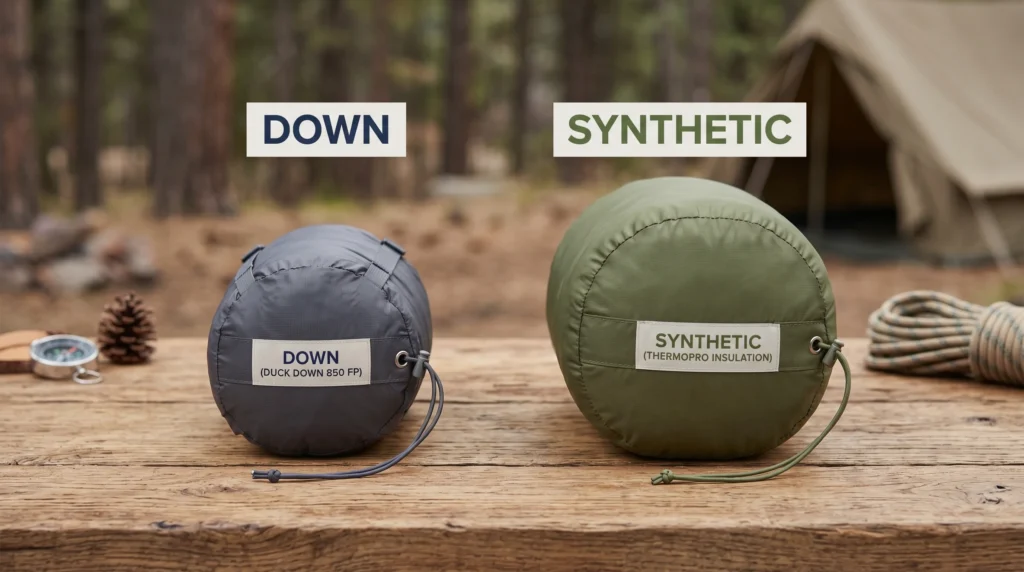
Down insulation:
- Unbeatable warmth-to-weight ratio, 800+ fill-power down is dramatically lighter than equivalent synthetic warmth
- Compresses to a fraction of its packed size, making it ideal for backpacking crossover use
- Can last 20–30 years with correct washing and storage
- Loses nearly all insulating ability when wet, treat with DWR and keep it dry
- Typically $80–200 more than equivalent synthetic bags
- Requires a front-loading washer with down-specific detergent; no corners cut
Synthetic insulation:
- Retains meaningful warmth even when damp, critical for coastal, rainy, or Pacific Northwest camping
- Machine washable in any standard machine on a gentle cycle
- Typically $50–150 less expensive for equivalent temperature performance
- Heavier and bulkier than down at the same warmth rating
- Gradually loses loft over years of use and compression cycles
Our recommendation for car campers : Synthetic is the safer, more practical choice for most weekend camping scenarios, it handles unexpected weather without drama and is easy to maintain. If you camp in consistently dry climates and want lighter gear or backpacking capability, invest in down.
Finding Your Shape : Rectangular, Mummy or Double?
Shape determines both your thermal efficiency and how comfortable you feel spending eight hours in the bag.
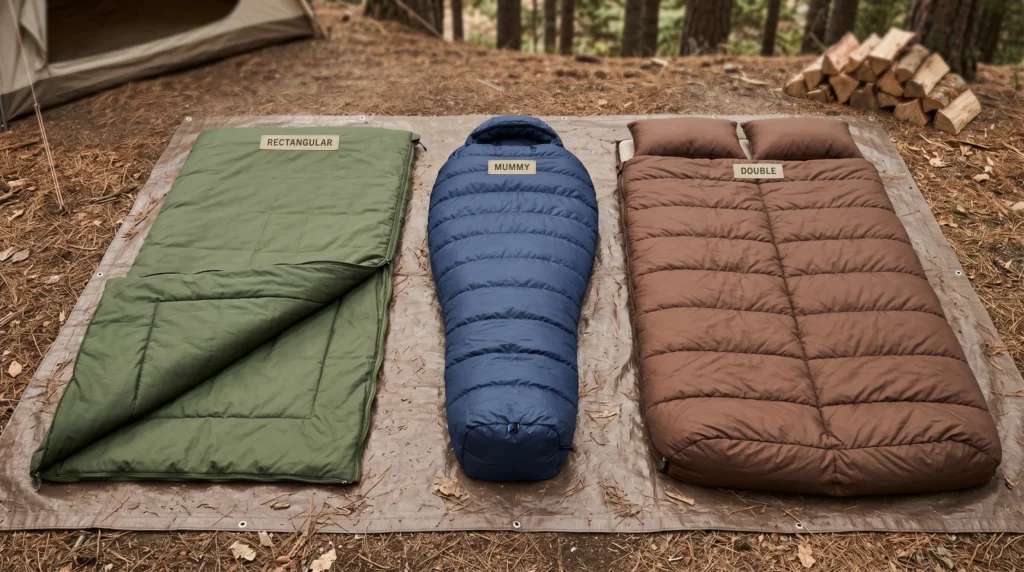
Rectangular bags are the most common choice for car camping. There’s room to flip, stretch a leg out, and sleep in any position without feeling confined. The trade-off is thermal efficiency, a bigger air space takes longer for your body to warm. For roomy, homey comfort at a campsite, rectangles are king, especially for “starfish” sleepers.
Mummy bags taper at the feet and shoulders to minimize dead air space, warming up faster and retaining heat better in extreme cold. They’re the go-to shape for backpackers and serious cold-weather campers. Many campers find the fit claustrophobic, newer “spoon shapes” like the NEMO Disco address this by adding knee and shoulder room while keeping the thermal efficiency of a tapered foot box.
Double bags are essentially wide rectangular bags built for two. They deliver the closest thing to sleeping in your own bed while camping. Weight and packed size are significant, so plan on these living in your car permanently rather than being hauled anywhere.
The Details That Make a Real Difference for Car Camping
When you’re not counting every ounce like a thru-hiker, these finer features add up to a noticeably better night’s sleep:
- Zippers : Anti-snag designs and large pull tabs matter more than you’d think. Glow-in-the-dark zipper pulls are a genuinely underrated feature, stumbling to the bathroom at 2 AM is far less aggravating when you can locate the zipper without a headlamp.
- Linings : Flannel-lined camping sleeping bags feel dramatically warmer and softer against bare skin than polyester liners. Nylon liners are more durable and dry faster, for car camping where comfort trumps performance, flannel wins.
- Hoods and draft collars : Non-negotiable below 40°F. A cinchable hood traps heat escaping from your head, while a draft collar seals the gap at your neck and shoulders, without both, cold air infiltrates no matter how well the rest of the bag is insulated.
- Pillow pockets : A small feature that makes a big nightly difference. Hoods wide enough to slot a full-size pillow from home, like those on the REI Siesta or NEMO Jazz Double, eliminate the constant pillow-repositioning that disrupts sleep.
Budget Tiers : What Are You Actually Paying For?
The gap between a $60 bag and a $600 bag is real, but whether those differences matter depends entirely on how you camp.
Entry-Level ($50–$120) : Coleman Brazos, Teton Sports Celsius. Basic synthetic insulation, rectangular shape, heavier materials, and simpler zipper systems. Completely adequate for summer weekends and warm-weather camping. Don’t expect them to keep you genuinely comfortable below 40°F without base layers underneath.
Mid-Range ($125–$250) : REI Co-op Siesta Hooded 20, Kelty Wayback 20, The North Face Wawona. Better zipper construction, inclusive sizing, higher-quality synthetic insulation that holds its loft longer, improved draft tubes, and thoughtful features like hood pillow pockets. This tier covers the vast majority of three-season car campers completely.
Premium ($250+) : NEMO Jazz Double, NEMO Disco, Feathered Friends Penguin YF. Down fill or premium recycled synthetic, modular layer options, advanced venting systems, and sleeping-system-level compatibility with specific pads. These bags are long-term investments, not impulse purchases , but they pay off in decades of excellent sleep.
Frequently Asked Questions
How warm of a sleeping bag do I need for 3-season car camping?
A 20°F bag is the most versatile choice for the vast majority of three-season car campers. It handles summer nights comfortably with venting options, and it genuinely covers you when temperatures drop into the low 40s in spring or fall. Camping exclusively in summer at low elevations? A 30°F bag saves money. Heading out in October or at altitude? Step up to a 0°F rating.
How should I store my sleeping bag at home?
Never store any sleeping bag compressed in its stuff sack between trips. Compressed insulation, particularly down, permanently loses loft over time, which directly reduces warmth. Store your bag loosely in the large mesh storage sack it came with, or any breathable cotton pillowcase, in a cool dry location away from direct sunlight. Synthetic bags tolerate slightly more compression than down, but both benefit significantly from being stored uncompressed.
How can I make my sleeping bag warmer without buying a new one?
Three methods that actually work: First, add a sleeping bag liner, a silk or fleece liner adds 5–15°F of warmth for $20–80. Second, eat a substantial, high-calorie snack before bed, your body generates heat through digestion for hours. Third, place a sealed water bottle filled with warm (not boiling) water in the foot box before you get in; it keeps your feet warm for several hours. And always use a sleeping pad, ground conduction steals far more heat than the cold air above you.