
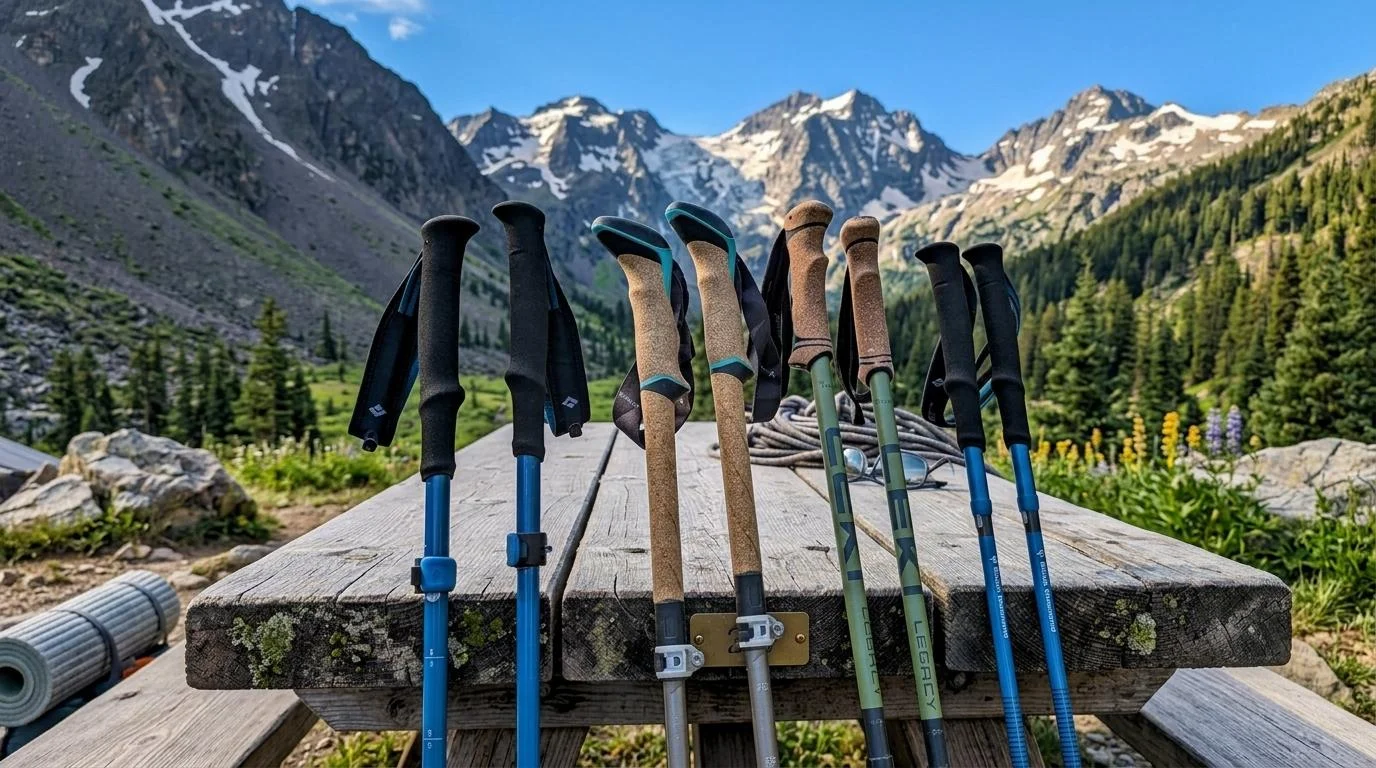
The right best hiking poles don’t just help you cover ground. They redistribute up to 40% of the impact force away from your knees on steep descents, recruit your upper body on relentless climbs, and give you four points of contact when the trail turns sketchy. The wrong pair, though? Dead weight, sloppy adjustments, and blisters from a grip that never felt right.
We’ve combed through testing data from gear labs that have evaluated nearly 30 pairs of hiking poles across deserts, mountain ranges, and thru-hike routes to bring you this 2026 guide. Whether you’re a weekend day hiker, a thru-hike veteran, or a trail runner who needs poles that vanish into a vest, there’s a pick for you below.
Quick Picks : The 7 Best Hiking Poles of 2026
| Pick | Price | Best For | Material |
|---|---|---|---|
| Black Diamond Pursuit | ~$170 | Best Overall | Aluminum |
| MSR DynaLock Ascent Carbon | ~$190 | Best Upgrade | Carbon |
| Black Diamond Trail Back | ~$100 | Best Durability & Value | Aluminum |
| Leki Legacy Lite | ~$110 | Best Bang for Buck | Aluminum |
| Trekology Trek-Z 2.0 | ~$56 | Best Budget | Aluminum |
| Black Diamond Distance Carbon FLZ | ~$240 | Best Trail Running | Carbon |
| Leki Cressida FX Carbon | ~$230 | Best Ergonomic / Women’s | Carbon |
In-Depth Reviews of The 7 Best Hiking Poles
1. Best Overall Hiking Pole: Black Diamond Pursuit
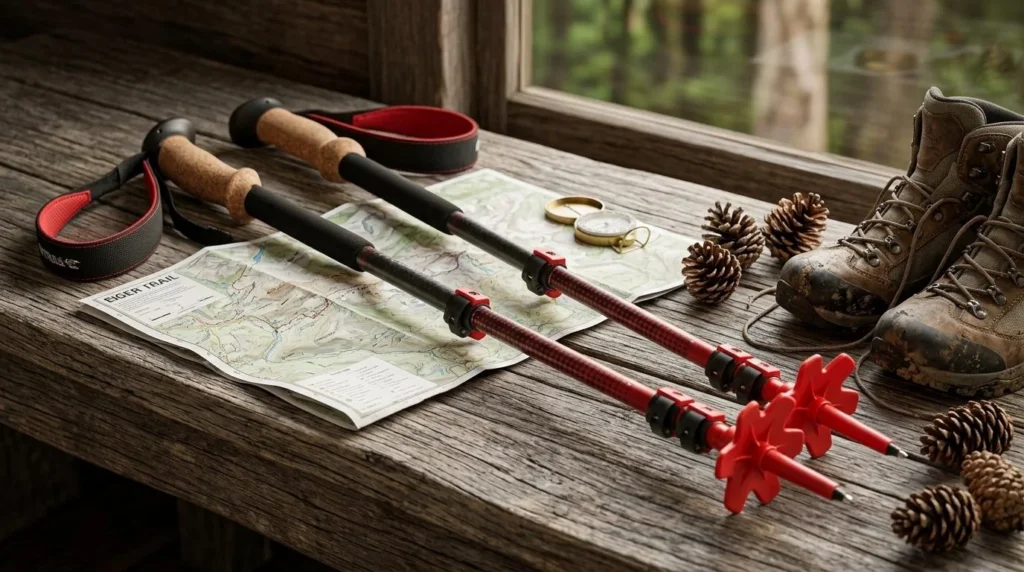
The most well-rounded of all the best hiking poles for most hikers, a rare blend of durability, comfort, and versatility that outperforms poles at twice its price.
CleverHiker’s team logged 2,000 backcountry miles with these hiking poles and calls them the most comfortable in their entire lineup, citing the extra-thick, padded wrist straps, roughly twice the padding of any competitor, and the natural cork grips that mold to your hand over time. Outdoor Gear Lab’s mountain guide testers echo this, noting the soft-touch FlickLock+ levers snap shut without cutting into fingers, and the built-in hex tool means field maintenance is always one pocket away. They ship with both summer and winter baskets, and available grip sizes allow for a dialed-in fit.
Pros:
- Supremely comfortable cork grips that wick sweat and break in over time
- Thick, padded wrist straps, best in class among all hiking poles tested
- Built-in adjustment hex tool for in-field maintenance
- Includes both summer and winter baskets
- Available in two grip sizes
Cons:
- Pricier than basic beginner hiking poles
- Heavier than carbon fiber equivalents
2. Best Upgrade Hiking Pole : MSR DynaLock Ascent Carbon
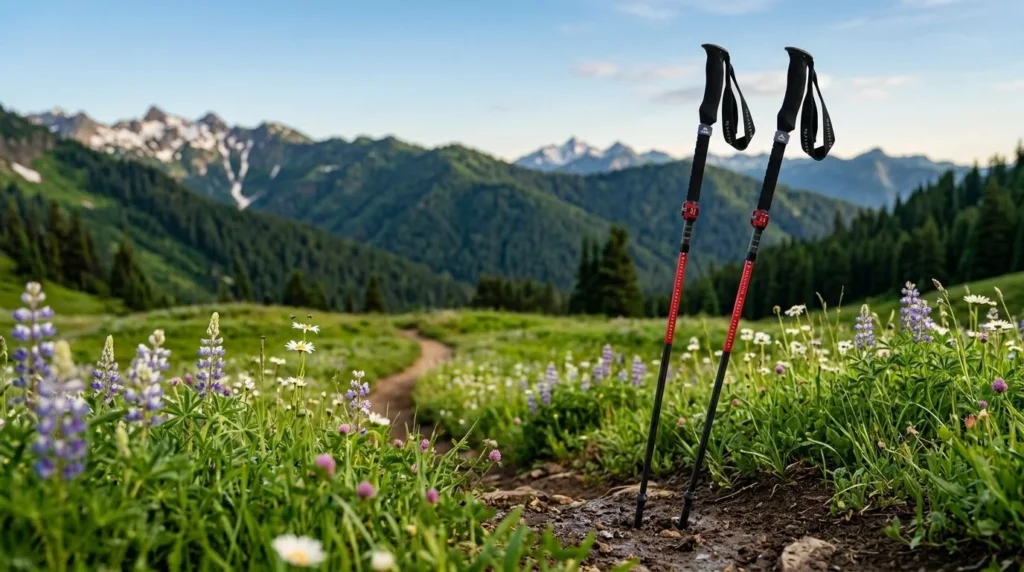
A do-it-all carbon hiking pole for hikers who want the best swing weight, the most packability, and serious versatility across every season.
The DynaLock Ascent Carbon collapses to just 14.5 inches, small enough to tuck into a pack side pocket on technical sections, yet it transitions seamlessly from alpine traverses to winter ski tours. Outdoor Gear Lab’s alpine guide testers were particularly impressed by how the pole “feels ounces lighter than its scale weight” thanks to its remarkably efficient swing. The EVA foam grip is simple, ergonomic, and secure even in wet conditions, and the adjustment mechanism is among the most reliable lever locks ever tested on hiking poles.
Pros:
- Folds down to just 14.5 inches, most packable premium hiking pole tested
- Excellent swing weight reduces arm fatigue on long days
- Versatile for backpacking, alpine climbing, and ski touring
- Reliable DynaLock adjustment system
Cons:
- One of the more expensive hiking poles at ~$190
- Not the absolute lightest carbon option if pure ounce-counting is your goal
3. Best Durable Hiking Pole for Value : Black Diamond Trail Back
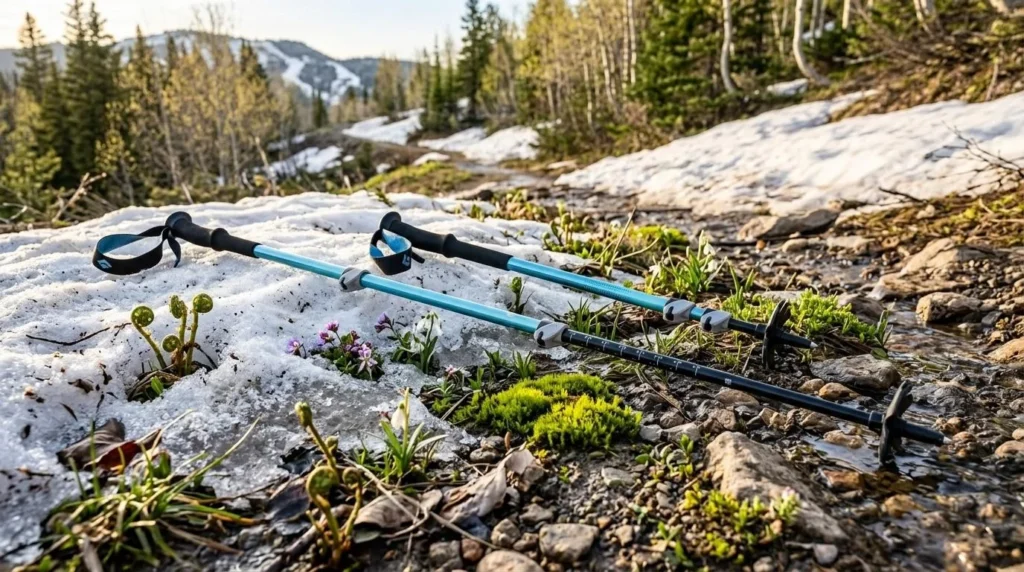
A virtually indestructible workhorse hiking pole built for heavy loads, abuse, and years of use, the pole that guiding companies trust with clients carrying 60-lb packs.
This is the hiking pole that Outdoor Gear Lab’s lead guide has kept in heavy rotation with multiple users on multi-day expeditions for up to eight years without a single failure. Its three-section 7075 aluminum shafts resist bending and denting better than lighter alloys, and the metal-on-metal FlickLock contact points won’t slip under load the way cheaper twist locks do. Drop tests, ski-slope stress tests, and javelin throws couldn’t dent it either, the Trail Back simply does not want to bend, which is exactly what you want when miles from the nearest trailhead.
Pros:
- Nearly indestructible 7075 aluminum construction
- Trusted by outdoor guiding companies for expedition use
- Includes both summer and winter baskets
- Affordable hiking pole at ~$100
Cons:
- Heavier than carbon fiber hiking poles at 18.25 oz/pair
- Collapses to a longer 25 inches, not ideal for packing inside a bag
4. Best Bang-for-Buck Hiking Pole : Leki Legacy Lite
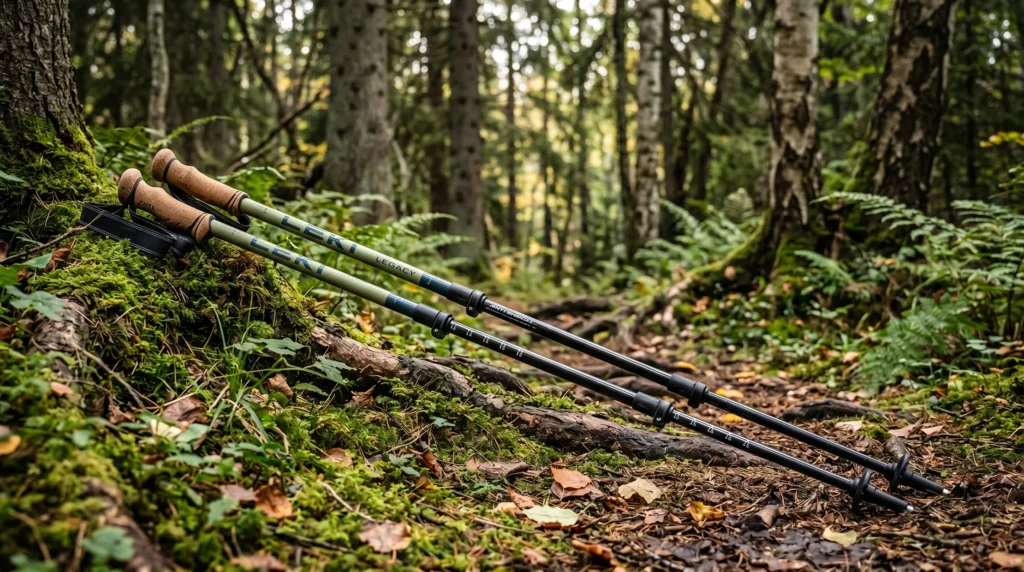
A lightweight, premium-feeling aluminum hiking pole that delivers performance close to $200 options for nearly half the price.
The Legacy Lite’s Speed Lock+ system earns high marks from testers for quick, tool-free adjustments that stay secure across varied terrain, including miles of creek hiking in Utah’s canyons and snowshoe routes. The EVOCON cork composite grip conforms subtly over time and stays comfortable in warm conditions thanks to small ventilation channels in the handle. Testers specifically call out the “light swing weight” as a standout feature that kept arm fatigue low on sustained climbs, impressive for an aluminum hiking pole at this price point.
Pros:
- Lightweight aluminum hiking pole with a surprisingly quick swing weight
- Speed Lock+ delivers fast, reliable adjustments without tools
- Cork composite grip with ventilation for warm-weather comfort
- Solid versatility across seasons
Cons:
- Grips feel small for hikers with larger hands
- Collapses to a longer ~26 inches, limiting packability
5. Best Budget Hiking Pole : Trekology Trek-Z 2.0
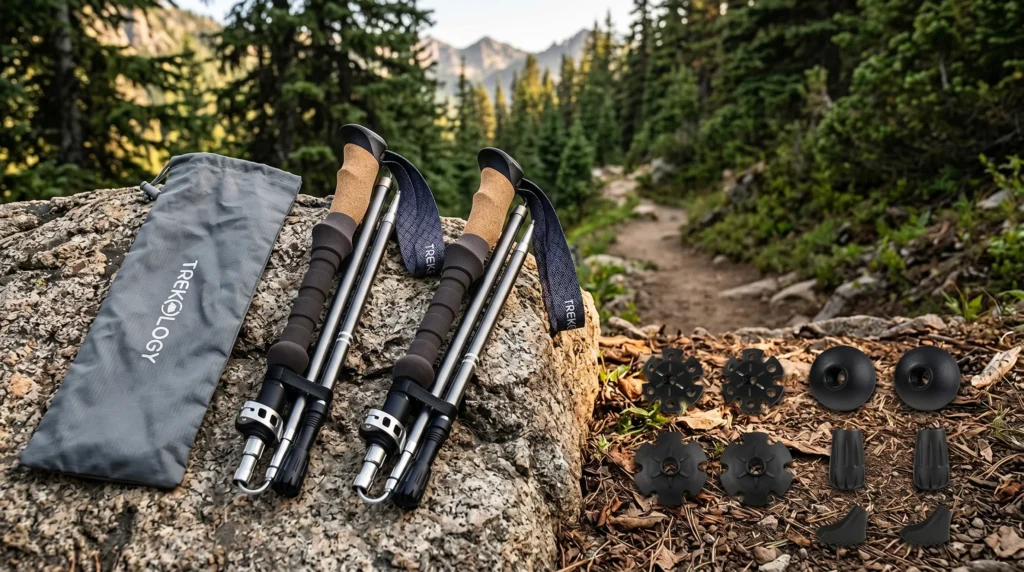
The ultimate budget-friendly folding hiking pole that packages genuine portability and useful features into an entry-level price.
At just $56, the Trek-Z 2.0 packs down to a 15-inch collapsed length, matching the packability of premium folding hiking poles at a fraction of the cost. It ships with winter baskets, multiple tip covers, and a storage bag, an accessory bundle that rivals poles twice the price. A family that used these hiking poles for weeks in the Alps reported that they were well-sized for multiple people, from adults to kids, making them a versatile travel companion.
Pros:
- Extremely affordable hiking poles at ~$56
- Compact 15-inch folded length fits in luggage and daypacks
- Ships with winter baskets, tip covers, and a storage bag
- Good enough for day hikes and moderate backpacking
Cons:
- Heavier than premium folding hiking poles (19.1 oz/pair)
- Foam grips less comfortable than cork on long days
- Some durability concerns under heavy loads, not ideal for 40+ lb packs
6. Best Hiking Poles for Trail Running & Fastpacking : Black Diamond Distance Carbon FLZ
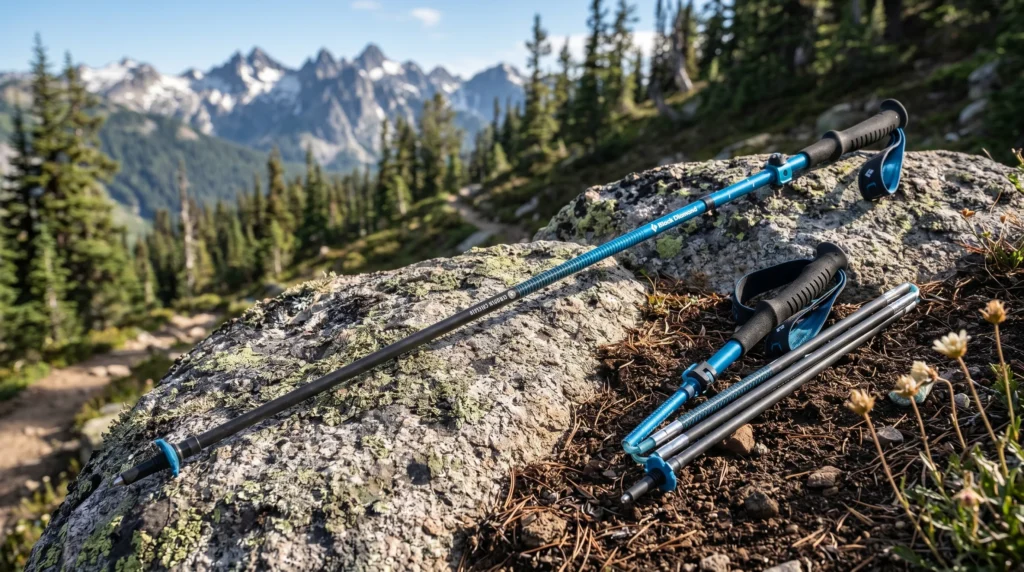
Among the best hiking poles engineered specifically for fast-and-light movement, ultra-compact, featherweight, and fast enough to deploy and stow mid-stride.
Weighing only 12 oz per pair and collapsing to just 14.25 inches, the Distance Carbon FLZ fits into a trail running vest chest pocket without a second thought. Testers expanded and locked these hiking poles in just six seconds during field tests in the Superstition Mountains, no fumbling, no delay. The low swing weight is a particular asset: “It makes it easy to maintain a steady rhythm while still providing stability on technical trails.”
Pros:
- Ultra-compact 14.25-inch folded length, fits inside running vests
- Deploys in approximately 6 seconds, fastest of all hiking poles tested
- Extremely low swing weight minimizes arm fatigue
- Includes two basket sizes and rubber tip covers
Cons:
- Not designed for heavy loads or aggressive rock-bashing
- Fixed-length design limits adjustability compared to telescoping hiking poles
- Higher price point at ~$240
7. Best Ergonomic Women’s Hiking Pole : Leki Cressida FX Carbon
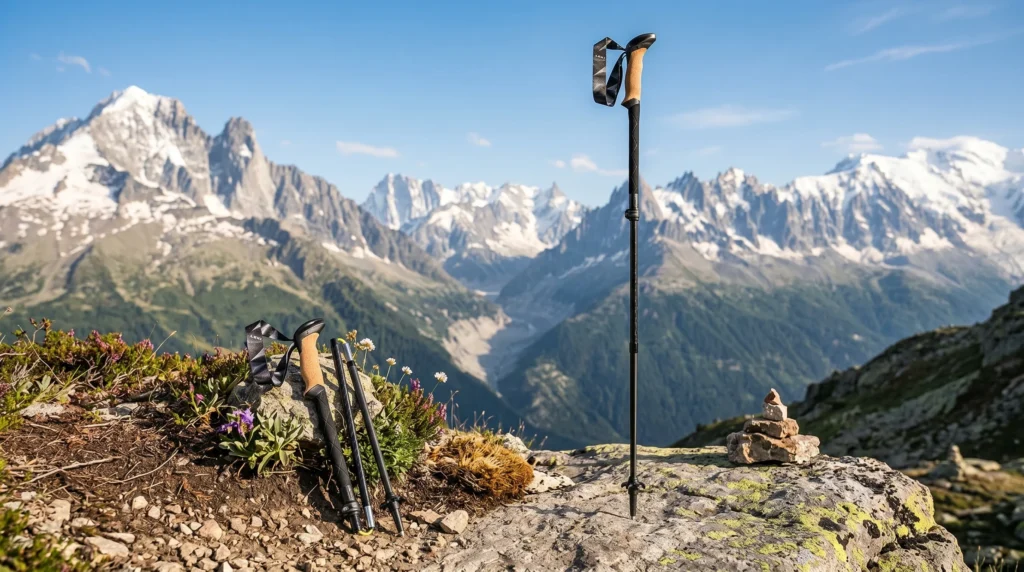
A premium folding hiking pole built around ergonomics, narrower grips, a smarter angle, and superior comfort for hikers with smaller hands or those prioritizing wrist health.
The Cressida’s soft cork grips feature a built-in ergonomic notch for the index finger and a 45-degree angled head that makes palming the hiking pole on steep descents natural rather than forced. It also includes a 5.5-inch cork grip extension below the main handle, letting you drop your grip without stopping to re-adjust on sudden steep sections. Outdoor Gear Lab’s lead tester used these hiking poles on five-day wilderness treks with diverse groups of women navigating canyon mudpots and desert terrain, reliability was never in question.
Pros:
- Ergonomic cork grips with finger notch and 45° angled head for descent comfort
- 5.5-inch lower grip extension for steep terrain, a rare feature in hiking poles
- Compact 16.5-inch folded length
- Versatile from trail running to snowshoeing
Cons:
- Carbon shafts less impact-resistant than aluminum hiking poles under side loads
- Heavier than hyper-light carbon options at 16.4 oz/pair
- Premium price at ~$230
Expert Buying Guide : How to Choose the Best Hiking Poles
Shaft Material : Aluminum vs. Carbon Fiber
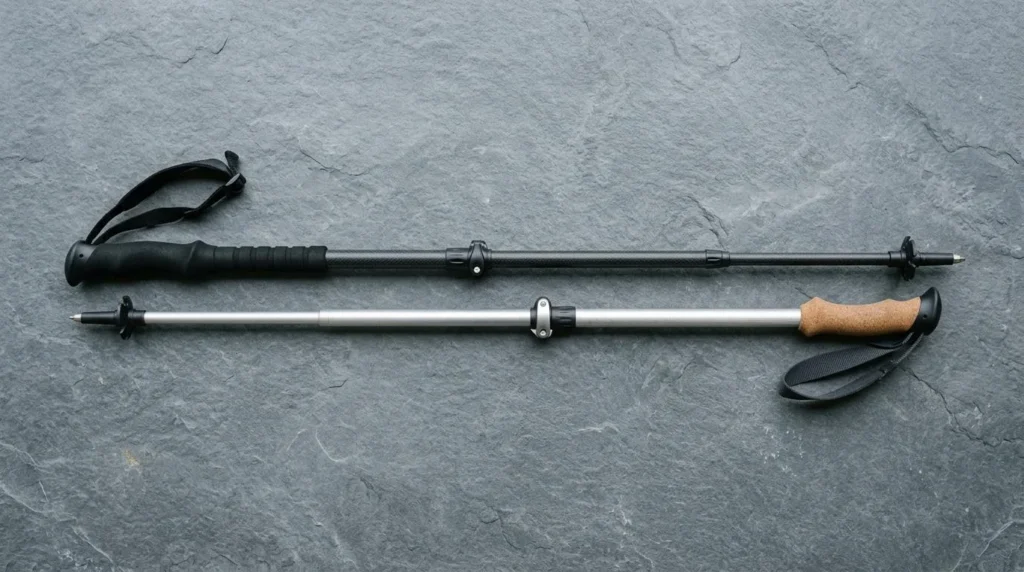
The debate between these two materials ultimately comes down to how you hike and how much you’re willing to carry. Aluminum hiking poles bend gradually before breaking, a forgiving failure mode deep in the backcountry, while carbon fiber is stiffer, absorbs more shock on rocky terrain, but can snap suddenly under side loads. For high-mileage thru-hikers or those going light, carbon’s reduced swing weight genuinely reduces arm fatigue over a full day. For guides, beginners, and anyone carrying expedition loads, aluminum hiking poles’ bulletproof durability wins every time.
| Feature | Aluminum Hiking Poles | Carbon Fiber Hiking Poles |
|---|---|---|
| Durability | Bends before breaking | Stronger axially, but can snap |
| Weight | Heavier (~17–21 oz/pair) | Lighter (~8–16 oz/pair) |
| Shock absorption | Minimal | Better on hard surfaces |
| Price | More affordable | Premium cost |
| Best for | Heavy loads, beginners, rough use | Ultralight, trail running, fastpacking |
Locking Mechanisms : FlickLock vs. Twist Lock
FlickLock (external lever) systems are the clear winner in both reliability and field adjustability among all hiking poles tested. They clamp directly to the shaft with a visible, tactile connection, you know immediately if it’s locked. Twist locks are internal and rely on expanding plastic components that can fail from over-tightening. For most hikers shopping for the best hiking poles, stick to lever locks without hesitation.
Grip Material : Cork vs. Foam
Cork is the longtime favorite for serious hiking poles for good reason, it wicks sweat, stays grippy when wet, and molds to the shape of your hand after a few trips. Softer cork breaks in faster; harder cork lasts longer. Foam (EVA) is lighter and more moisture-resistant in rain but can become slick and dirty with extended sweat exposure. If you’re hiking for hours in warm climates, cork grips are worth the upgrade on your hiking poles.
Portability : Telescoping vs. Folding / Z-Poles
Telescoping hiking poles collapse to around 24–26 inches and offer the widest range of length adjustment, great for sharing among hikers of different heights. Folding (Z-pole) hiking poles collapse to 14–16 inches, fitting inside a pack or vest, but offer more limited length adjustment. Recent durability improvements have made folding hiking poles viable even for technical use, the MSR DynaLock is a prime example.