

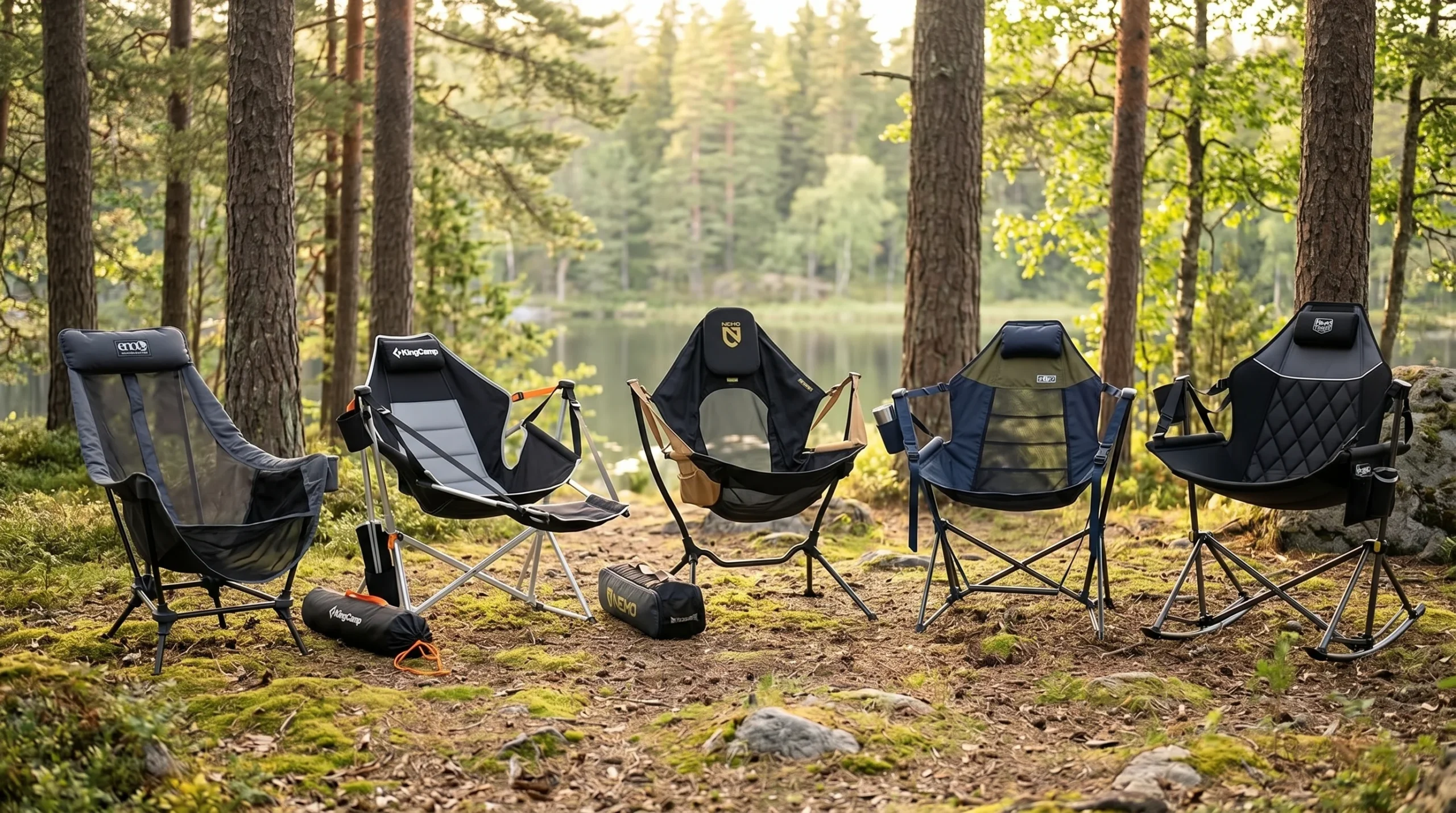
The right freestanding hammock chair doesn’t just give you a place to sit; it completely changes how you recover at camp. Instead of forcing you to hunt for two perfectly spaced trees, these hybrid chairs bring the zero-gravity comfort of suspension directly to the fire pit. But get the wrong one, and you’re dealing with a heavy, squeaky frame, a seat that sinks into soft mud, or a reclining system that requires constant leg tension just to keep you from folding forward.
After analyzing extensive field tests, tearing down the top models, and drawing on years of testing suspension systems in the relentless humidity of the Southeast US and the varied terrain of Central America, we’ve evaluated the market to bring you this 2026 guide to explore the best hammock chairs for camping. Whether you are a car camper looking for ultimate stargazing luxury or a festival-goer needing a low-profile lounger, here are the top models that actually deliver.
Quick Picks : The 5 Best Hammock Chairs of 2026
| Pick | Price | Best For | Material |
| NEMO Stargaze Recliner Luxury | ~$250 | Best Overall | Aluminum |
| TIMBER RIDGE Camping Chair | ~$90 | Best Value & Durability | Steel |
| KingCamp Orchid C20 | ~$120 | Best Footrest / Tall Campers | Steel/Aluminum |
| ENO Lounger DL | ~$140 | Best Low-Profile | Aluminum |
| RIO Swinging Hammock Chair | ~$60 | Best Budget Canvas | Steel |
In-Depth Reviews of The 5 Best Hammock Chairs
1. Best Overall Hammock Chair: NEMO Stargaze Recliner Luxury
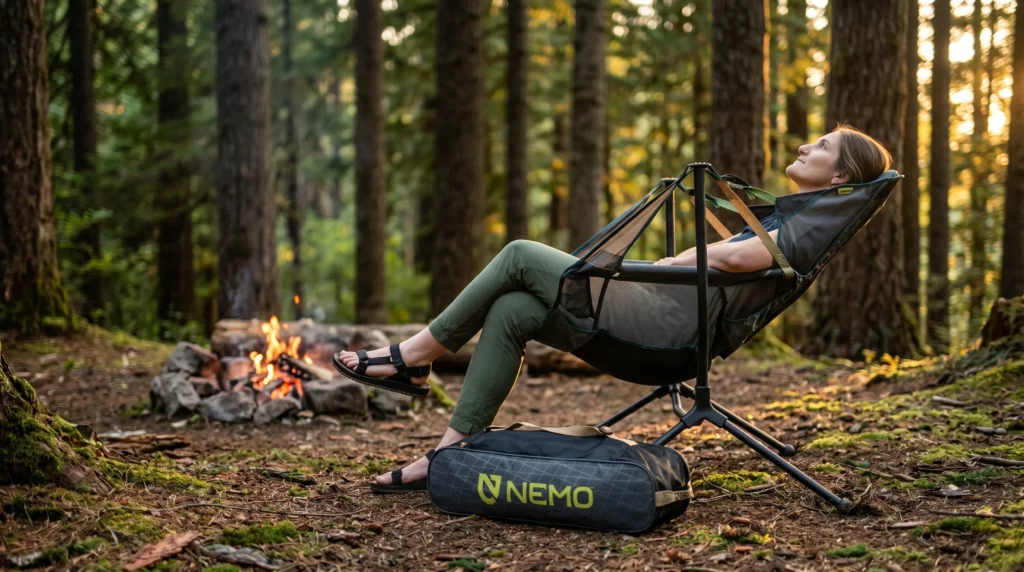
The NEMO Stargaze remains the most well-rounded and technologically advanced hammock chair on the market. It’s an absolute engineering marvel that manages to offer an auto-reclining shift mechanism while packing down to nearly half the size of its competitors.
During our deep dives into suspension performance, breathability is a massive factor—especially in humid environments like the Southeast US. The Stargaze uses a monofilament mesh that dumps body heat instantly. The aircraft-grade aluminum frame is remarkably stable, even on slightly uneven ground, and weighs in at a highly portable 7 pounds. You simply lean back, and your center of gravity automatically shifts the chair into a stargazing position without pulling any levers.
Pros:
- Auto-reclining mechanism shifts seamlessly with your body weight.
- Aircraft-grade aluminum frame keeps the weight down to just 7 lbs.
- Packs down incredibly small, making it the best option for tight trunk space.
- Monofilament mesh is highly breathable in hot, humid climates.
Cons:
- Premium price tag makes it a serious investment.
- Campers under 5’2″ may find the headrest geometry pushes their head forward slightly.
2. Best Value & Durability : TIMBER RIDGE Hammock Camping Chair
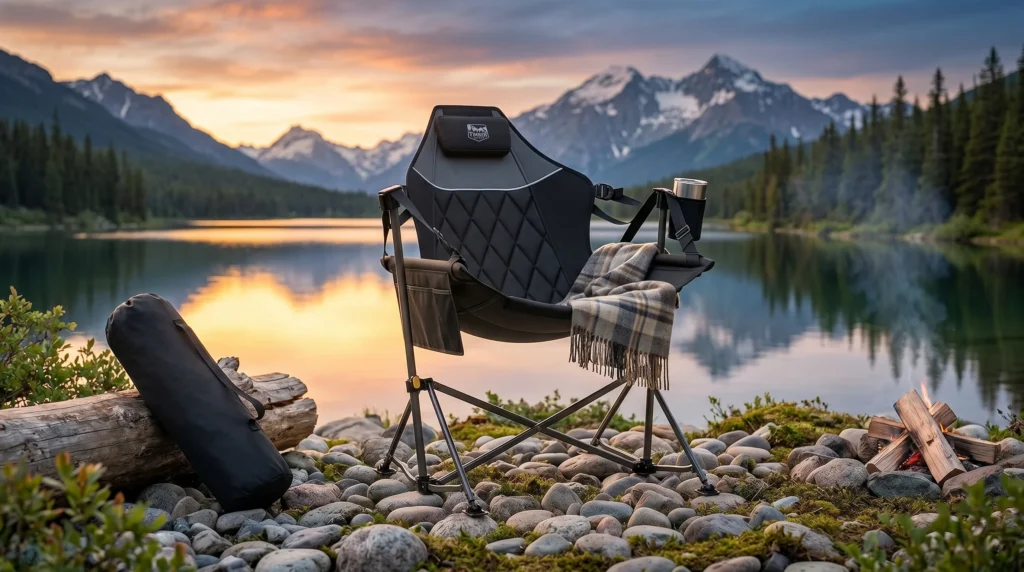
If you want the swinging, suspended feel of the Nemo but refuse to cross the $200 threshold, the Timber Ridge is an absolute powerhouse. It trades lightweight aluminum for a heavy-duty, solid steel frame that can take a serious beating.
Unlike the auto-reclining Stargaze, the Timber Ridge uses manual adjustment tabs. This is actually a massive benefit if you want to sit completely upright to eat a meal or tend to a campfire. It features wide, oversized foot pads that prevent the chair from sinking into sand or soft soil. Our favorite hidden feature? A zippered, insulated cup holder that expands to perfectly fit a 32oz Nalgene bottle—a rare find in camp furniture.
Pros:
- Incredible value for the heavy-duty build quality.
- Manual reclining straps allow you to sit completely straight up.
- Oversized pivoting feet prevent sinking in mud or sand.
- Expandable cup holder fits large water bottles.
Cons:
- Extremely heavy; you won’t want to carry this far from your car.
- Steel frame is prone to rust if left out in the rain long-term.
3. Best for Tall Campers : KingCamp Orchid C20 Hammock Chair
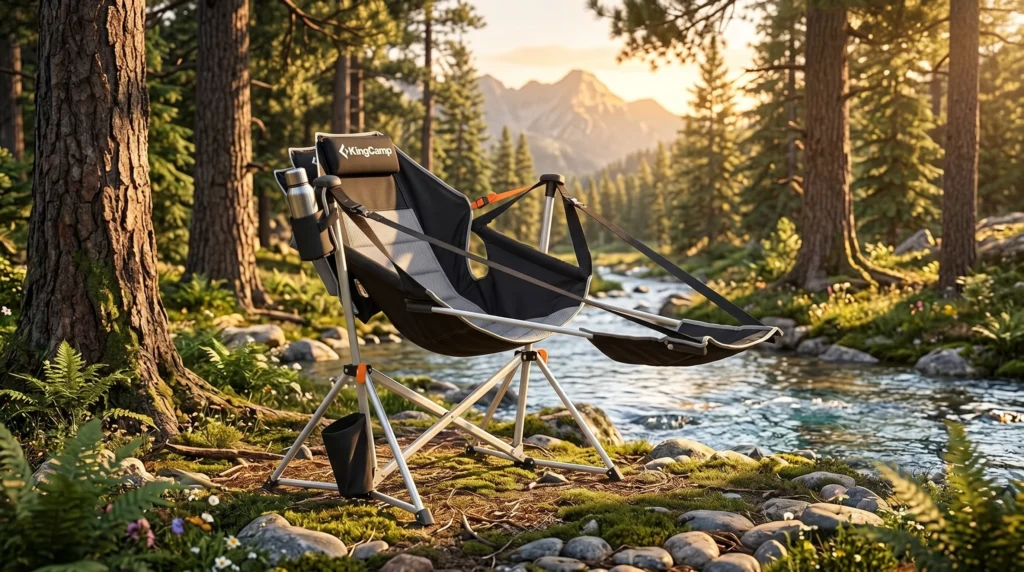
One of the most common complaints with standard swinging chairs is leg fatigue; in some models, you have to keep tension in your quads just to stop the chair from tipping forward. KingCamp solves this completely by integrating a fold-out footrest.
This chair offers a much more structured, padded feel compared to the hammock-like mesh of the Nemo. It feels like a premium recliner that just happens to be suspended. It boasts an excellent weight capacity and a taller backrest, making it the undisputed champion for larger or taller campers who want to take a full afternoon nap at the campsite.
Pros:
- Integrated footrest eliminates leg tension and allows full lay-back napping.
- Padded structured seat is warmer for cool-weather camping.
- High backrest with a padded pillow provides excellent neck support for tall users.
Cons:
- Bulky when packed down; requires significant storage space.
- Takes slightly longer to set up than the Stargaze.
4. Best Low-Profile : ENO Lounger DL
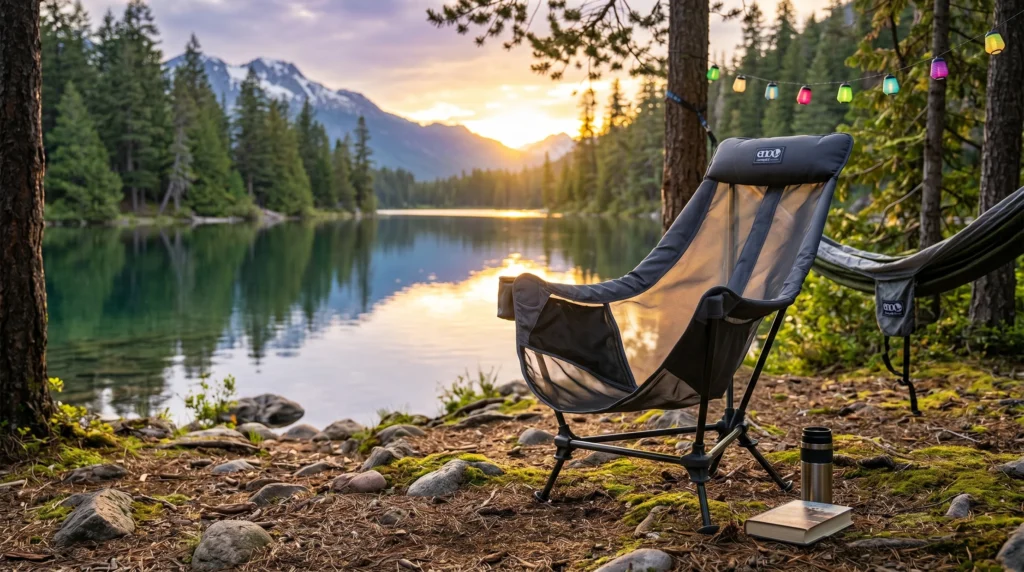
ENO brought their legendary parachute-nylon hammock expertise to the ground with the Lounger DL. Instead of hanging from a high frame, this chair suspends you lower to the ground, offering adjustable leg heights to customize your sit.
The fabric is the same breathable, body-molding material used in their iconic DoubleNest hammocks. Because it sits lower, it has an incredibly stable center of gravity, making it the perfect companion for music festivals, beach camping, or anywhere you need a low-profile seat. Assembly is famously frictionless, snapping together with shock-corded poles much like a premium backpacking tent.
Pros:
- Adjustable leg heights allow you to sit at standard or low-profile levels.
- True parachute-nylon fabric molds perfectly to your body.
- Shock-corded assembly is incredibly fast and intuitive.
- Lightweight and highly portable.
Cons:
- Does not offer the same swinging arc range as the taller frames.
- Sitting lower to the ground can make it harder to get out of for some users.
5. Best Budget Canvas : RIO Swinging Hammock Chair
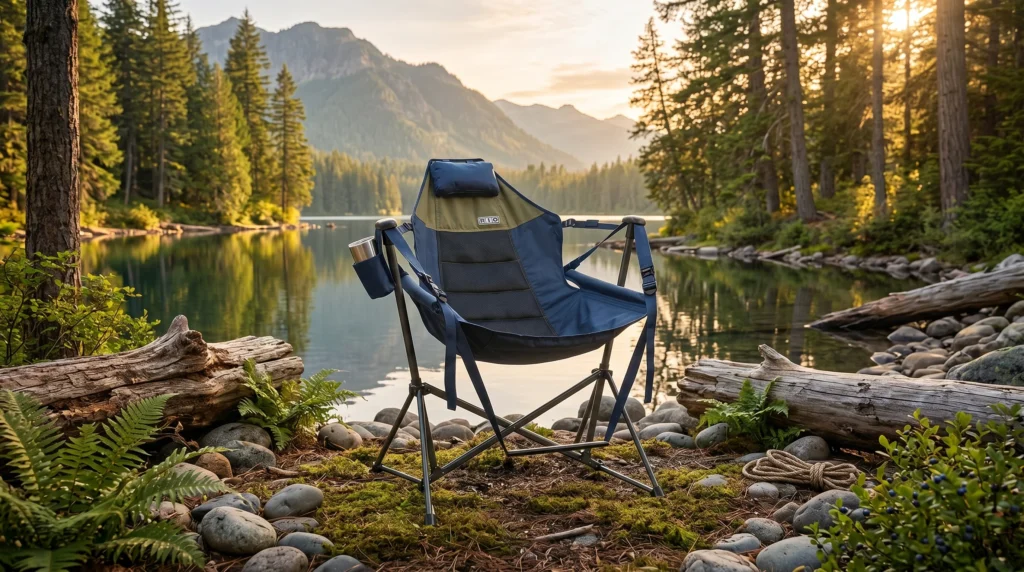
Often found at big-box retailers, the RIO Swinging Hammock Chair is the classic entry-level swinger. Instead of using technical mesh or nylon, it utilizes a thick, durable canvas that many campers simply prefer the feel of.
It features an easy-to-use strap system at the top of the frame to adjust your recline angle. While it doesn’t have the engineering refinement of the higher-end models—and weighs in at a hefty 11 pounds—it provides a surprisingly smooth swing and a deep, comfortable bucket seat for a fraction of the cost of premium brands.
Pros:
- Very affordable entry point into hammock chairs.
- Thick canvas material is highly durable and comfortable.
- Deep bucket seat feels secure and cozy.
Cons:
- Bulky and heavy compared to premium aluminum models.
- Fabric is not breathable, which can lead to sweating in hot weather.
Hammock Chair Buying Guide : How to Choose the Right Suspension Setup
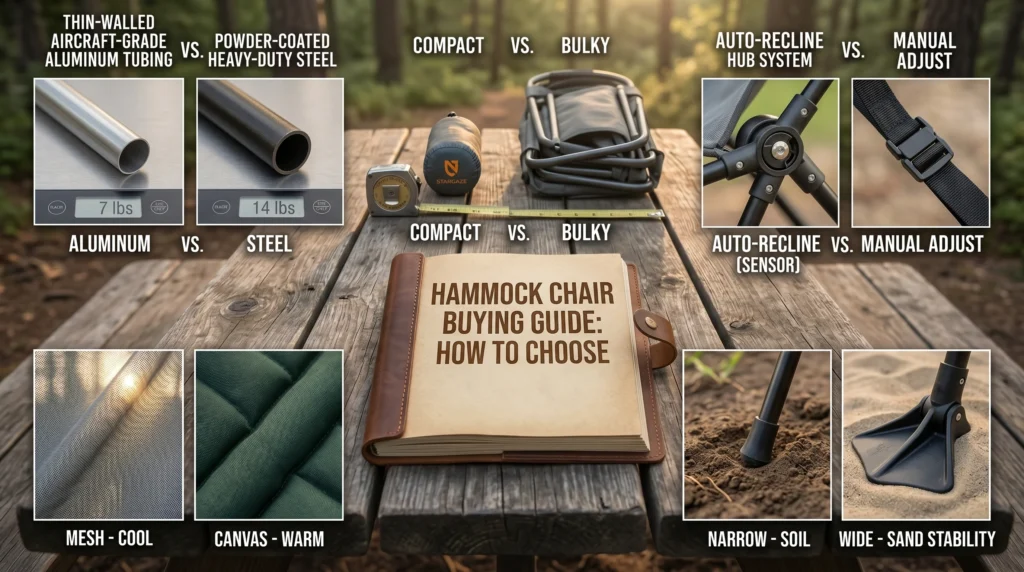
If you are transitioning from a traditional ground chair to a suspended model, there are a few entirely new variables to consider. A hammock chair isn’t just about the fabric; it’s about the geometry of the frame and how it handles your specific style of camping.
Here is what you need to evaluate before making a purchase:
1. Frame Material: Aluminum vs. Steel
The skeleton of your chair determines both its lifespan and how far you can realistically carry it from your vehicle.
- Aircraft-Grade Aluminum (E.g., NEMO Stargaze, ENO Lounger): Aluminum is the undisputed king of portability. It is incredibly lightweight, naturally rust-resistant, and possesses a slight flex that absorbs the shock of you sitting down. If you plan to carry your chair to a music festival, down to the beach, or pack it into a crowded trunk, aluminum is worth the premium price tag.
- Heavy-Duty Steel (E.g., Timber Ridge, RIO): Steel is significantly cheaper to manufacture, which keeps the price of the chair down. It is incredibly strong and offers a highly rigid frame. However, the trade-off is massive weight. A steel-framed chair can weigh twice as much as an aluminum one, making it strictly a “car-to-campfire” piece of gear. You also need to ensure you dry the frame if it rains to prevent long-term rust.
2. Packability & Weight
Hammock chairs have complex frames with long arms to support the suspension points. This means they rarely pack down as small as a traditional folding camp chair.
Before buying, look at the collapsed dimensions, not just the weight. For example, the NEMO Stargaze uses hubbed poles (similar to a backpacking tent) that break down entirely, allowing it to fit into a relatively small cylindrical bag. Conversely, budget models like the KingCamp or RIO often just fold in half like a clamshell, requiring a massive amount of horizontal trunk space.
3. Reclining Mechanisms: Auto vs. Manual
The defining feature of a hammock chair is the ability to swing and lean back, but how they achieve this varies wildly.
- Auto-Reclining: Premium chairs use a sliding tension system. As you lean your shoulders back, your center of gravity shifts, and the chair smoothly transitions into a stargazing position. It requires zero effort and feels incredibly luxurious.
- Manual Adjustment: Budget and mid-tier chairs use nylon webbing straps with buckles. You have to physically shorten or lengthen the straps before you sit down to dictate your angle. While less convenient, it does allow you to lock the chair into a rigid, upright 90-degree angle, which is much better for eating at a camp table.
4. Breathability vs. Warmth
Your environment dictates the fabric you need.
- Mesh (Best for Summer/Humid Climates): If you are camping in the Southeast US or Central America, a monofilament mesh seat is mandatory. It dumps body heat instantly and dries in minutes if you leave it out in a rainstorm or sit in it with a wet bathing suit.
- Canvas/Padded Nylon (Best for Shoulder Season): If you primarily camp in the cool, crisp air of the fall or spring, mesh will leave your backside freezing. A thick canvas or lightly insulated nylon seat acts as a barrier against cold drafts, keeping you much warmer around the fire.
5. Foot Design and Stability
Because hammock chairs suspend your weight from a central hanging point, they generate different ground forces than a standard chair with four vertical legs.
Look closely at the “feet” of the chair. Narrow, rubber-tipped feet are fine for solid dirt or gravel but will immediately sink into soft sand, mud, or wet grass, destabilizing the whole frame. If you frequently camp on beaches or soft ground, prioritize a chair with oversized, pivoting “duck feet” (like the Timber Ridge) that disperse your weight over a wider surface area.