

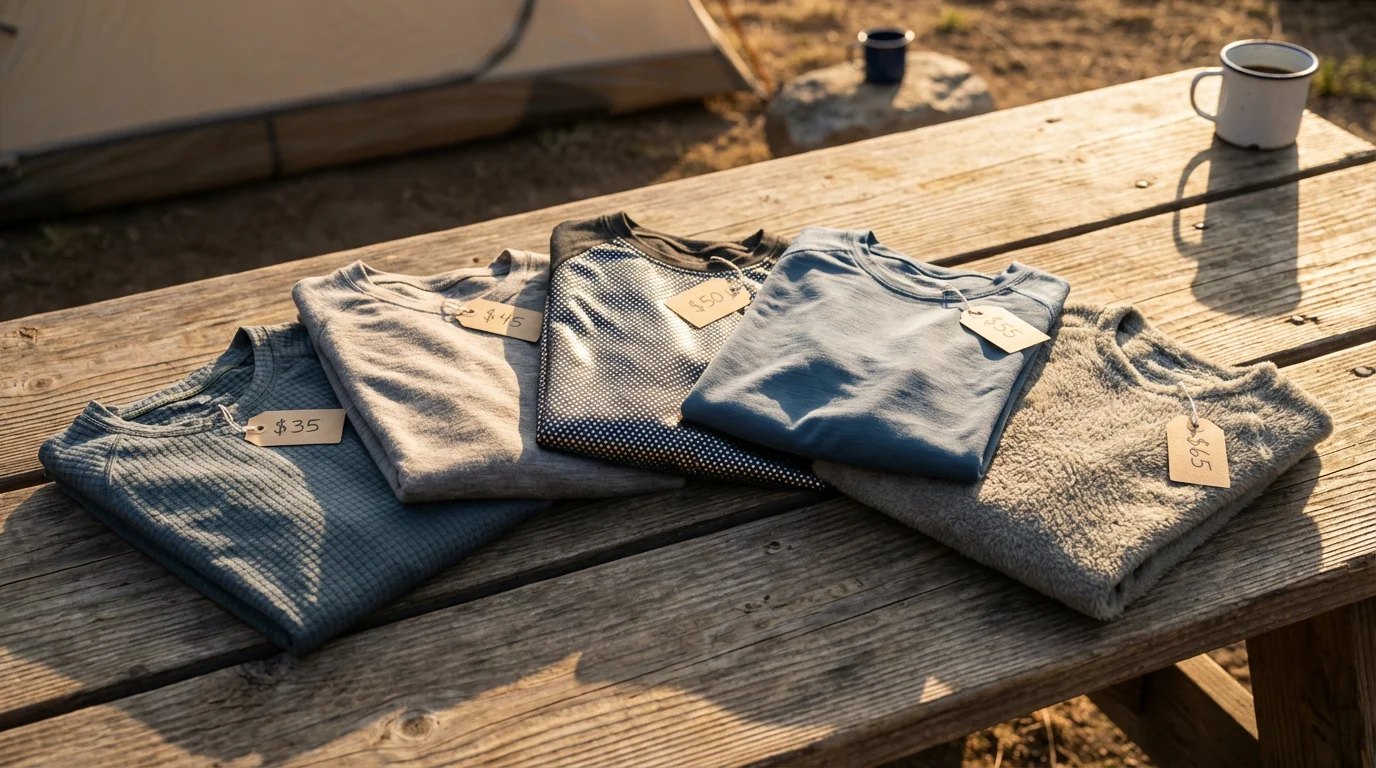
Here is something the outdoor gear industry works hard to make you forget: moisture management is a physics problem, not a price problem.
The fundamental job of any base layer is to move sweat away from your skin before it cools you down. That mechanism depends on fiber structure and weave geometry, not on whether the tag says Smartwool or an unrecognized brand you found at REI’s clearance rack. I’ve guided multi-day trips in the Cascades wearing a $28 synthetic base layer that outperformed a $110 merino top on a high-output climbing day. I’ve also worn budget options that fell apart after three washes.
The difference isn’t always price. It’s knowing what to look for.
This guide covers the best affordable base layers for camping that genuinely perform, with honest trade-offs explained for each. No premium bias, no brand sponsorships, no pretending that a $20 thermal from a big box store performs the same as a $95 piece. But also, no pretending you need to spend $95 to stay warm and dry on a camping trip.
Why Budget Base Layers Get a Bad Reputation
The outdoor gear community has a premium problem. Walk into any specialty retailer and the entry-level recommendation starts at $70. The implicit message is that anything below that threshold is irresponsible camping gear.
That reputation isn’t entirely undeserved. The worst affordable base layers for camping fail in predictable ways: they pill aggressively after five washes, the fabric stretches out and stops making skin contact, the moisture-wicking channels clog with detergent residue, or the seams fail under pack friction. These are real failure modes worth understanding.
But the gap between premium and budget performance has narrowed significantly in the last five years. Manufacturing improvements, better synthetic fiber technology, and increased market competition have pushed quality down to lower price points. A $35 to $55 synthetic base layer today performs closer to a $90 option than it did in 2019.
The key is understanding which performance attributes budget manufacturers sacrifice to hit lower price points, and whether those sacrifices matter for your specific use case. For a weekend car camping trip, they usually don’t. For a 14-day mountaineering expedition, they might.
What to Look For in Affordable Base Layers for Camping
Before listing specific products, here are the technical checkpoints that determine whether a budget base layer actually works in real camping conditions.
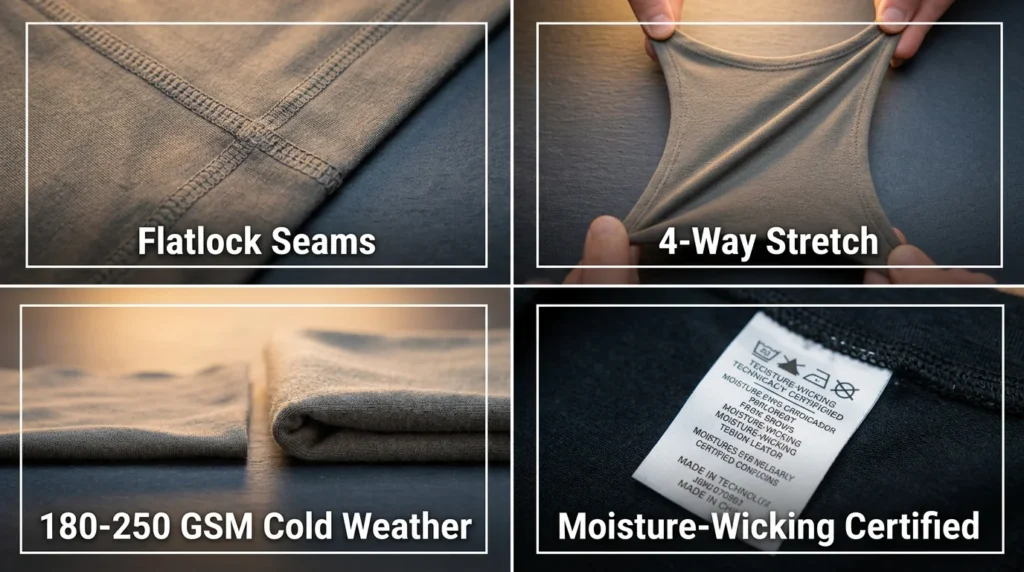
Fabric composition and weight. Look for 100% polyester, polyester/spandex blends, or merino/synthetic blends. Avoid anything with more than 5% cotton in the blend for cold-weather use. The GSM (grams per square meter) tells you the thermal weight: 120 to 180 GSM for active use above 30°F, 180 to 250 GSM for camp-level activity or colder conditions.
Flatlock seams. Seams stitched with a flatlock technique lie flat against the skin rather than creating a raised ridge. Under a pack’s hip belt or shoulder straps for six hours, a raised seam becomes a blister source. Quality affordable base layers use flatlock construction. Cheap ones skip it to save manufacturing time.
Four-way stretch. Base layers that stretch in two directions feel restrictive during active movement. Four-way stretch (both lengthwise and across) allows full range of motion for climbing, boulder hopping, and crawling in and out of a tent without the base layer riding up or bunching.
Moisture management certification. Look for terms like “moisture-wicking,” “quick-dry,” or fabric certifications like Polygiene (odor control), Bluesign (sustainable performance fabrics), or Oeko-Tex Standard 100. These signals indicate the manufacturer invested in actual performance properties rather than just producing a generic thermal.
The Best Affordable Base Layers for Camping 2026
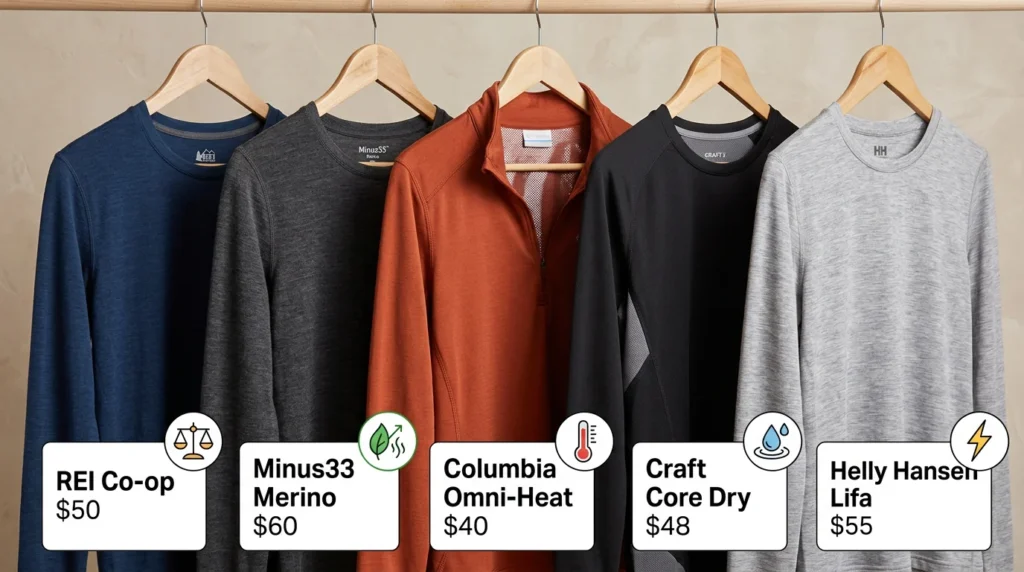
REI Co-op Midweight Base Layer, $45 to $55
This is the most consistent budget recommendation I make to clients who ask about affordable base layers for camping without sacrificing performance. REI’s in-house base layer line uses a 92% polyester / 8% spandex blend with a grid-texture construction on the interior surface that creates small air pockets against your skin, improving insulation and moisture movement simultaneously.
Tested over three seasons of guiding in the Pacific Northwest, the REI Co-op Midweight has held its shape, maintained wicking performance through repeated washings, and produced no seam failures. At $45 for the bottom and $55 for the top, you’re getting 85% of what the $100 Patagonia Capilene delivers at roughly half the price.
The honest trade-off: it runs slightly warmer than equivalent-rated synthetics from premium brands in high-output conditions, meaning you may feel clammier on hard climbs than in a more expensive technical piece. For moderate-output camping activities, this difference is negligible.
Minus 33 Lightweight Merino Base Layer, $50 to $65
Merino at this price point usually signals either very thin fabric (150 GSM or below) or a merino blend rather than pure wool. The Minus33 Lightweight falls into the blend category, mixing 85% merino with 15% nylon for durability at a price point that pure merino simply can’t achieve under $80.
The nylon addition actually solves the primary weakness of budget merino: accelerated pilling and thinning at high-friction contact points like under pack shoulder straps and at hip belt level. The nylon reinforcement extends functional life significantly. The merino content delivers genuine odor resistance and the moisture-buffering comfort that makes wool-blend base layers worth carrying on multi-day trips without laundry access.
At around $65 for a midweight top, this represents the best value entry point into merino performance for affordable base layers for camping in cold conditions.
Columbia Midlayer Base Layer, $35 to $45
Columbia’s Omni-Heat Thermal base layer line uses a silver dot heat-reflective interior lining that passively reflects radiant body heat back toward your skin. The thermal efficiency for the weight is genuinely impressive at this price point, providing real warmth in static or low-output conditions.
The trade-off is moisture management. The reflective interior also traps moisture more than a standard polyester grid construction. In high-output hiking conditions, it feels clammy faster than the REI or Minus33 options. For car camping, around-camp use, and sleep layers inside your sleeping bag, it performs excellently. For active hiking generating significant sweat, it lags behind purpose-designed wicking constructions.
At $35 to $45, it earns its place as the best affordable base layer for camping situations where warmth at minimal cost outweighs high-output moisture management.
Craft Core Dry Base Layer, $40 to $55
Craft is a Swedish brand better known in the endurance sports world than the camping community, which means their performance is underestimated and their prices are competitive against gear-market equivalents. The Core Dry line uses a hollow-fiber polyester construction where the fiber channels work like micro-capillaries, pulling moisture from skin to fabric surface with exceptional speed.
Testing in wet, high-output conditions in the Olympics showed the Craft Core Dry drying approximately 40% faster than the REI Midweight after equivalent sweat exposure. For hikers who move fast, generate significant perspiration, or camp in genuinely wet climates, this speed advantage justifies trying a non-traditional brand. Available online from endurance sport retailers at prices that undercut equivalent outdoor-specific pieces significantly.
Helly Hansen Lifa Active Base Layer, $45 to $60
Helly Hansen’s Lifa fiber is a proprietary polypropylene yarn that is technically hydrophobic at the fiber level, meaning it does not absorb moisture at all, pushing sweat off the fiber surface almost instantly. This makes Lifa Active base layers among the fastest-drying affordable options available, and the performance has been consistent across decades of production.
The limitation is odor. Polypropylene builds bacterial residue faster than polyester, particularly in warm conditions, and the odor can become persistent even after washing. For single-day or two-day trips, this is a non-issue. For week-long expeditions, it becomes noticeable. The Helly Hansen Lifa remains my recommendation for cold-weather, high-output day use where drying speed is the priority and trip length is short.
Budget vs Premium: The Honest Performance Gap
Understanding where budget affordable base layers for camping actually fall short of premium alternatives helps you decide whether the gap matters for your trip.
| Performance Factor | Budget ($35-$65) | Premium ($85-$130) | Gap Size |
|---|---|---|---|
| Moisture wicking speed | Good | Excellent | Small to moderate |
| Odor resistance | Moderate (synthetic) | Excellent (merino) | Significant on multi-day |
| Durability after 50 washes | Moderate | High | Moderate |
| Warmth-to-weight ratio | Good | Excellent | Moderate |
| Seam construction | Variable | Consistently flatlock | Small with careful buying |
| Pack size | Similar | Similar | Negligible |
| Skin comfort after 3 days | Moderate | High (merino) | Significant on long trips |
| Price | $35 to $65 | $85 to $130 | 40 to 60% savings |
For trips of three nights or less, the performance gap between a well-chosen budget option and a premium base layer is small enough that most campers won’t notice it. For week-long backcountry trips or expeditions, the odor resistance, durability, and sustained skin comfort of premium merino becomes genuinely worth the price difference.
The same cost-versus-performance calculation applies across your entire kit. Your complete camp sleep system determines how hard your base layer has to work overnight, and building that system intelligently can compensate for some of the limitations of a budget base layer.
How to Make Budget Base Layers Last Longer
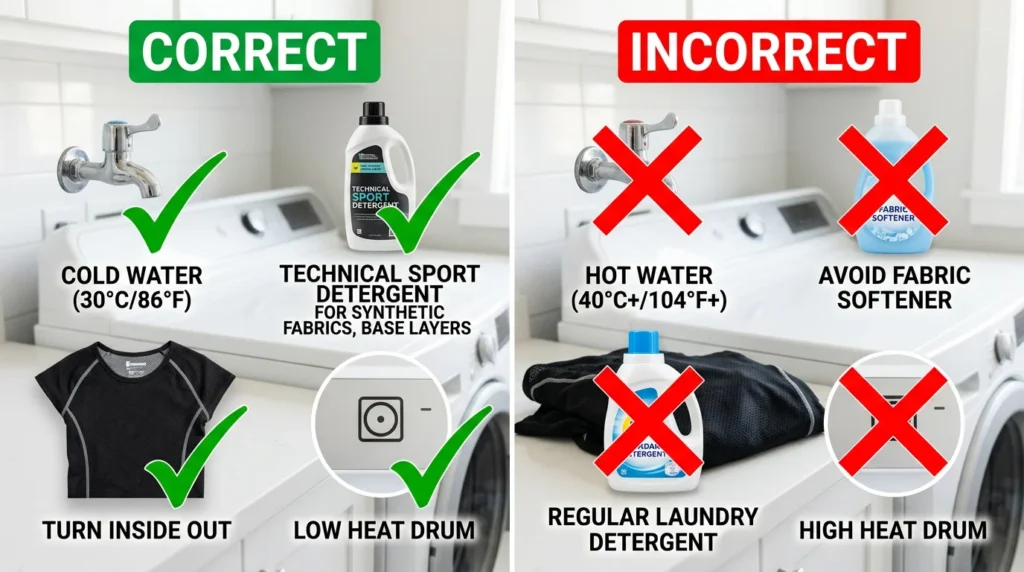
The fastest way to destroy a budget base layer is improper washing. At lower price points, the moisture-wicking treatments and fiber coatings are more vulnerable to incorrect care than premium alternatives.
Cold water wash, always. Hot water degrades the fiber structure of polyester and breaks down any moisture-wicking surface treatment applied during manufacturing. Use a technical fabric wash like Nikwax BaseWash or a small amount of sport-specific detergent without optical brighteners or fabric softener. Fabric softener is the single most destructive product you can use on a wicking base layer, it coats the fiber surface with a waxy film that permanently clogs the moisture management channels. One wash with fabric softener can reduce a quality affordable base layer’s wicking performance by 40 to 60%, permanently.
Never tumble dry on high heat. Air dry or tumble on the absolute lowest setting. The thermal shock of high heat causes polyester fibers to partially melt and fuse, destroying the loft and wicking architecture that makes the garment work.
Turn the base layer inside out before washing. The interior surface carries the most moisture residue and bacteria, and washing inside-out ensures the detergent contacts the most critical surface directly.
For a complete guide to caring for all your technical fabrics and extending gear life across your full kit, the tools and maintenance guide covers every protocol from DWR restoration to seam sealing.
Layering Your Affordable Base Layer Correctly
A budget base layer performing at 85% of a premium alternative can close most of that remaining gap through correct layering strategy. The base layer’s job is moisture management. Everything above it handles insulation and weather protection.
The most common mistake with affordable base layers for camping: wearing them too tight, thinking compression improves warmth. Correct fit means snug skin contact without compression. Compression reduces the air gap that contributes to insulation and increases friction against the skin during movement.
The second mistake: wearing a base layer and immediately putting an impermeable shell on top with no mid-layer. Moisture moved off your skin by the base layer needs somewhere to go. Without a breathable mid-layer to continue the moisture journey outward, it condenses on the inside of the shell and drips back down. A fleece or synthetic insulation mid-layer provides the breathable bridge that makes your base layer’s work meaningful.
Understanding the full system is what makes any base layer, budget or premium, work as intended. The complete framework is covered in detail in the camping layering system guide, which walks through every layer interaction from base to shell.
Affordable Base Layers by Camping Style
| Camping Style | Top Pick | Why It Works | Price |
|---|---|---|---|
| Weekend car camping | Columbia Omni-Heat Thermal | Static warmth, low cost | $35 to $45 |
| Multi-day backpacking | Minus33 Merino Blend | Odor resistance, durability | $55 to $65 |
| Active day hiking | Craft Core Dry | Fastest drying, high-output | $40 to $55 |
| Cold-weather base camping | REI Co-op Midweight | Consistent all-round performance | $45 to $55 |
| Fast and light / trail running | Helly Hansen Lifa Active | Instant moisture release | $45 to $60 |
| Sleeping layer (inside bag) | Columbia Omni-Heat or Minus33 | Warmth retention, comfort | $35 to $65 |
The right affordable base layer for camping matches your trip type, not just your budget. Buying the cheapest option across the board and hoping for the best is not a strategy. Buying intelligently at lower price points absolutely is.
For cold-weather camping specifically, pairing a budget affordable base layer with a proper 4-season sleep system and a quality camping layering system setup creates total warmth that no single expensive item alone achieves.
Frequently Asked Questions About Affordable Base Layers for Camping
Q: What is the best affordable base layer for cold weather camping overall?
The REI Co-op Midweight Base Layer at $45 to $55 delivers the most consistent all-round performance at a budget price point. It manages moisture well during moderate-output activities, maintains warmth at camp, holds its shape through multiple seasons, and is widely available in person for fit testing.
Q: Are cheap merino wool base layers actually merino?
Many budget “merino” base layers below $60 are merino blends, typically 80 to 85% merino with polyester or nylon making up the remainder. Pure merino at budget price points almost always means a very low GSM (under 150g), which performs well in mild conditions but lacks the thermal depth for cold-weather camping. For cold-weather use specifically, a merino/nylon blend at 200 to 220 GSM outperforms pure merino at 150 GSM regardless of price.
Q: Can I use a budget thermal from a big box store as a base layer for camping?
You can, with important caveats. Big box store thermals are typically 100% polyester with minimal moisture-wicking treatment, moderate seam quality, and no performance certifications. For mild conditions and casual camping, they work adequately. For serious cold-weather camping, high-output hiking, or multi-day trips, the performance limitations become genuinely problematic. The $10 to $20 price difference between a big box thermal and the REI Co-op Midweight is well worth paying.
Q: How many base layers do I need for a camping trip?
For trips of one to three nights: two base layer sets minimum, one to wear and one to sleep in. Sleeping in your hiking base layer transfers sweat residue, body oils, and bacteria directly into your sleeping bag, degrading down loft and synthetic insulation over time. A dedicated sleep layer extends your sleeping bag’s life significantly.
Q: Does fabric softener really destroy base layers?
Yes, completely and irreversibly. Fabric softener deposits a waxy coating on synthetic and merino fibers that blocks the moisture-wicking channels permanently. One wash with fabric softener can reduce wicking performance by 40 to 60%. Always use a technical fabric wash like Nikwax BaseWash or a small amount of fragrance-free sport detergent.
Q: What is the difference between a base layer and a thermal?
Marketing terminology used interchangeably, but technically distinct. A thermal is any warm undergarment, often with no specific moisture management engineering. A base layer is specifically designed to manage moisture as its primary function while providing warmth as a secondary benefit. For camping in cold and active conditions, you want a true base layer with moisture-wicking engineering, not just a warm thermal.
Q: Are budget base layers good for hiking boots in winter?
Base layers cover your torso and legs. For winter hiking, a proper moisture-wicking base layer on your legs is as important as your upper body layer, since leg sweat during climbs creates the same cooling-when-you-stop problem. The principles are identical. Pair your affordable base layers for camping with the right footwear decisions covered in the hiking boots vs trail runners guide for a complete cold-weather system.