

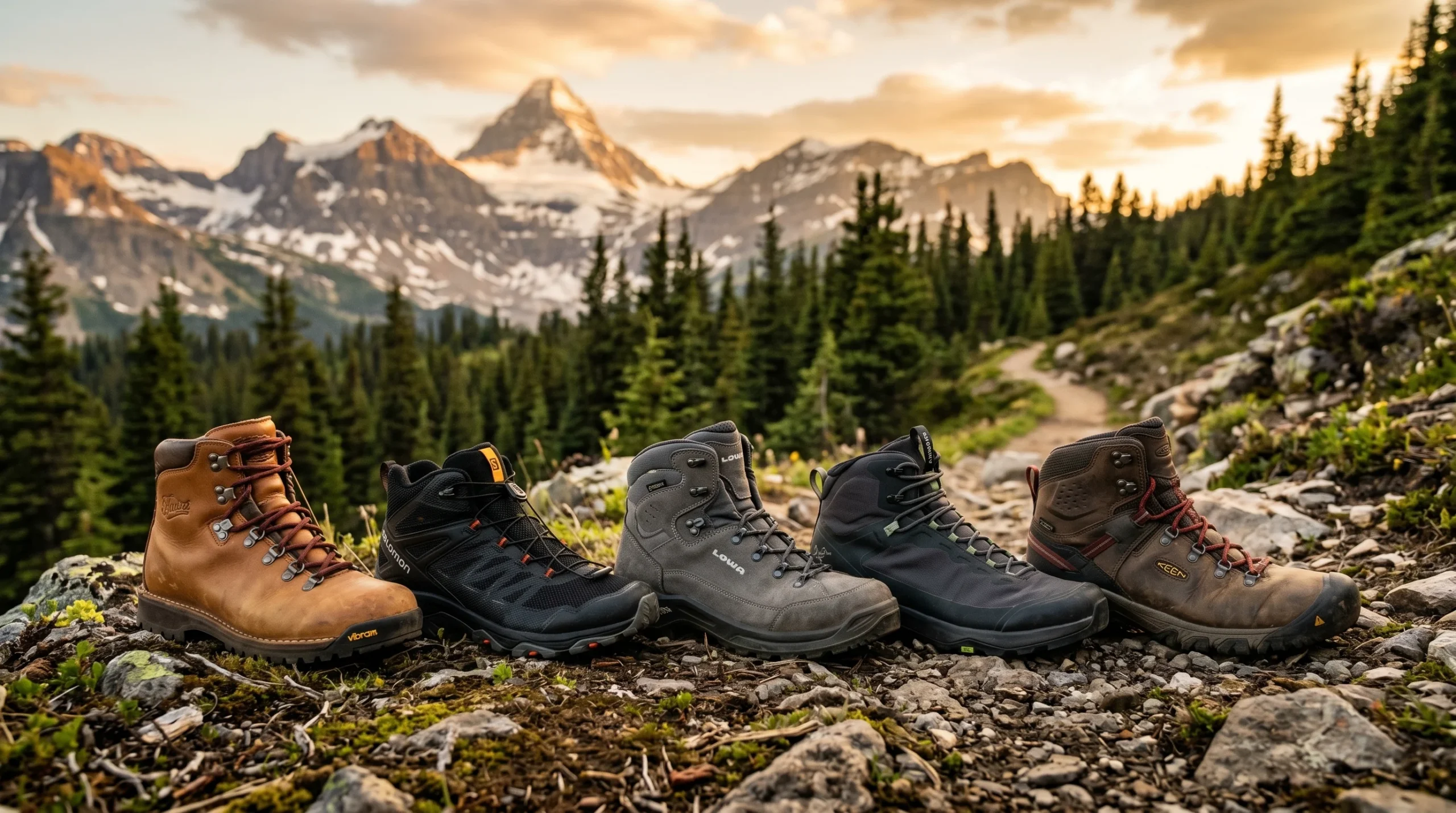
Buying the wrong hiking boot will not just ruin your weekend. It can cost you lost toenails, agonizing blisters, and sprained ankles miles from your car. Most popular guides are built on one tester’s foot, not yours. Instead of relying on a single tester’s subjective opinion, we spent hundreds of hours analyzing boot specs, aggregating thousands of verified buyer reviews, and cross-referencing podiatrist insights to build the ultimate, objective guide to the best hiking boots for men. Whether you have wide feet, bad knees, or need serious off-trail support, this review will match you with the exact men’s hiking boot you need.
Key Takeaways
- The Salomon X Ultra 5 Mid GTX is the best all-around agile boot for fast day hikers and weekend warriors with medium or narrow feet.
- The KEEN Targhee IV WP is the top pick for wide feet, bunions, and blister-prone hikers, with the roomiest toe box in the category.
- The HOKA Anacapa 2 Mid GTX delivers the most joint relief, making it podiatrist-endorsed and purpose-built for all-day wear.
- The LOWA Renegade EVO GTX is the gold standard for heavy pack loads and multi-day backpacking expeditions.
- The Merrell Moab 3 WP is the most trusted budget entry point under $170 for first-time hikers and casual trail walkers.
Jump to Your Foot Type
Why Subjective Boot Tests Are Ruining Your Feet !
Here is an uncomfortable truth: a boot that feels incredible on a gear tester doing 10,000 miles of Pacific Crest Trail may destroy your feet on a 6-mile day hike. Boot fit is profoundly personal. It is governed by your heel width, arch height, toe splay, and whether you are dealing with a condition like gout, plantar fasciitis, or chronic knee pain. Most major reviews are built on one person’s subjective experience. That experience is valid for them. It may be completely wrong for you.
That is exactly why this guide is different. Rather than trusting a single tester’s gut feeling, we cross-referenced verified buyer reviews at scale, clinical podiatric guidance, and hard technical specs including heel-to-toe drop in millimeters, lug depth, midsole stack height, and shank construction. Objective data does not have a shoe size. Use the Jump Table above to go directly to the boot that matches your specific foot type, or read the full reviews below in order.
In-Depth Reviews : Top Men’s Hiking Boots of 2026
Every boot below was evaluated across the same six criteria: weight, waterproofing method, heel-to-toe drop, outsole lug depth, fit profile, and verified long-term user satisfaction. A “Buy this if” and “Skip this if” verdict is provided for every model so you can make a decision in seconds, backed by the full review if you want the details.
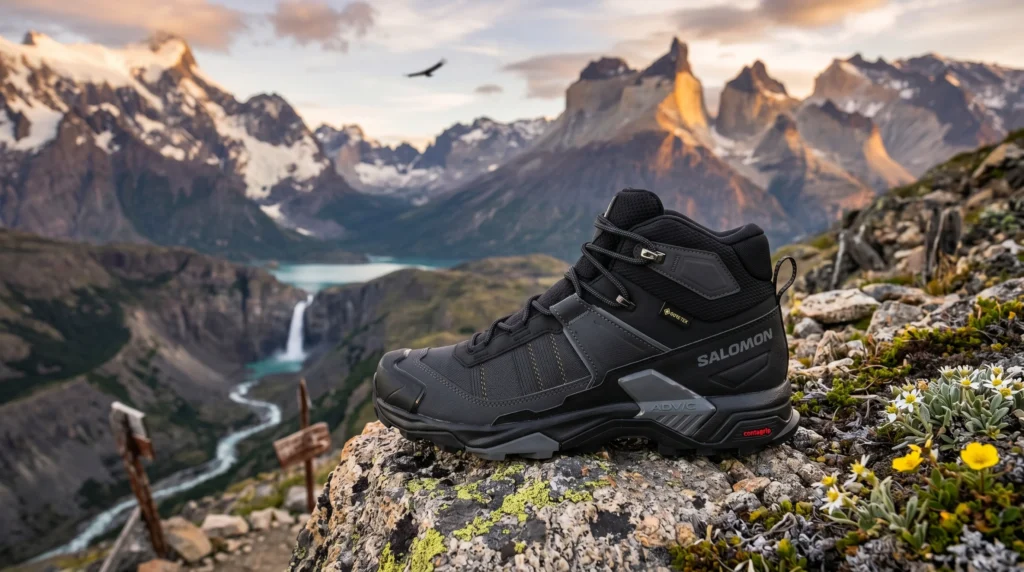
1 – Best Overall for Agility : Salomon X Ultra 5 Mid GTX
✅ Buy This If…
You want a lightweight, trail-runner-inspired boot for technical terrain and you have a medium or narrow foot. This is the best hiking boot for men who move fast and cover varied ground.
❌ Skip This If…
You have wide feet. Multiple independent reviewers confirm the X Ultra 5 runs slightly narrow. Forcing a wide foot into this boot is a reliable way to develop blisters within the first five miles.
The Salomon X Ultra 5 Mid GTX is the evolution of one of the most trusted platforms in hiking footwear, and it earns its position at the top of nearly every best hiking boots for men list in 2026. It pairs a full GORE-TEX waterproof membrane with Salomon’s proprietary Advanced Chassis midsole, delivering torsional rigidity without the weight penalty that traditionally comes with it. At approximately 1 lb. 15 oz. per pair, it sits firmly in the lightweight hiking boot category while still offering mid-cut ankle support.
The Contagrip MA outsole provides multi-directional traction that consistently outperforms heavier models on technical, loose, and wet terrain. Independent testers describe the feel as athletic rather than rigid, which is a meaningful distinction for hikers who cover 10 to 20 miles in a single day and want a boot that works with their stride rather than resisting it. The boot runs true to size but slightly long and narrow, so sizing up half a size is advisable for most buyers.
Key Specs — Salomon X Ultra 5 Mid GTX
- Weight~1 lb. 15 oz.
- WaterproofingGORE-TEX
- Heel-to-Toe Drop~11mm
- Lug Depth~5mm (Contagrip MA)
- Fit ProfileMedium–Narrow; size up ½
- Price~$190
Pros
- Ultralight for a mid-cut waterproof boot
- Exceptional grip on wet and loose terrain
- Trail-runner agility with ankle support
- True GORE-TEX, not a budget alternative
- Minimal break-in period
Cons
- Not suitable for wide feet
- Outsole wear after 400 to 500 miles
- Less cushioning than HOKA for flat walking
- Pressure points on high-volume feet
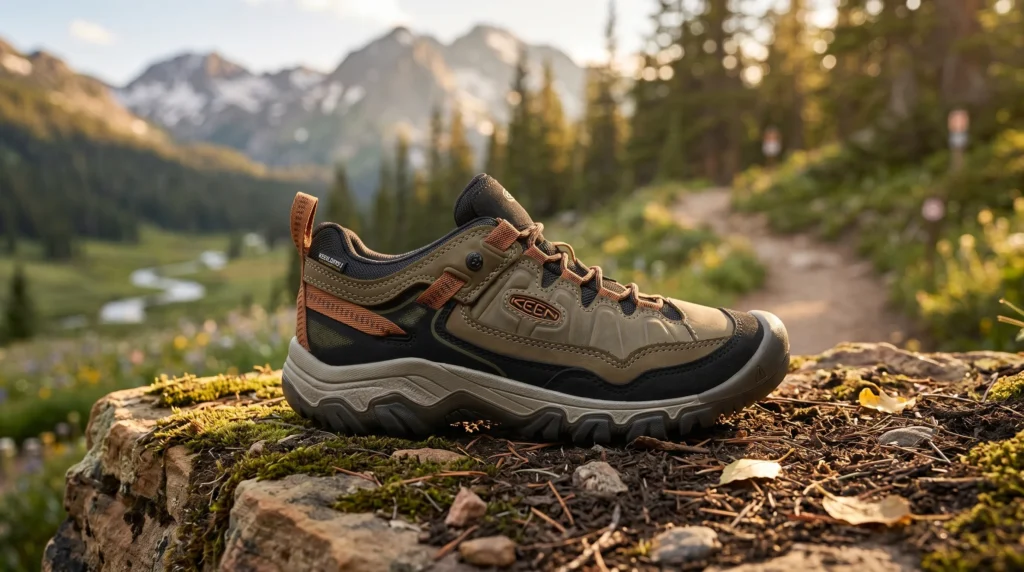
2 – Best for Wide Feet and Blister Prevention : KEEN Targhee IV WP
✅ Buy This If…
You have wide feet, bunions, or a history of blisters in traditional boots. The KEEN Targhee IV’s toe box is the widest in this entire category.
❌ Skip This If…
You are counting grams. At nearly 600g per boot in a size 8, this is one of the heavier options in this review. If trail speed and pack weight efficiency are your priority, the Salomon above is the better call.
Hikers with gout deserve a specific answer that most guides completely skip. If you are managing gout, you need two things from a hiking boot: a rigid sole to limit flexion at the inflamed metatarsophalangeal joint, and a massively roomy toe box to prevent any pressure on a swollen big toe during activity. The KEEN Targhee IV WP addresses both requirements better than any other boot on this list. The wide toe box eliminates lateral pressure, while the structured midsole keeps the forefoot from bending aggressively on steep descents. Hikers managing gout flares consistently rank the Targhee IV as the most comfortable option for getting back on the trail safely.
Beyond foot ailment cases, the Targhee IV earns its spot among the best hiking boots for men simply through its build quality. Its newly reformulated rubber compound on the 4.5mm multi-directional lugs is claimed to be significantly more durable and grippy than the previous generation. The KEEN.DRY waterproof membrane handles moderate wet conditions reliably, though sustained submersion in deep crossings can overwhelm it. The nubuck leather and padded collar arrive nearly broken-in, which is a real-world advantage over stiffer leather alternatives that demand weeks of painful conditioning.
Key Specs — KEEN Targhee IV WP
- MidsoleAir-injected PU
- WaterproofingKEEN.DRY
- Toe BoxExtra wide forefoot
- UpperLeather + recycled materials
- Fit ProfileWide-foot friendly
- Price~$185
Pros
- Excellent fit for wide feet and bunions
- No-blister comfort reported by many testers
- Durable sole construction aimed at stopping delamination
- Strong toe protection and secure lacing
- Supportive underfoot feel for long walks
Cons
- Runs warmer than non-waterproof options
- Chunkier feel than athletic hiking boots
- Heavier and less agile than Salomon
- Can feel bulky for fast summer hiking
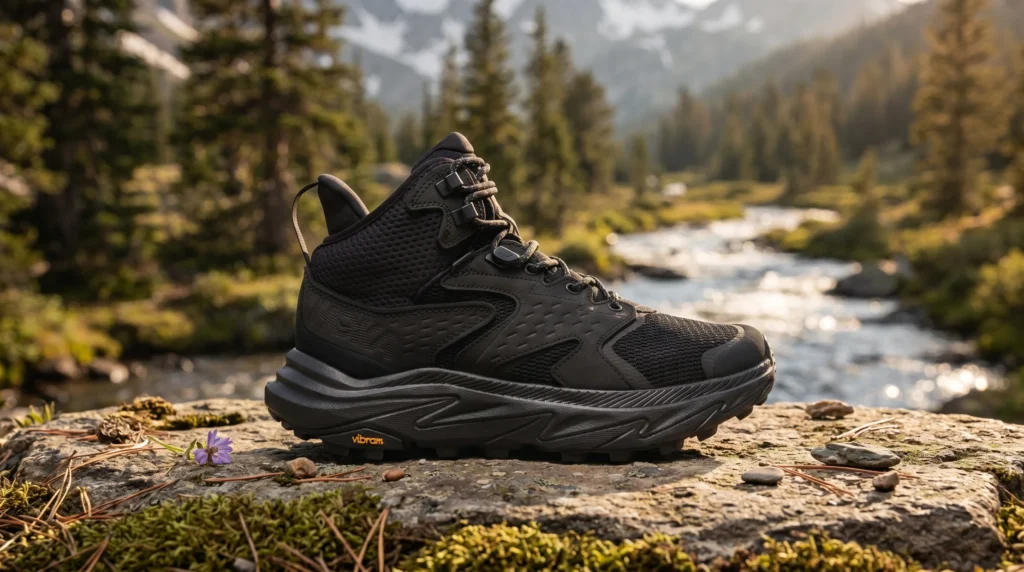
3 – Best for Joint Pain and All-Day Wear : HOKA Anacapa 2 Mid GTX
✅ Buy This If…
You have knee pain, plantar fasciitis, or need a boot that still feels comfortable after 8 or more hours on your feet. The rockered sole and thick midsole are the most effective combination for impact reduction among the best hiking boots for men in 2026.
❌ Skip This If…
You want maximum ground feel on technical, off-camber terrain. The plush stack height sacrifices precision for comfort. On aggressive scrambling routes, the reduced proprioception becomes a meaningful safety trade-off.
Podiatrists frequently recommend HOKA boots, including the Anacapa 2 Mid GTX, specifically because their thick cushioning and rockered soles reduce impact on joints and the plantar fascia during long hikes. The swallowtail heel design cradles the calcaneus to stabilize your stride and reduce the lateral rolling that causes cumulative knee and hip stress over long distances. Lab measurements place the heel stack at 34.4mm, putting it at the high end of the category and delivering genuine impact protection that goes beyond marketing language.
What separates the Anacapa 2 from a casual sneaker is how it packages that comfort in a trail-ready shell. A full GORE-TEX membrane keeps feet dry in sustained wet conditions, while the Vibram Megagrip outsole provides the confident traction needed on wet rock and loose soil. The rockered midsole geometry also promotes a more efficient toe-off motion, which reduces strain on the metatarsal heads during the repetitive load cycles of a long day on the trail. If you have ever wondered why your feet hurt less in running shoes than in traditional hiking boots, the answer is almost exactly what HOKA has engineered here.
Podiatrist Insight HOKA’s thick-cushion, rockered-sole design mimics the therapeutic footwear principle used in clinical settings for patients with plantar fasciitis, Achilles tendinopathy, and osteoarthritis of the knee. The rocker geometry shifts weight forward during toe-off, reducing peak pressure on inflamed tissue. For men who spend 8 to 12 hours on their feet, whether on trail or at work, the Anacapa 2 Mid GTX is among the most clinically sound options in the best hiking boots for men category.
Key Specs — HOKA Anacapa 2 Mid GTX
- Weight1 lb. 13.4 oz.
- WaterproofingGORE-TEX
- Stack HeightHigh-cushion platform
- RideRockered smooth stride
- Fit ProfileComfort-first trail fit
- Price$195
Pros
- Outstanding comfort and shock absorption
- Very smooth, efficient ride on long days
- Good stability despite the plush build
- Strong wet-condition setup with Gore-Tex and Vibram
- Great option for joint-sensitive hikers
Cons
- Outsole durability has been a repeated criticism
- Looks are polarizing for some buyers
- Less ground feel than traditional boots
- Not the best choice for very technical terrain
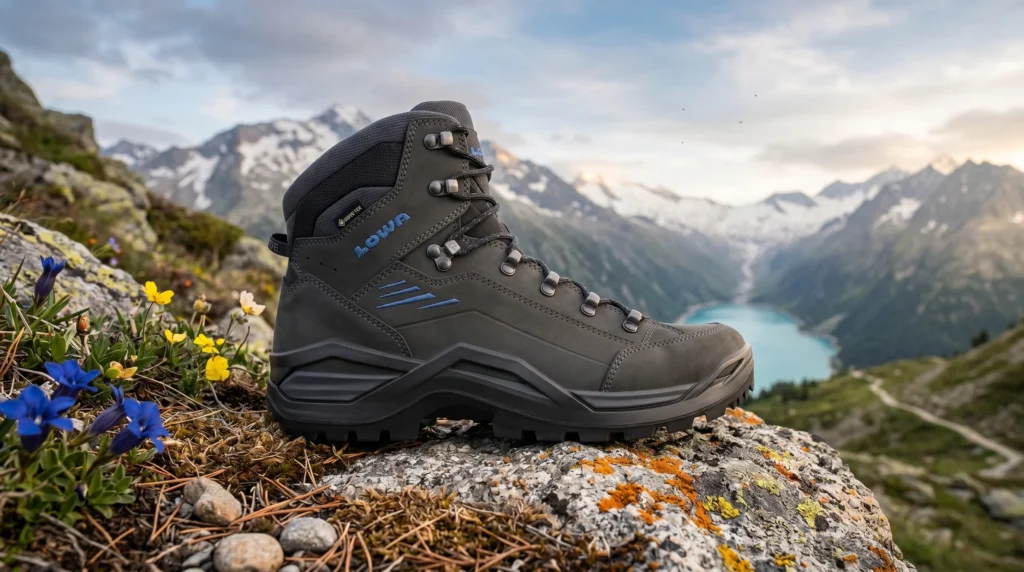
4 – Best for Heavy Backpacking : LOWA Renegade EVO GTX
✅ Buy This If…
You are carrying a 40 to 60 lb. pack across multi-day routes. The full-length nylon shank and nubuck leather build deliver ankle support and load-transfer capability that no lightweight boot can replicate at high pack weights.
❌ Skip This If…
You are doing fast, light day hikes. At 2 lbs. 10 oz., this boot will fatigue your legs unnecessarily over long, flat distances where a lighter option would more than suffice.
The LOWA Renegade EVO GTX is one of the most trusted names in serious backpacking footwear, and it earns that reputation through engineering rather than marketing spend. The Monowrap frame reduces overall boot weight without compromising torsional rigidity, while the Vibram outsole provides confident grip on loose scree and wet rock where heavier loads amplify the consequences of a slip. GORE-TEX Extended Comfort construction manages heat buildup better than standard GTX membranes, a meaningful advantage when you are wearing these boots for 8 to 10 hours on consecutive days.
The climate-control footbed actively wicks moisture away from the sock liner during high-output ascents, reducing the maceration that leads to blisters on multi-day trips. The full-grain nubuck leather upper stiffens the boot platform significantly compared to synthetic alternatives, which is exactly the point. Under a heavy pack, your foot needs a rigid platform to transfer load efficiently to the sole rather than collapsing inward with every step. This is a serious tool for serious terrain.
Key Specs — LOWA Renegade Evo GTX Mid
- Weight2 lb. 2.2 oz.
- WaterproofingGORE-TEX
- UpperLeather
- SupportFull-pack friendly
- Fit ProfileStable, structured fit
- Price$285
Pros
- Excellent support with a full backpacking load
- Very protective and confidence-inspiring
- Updated midsole improves comfort over older versions
- Fewer seams help reduce pressure points
- Long-standing reputation for durability
Cons
- Overkill for easy or short hikes
- Heavier than lighter all-around boots
- Only available in waterproof format
- Higher price than mainstream competitors
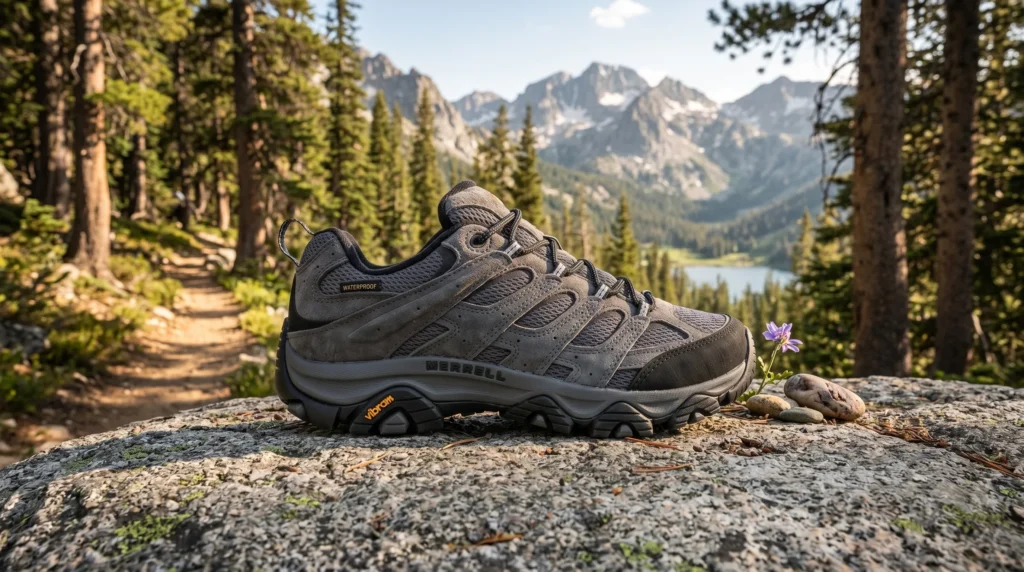
5 – Best Budget Entry Point : Merrell Moab 3 WP
✅ Buy This If…
You are new to hiking, working a limited budget, or want a reliable, proven boot backed by millions of positive reviews. At ~$170, this is the best hiking boot for men who want genuine quality without overspending.
❌ Skip This If…
You need specialized support for a medical condition such as plantar fasciitis or severe overpronation. The stock footbed is adequate for healthy feet. Hikers with chronic arch issues should plan to immediately upgrade to an aftermarket insole.
Merrells are highly regarded by podiatrists and everyday hikers alike for their supportive footbeds and wide toe boxes, which allow feet to swell naturally during activity without creating pressure points. The Moab acronym stands for Mother of All Boots, and that name has been earned over more than a decade as the gateway boot for more first-time hikers than any other model in the category. The Moab 3 refines the beloved Moab 2 formula with a higher-quality upper construction and an improved air-cushion heel absorber while keeping the price under $170.
The Vibram TC5+ outsole is one of the most wear-resistant compounds available at this price point, giving the Moab 3 a meaningful durability edge over competing budget options. The M Select DRY waterproof membrane keeps feet dry in light rain and stream crossings, though it will not match the performance of GORE-TEX in sustained downpours. Hikers with chronic arch issues should note that an aftermarket insole like Superfeet Green or Currex HikePro transforms this boot’s support profile and is genuinely worth the additional investment of $30 to $50.
Pro Tip Pair your Merrell Moab 3 with merino wool hiking socks from Darn Tough or Smartwool. Merino wool regulates temperature in both cold and warm conditions and dramatically reduces blister-causing friction. It is arguably the best $20 to $30 you will spend alongside any hiking boot purchase, regardless of which model you choose.
Key Specs — Merrell Moab 3 Mid Waterproof
- Weight1 lb. 11.1 oz.
- WaterproofingM-Select Dry
- UpperLeather / mesh
- OutsoleVibram TC5+
- Fit ProfileComfortable, accommodating
- Price$170
Pros
- Comfortable and affordable category benchmark
- Durable outsole and dependable all-around performance
- Widely trusted by casual and first-time hikers
- Ready-to-wear feel for many users
- Great value at the lower end of premium hiking boots
Cons
- Less technical and precise than Salomon
- Not as cushioned as HOKA
- Less supportive than LOWA for full-pack backpacking
- Still benefits from an insole upgrade for some hikers
The Ultimate Brand Showdowns
Some of the most common searches around the best hiking boots for men are not looking for individual boot reviews. They are direct brand battles. Hikers who have narrowed their shortlist to two brands need a clear, data-driven verdict rather than a diplomatic non-answer. These head-to-heads address the specific comparisons dominating hiking forums and search queries right now.
Hoka vs. Merrell: Which Is Best for All-Day Comfort?
This comparison comes down to one question: are you prioritizing cushioned comfort or proven durability? HOKA’s Anacapa 2 Mid GTX delivers a cushioning experience that no traditional hiking boot can match. With a lab-measured 34.4mm heel stack and rockered geometry, reviewers consistently describe long days in HOKAs as significantly less fatiguing than equivalent days in any conventionally built boot. If you are dealing with bad knees, plantar fasciitis, or joint inflammation, HOKA wins this matchup without serious debate. Podiatrists recommend HOKA specifically because the thick midsole and rocker geometry reduce peak pressure on inflamed tissue during the repetitive load cycles of hiking.
Merrell takes the durability and value crown decisively. Its Vibram TC5+ outsole is among the most wear-resistant compounds in the category at any price, and its lower stack height delivers better proprioception and ground feel for technical trails. Merrell’s wide toe box also accommodates a broader range of foot shapes, making it more universally accessible than HOKA’s relatively snug fit. If you want a boot that will survive 1,000 miles and still feel structurally sound, Merrell earns your trust at a $50 lower price point.
Hoka vs. Merrell: Which Is Best for All-Day Comfort?
Tap between quick verdict and full comparison
Exceptional cushioning with a high-stack midsole and rockered ride that reduces fatigue on long days.
Strong durability reputation with a dependable outsole and long-term everyday trail use.
You want the softest ride, better impact absorption, and more relief for knees, heels, and long days on your feet.
You want a lower price, more traditional support, and a durable all-around boot for regular hiking.
Salomon vs. Merrell: The Durability Battle
This comparison is closer than most people expect, and the answer depends on the terrain you are hiking. Salomon’s Contagrip MA compound is engineered for multi-directional grip and performs brilliantly on wet, technical surfaces. However, independent reviewers note visible outsole wear after 400 to 500 miles on abrasive, gritty terrain. Merrell’s Vibram TC5+ partnership gives the Moab 3 a meaningful edge in pure outsole longevity, particularly on the rocky, dusty trails that wear rubber fastest.
Where Salomon recaptures ground is in athletic performance and traction precision. The X Ultra 5’s Advanced Chassis provides torsional rigidity that lets your foot pivot confidently on off-camber ground, something the Moab 3 is simply not engineered to match at the same level. For beginner to intermediate hikers covering moderate terrain, Merrell’s durability advantage is real and worth the lower price. For experienced hikers who move fast, cover varied technical terrain, and prioritize performance over raw mileage longevity, Salomon’s engineering edge justifies the price premium.
Salomon vs. Merrell: The Durability Battle
Tap between quick verdict and full comparison
Vibram TC5+ outsole is a proven workhorse that holds up well over hundreds of miles of regular trail use.
Lightweight textile and synthetic upper is highly protective and resistant to trail debris.
Around $170, the more accessible choice for budget-minded hikers.
You hike technical or rocky terrain and want a boot that grips hard, moves fast, and protects well on demanding trails.
You want proven long-term durability on everyday trails without paying a premium, with a trusted outsole that just keeps going.
The Definitive Men’s Hiking Boot Buyer’s Guide
Finding the best hiking boots for men means understanding the technical language behind the specs. Every number on a boot’s product page tells you something specific about how it will behave on your foot and on the trail. This section decodes the specs that matter most so you can evaluate any boot, including models released after this guide was published, with confidence.
How to Size Your Boots to Prevent Black Toenails
Always size up at least half a size from your everyday street shoe. Your feet swell by up to a full size during sustained physical activity, and a boot that fits perfectly in the store at 10am will be painful by 3pm on a mountain descent. Try boots on at the end of the day when your feet are at their most swollen, and always wear the exact sock thickness you plan to hike in. With the correct sizing, your toes should have roughly one thumb-width of space between the longest toe and the boot’s toe cap during a downhill simulation.
Pro Tip When trying on boots in a store, ask staff to let you walk down a ramp or inclined surface. Your foot slides forward on descents, which is exactly when black toenails form. A boot that feels perfect on flat ground may put your toes in direct contact with the cap on any meaningful downhill gradient.
GORE-TEX vs. Breathability : Do You Actually Need Waterproof Boots ?
GORE-TEX and equivalent waterproof membranes prevent water intrusion from outside, but they also trap heat and reduce evaporative cooling from inside your boot. In hot, dry climates or summer conditions, a non-waterproof mesh boot dries faster after a stream crossing and keeps your feet measurably cooler over a full day. In cold, wet environments such as fall Pacific Northwest trails, spring snowmelt routes, or European alpine terrain, a GTX membrane earns every dollar of its premium. If you hike in mixed or unpredictable conditions, opt for the GTX version of whichever boot you select.
Pro Tip Merino wool hiking socks from Darn Tough or Smartwool regulate temperature in both cold and warm conditions and dramatically reduce blister-causing friction against your boot liner. They are arguably the best $20 to $30 you will spend alongside any hiking boot, and they are especially important when wearing GORE-TEX boots in warmer weather to manage the moisture that the membrane traps inside.
GORE-TEX vs. Non-Waterproof
Tap between quick verdict and full comparison
Keeps feet dry in rain, river crossings, wet grass, and snow. Essential for multi-day trips in unpredictable weather.
Much better airflow keeps feet cooler and drier from sweat on warm, dry trails.
More affordable entry point, with the same outsole and construction at a lower price.
You hike in unpredictable weather, cold temperatures, or wet terrain — or if keeping your feet dry across a multi-day trip is non-negotiable.
You mostly hike in warm, dry conditions where breathability and lighter weight will serve you better than waterproofing you rarely need.
Understanding Your Boot’s Anatomy : Drop, Lugs, and Soles
These four specs govern how your body moves inside every boot on this list, and understanding them allows you to compare any two models in seconds.
- Heel-to-Toe Drop: The height difference in millimeters between the heel and the toe. Standard hiking boots run 10 to 12mm, which keeps the Achilles tendon in a relaxed, shortened position. Zero-drop boots (0 to 4mm) promote a more natural gait but demand significantly more from your calves and plantar fascia. Transition slowly if switching to low-drop footwear, particularly if you have tight calves or a history of Achilles issues.
- Lug Depth: The depth of the rubber nubs on your outsole. Lugs of 4 to 5mm handle most trail conditions reliably. Deeper lugs (6mm and beyond) excel in mud but feel clunky on hardpack, and they wear faster on abrasive rock. The KEEN Targhee IV’s 4.5mm multi-directional pattern is an excellent all-conditions benchmark.
- Stack Height and Midsole Thickness: A higher stack means more cushioning and impact absorption, and less ground feel. HOKA maximizes this principle with a 34mm heel stack. Traditional boots use 20 to 25mm for a balance between cushion and proprioceptive feedback. If you have joint pain, favor high stack. If you need precision on technical terrain, favor lower stack.
- Shank Construction: A rigid plate inside the midsole. A full-length shank (like the LOWA Renegade EVO) distributes pack weight across the entire foot and is essential for loads above 35 lbs. A three-quarter shank, found in most day-hiking boots, offers flex for a more natural walking motion and is entirely appropriate for lighter loads and moderate terrain.