
Key Takeaways:
- The Teva Hurricane XLT3 is the best all-around choice for most hikers, solid traction, sneaker-like support, under $100.
- Budget hikers won’t go wrong with the Teva Original Universal at just $65 and 11 oz.
- Minimalists should look at the Xero Shoes Z-Trail EV, only 8.6 oz and backed by a 5,000-mile warranty.
- Narrow feet? The Ecco Yucatan’s locked-in fit and padded straps are built for you.
- Always match your sandal to your foot shape, not just the trail.
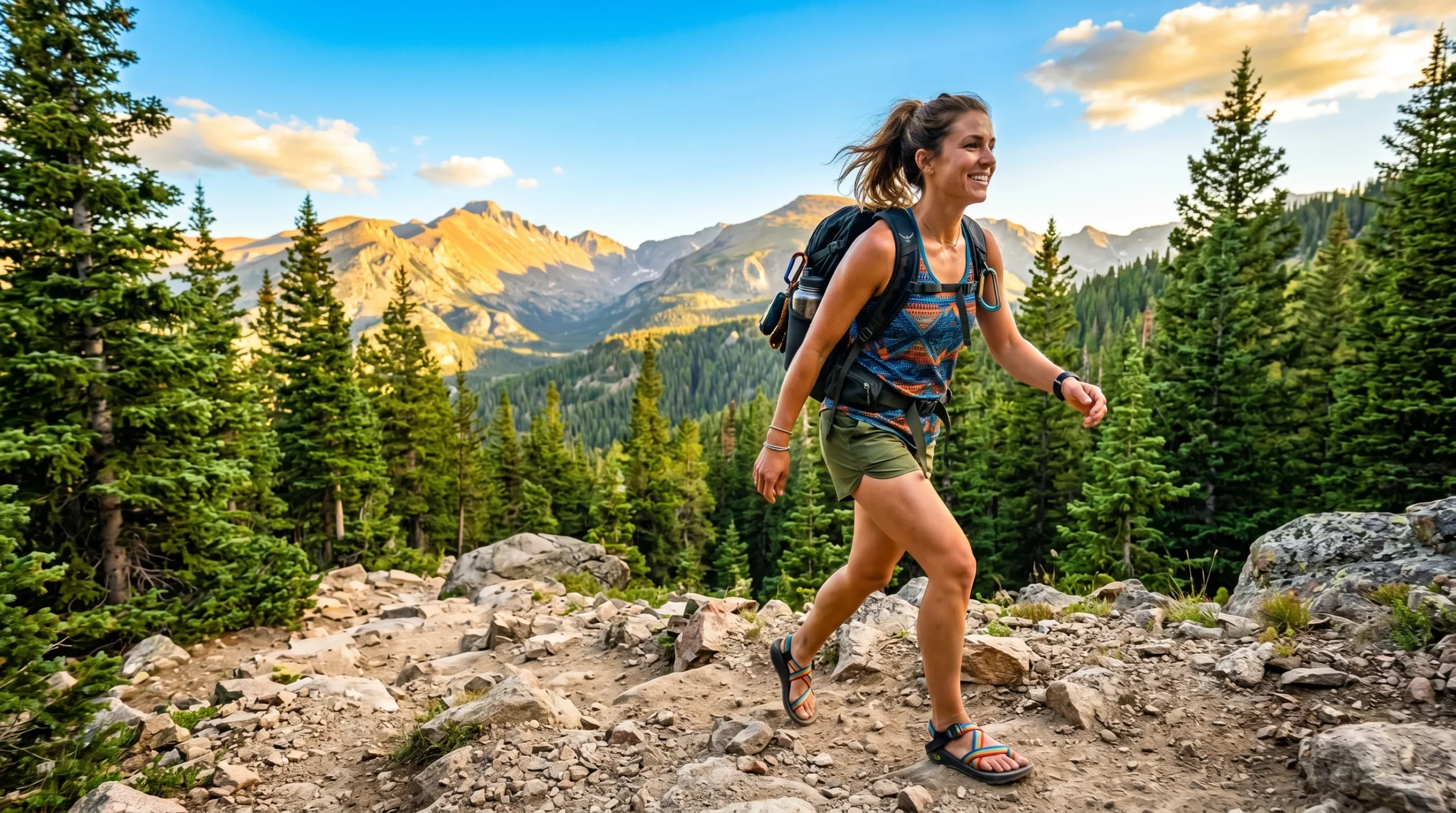
Let’s be honest : there’s something deeply satisfying about hiking in sandals. The breeze on your feet, no breaking-in period, no waterlogged boots that take three days to dry. For years, traditional hiking boots were the unquestioned standard, heavy, hot, and inescapable. But in 2026, more and more trail runners, thru-hikers, and weekend wanderers are making the switch to breathable, versatile sandals that keep up with everything from creek crossings to gravel climbs. This guide will help you pick the best hiking sandals for women.
Quick Comparison : Our Top 7 Picks
| Product | Best For | Price | Weight (Pair) |
|---|---|---|---|
| Teva Hurricane XLT3 | Best Overall | $100 | 15.5 oz. |
| Teva Original Universal | Best Budget | $65 | 11 oz. |
| Chaco Z/1 Classic | Most Versatile | $105 | 1 lb. 5.2 oz. |
| Xero Shoes Z-Trail EV | Best Ultralight | $80 | 8.6 oz. |
| HOKA Hopara 2 | Best Hybrid | $140 | 1 lb. 4.8 oz. |
| Ecco Yucatan | Best for Narrow Feet | $130 | 1 lb. 12.6 oz. |
| Luna Mono Winged | Best Zero-Drop | $110 | 10.8 oz. |
In-Depth Reviews
1. Teva Hurricane XLT3 – Best Overall Hiking Sandal
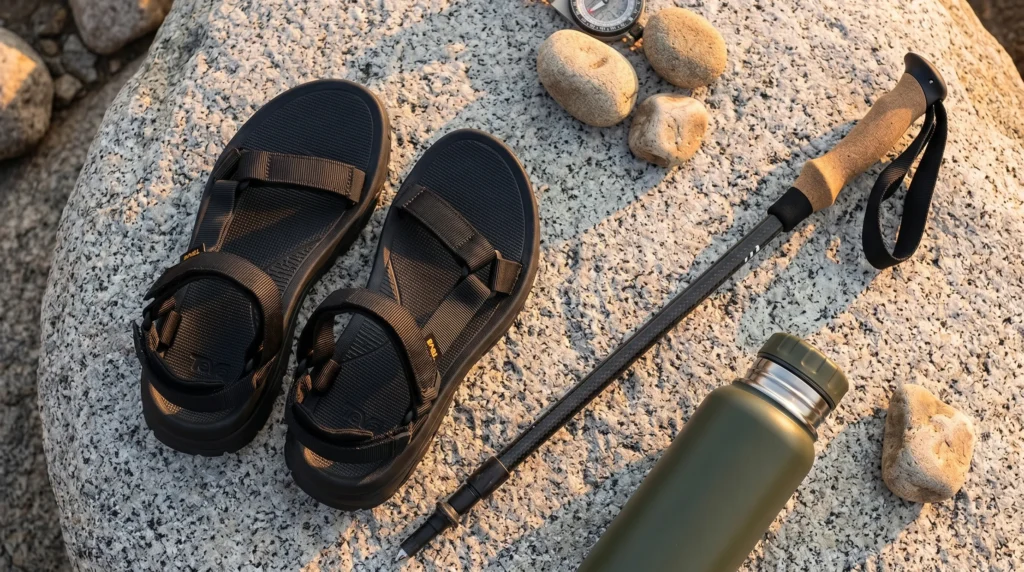
Imagine lacing up a pair of sneakers, then suddenly feeling a warm breeze between your toes. That’s the Hurricane XLT3 experience. It sits at the sweet spot where trail performance meets everyday wearability, and at $100 it genuinely over-delivers.
The XLT3 is a rugged evolution of the beloved XLT2, upgraded with a chunkier energy-returning midsole and a contoured footbed that cradles your heel on the downhills. Three independently adjustable Velcro straps at the forefoot, ankle, and heel give you a locked-in custom fit, and the padded heel strap means no more post-hike blisters. Our testers wore them on trails ranging from gravel flats to bare rock scrambles, and the grip held up across the board.
✅ Pros:
- Wide, stable footbed ideal for all-day miles
- Three adjustment points for a locked-in fit
- Solid traction on dirt, gravel, and rock
- Padded heel strap prevents blisters
❌ Cons:
- Bulky profile won’t suit everyone’s aesthetic
- Wide footbed is not ideal for narrow feet
- Midsole is supportive but not particularly plush
Best for : Day hikers, casual thru-hikers, anyone wanting one sandal that does it all.
2. Teva Original Universal – Best Budget Choice
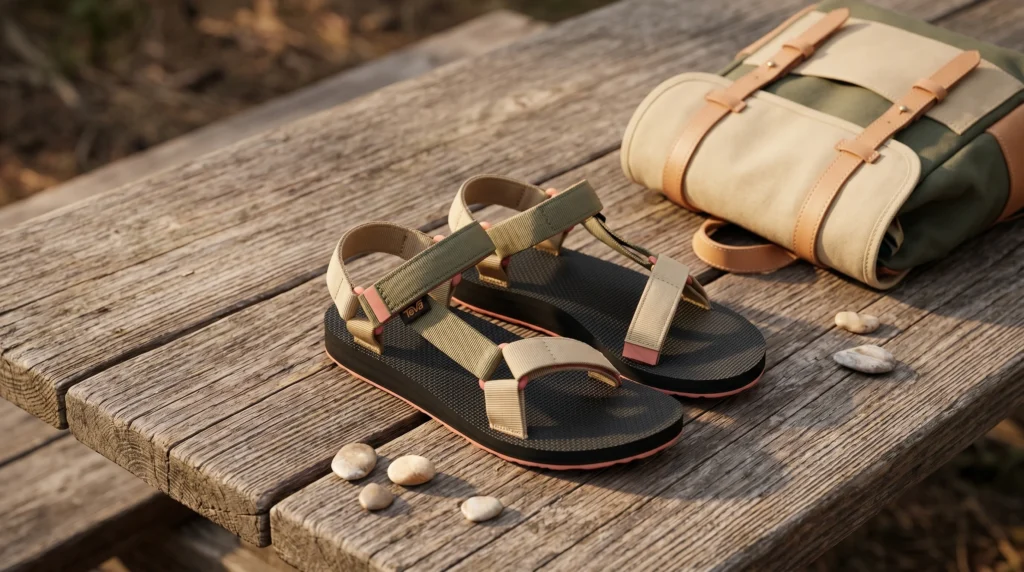
Here’s a little-known truth among seasoned backpackers: the Teva Original Universal might be the most underrated piece of trail gear under $100. At just $65 and 11 oz per pair, these slip-on legends earn their place in virtually every backpack as a go-to camp shoe or water-crossing sandal.
The dual Velcro strap system is as simple as sandals get, and that simplicity is the point. The flexible soft midsole adapts naturally to the foot, making them comfortable enough for casual trail walks and relaxed enough for lounging around camp after a long day. They’re not built for steep scree or fast-moving river fords, but for mild trails, river banks, and grassy paths they’re practically unbeatable at this price.
✅ Pros:
- Ultra-affordable at $65
- Extremely packable for backpacking trips
- Durable despite their lightweight build
- Easy on-and-off convenience
❌ Cons:
- Not suitable for technical or wet/slippery terrain
- Minimal arch support for longer miles
Best for : Backpackers seeking a lightweight secondary shoe; anyone who wants a low-stakes everyday sandal.
3. Chaco Z/1 Classic – Most Versatile & Durable
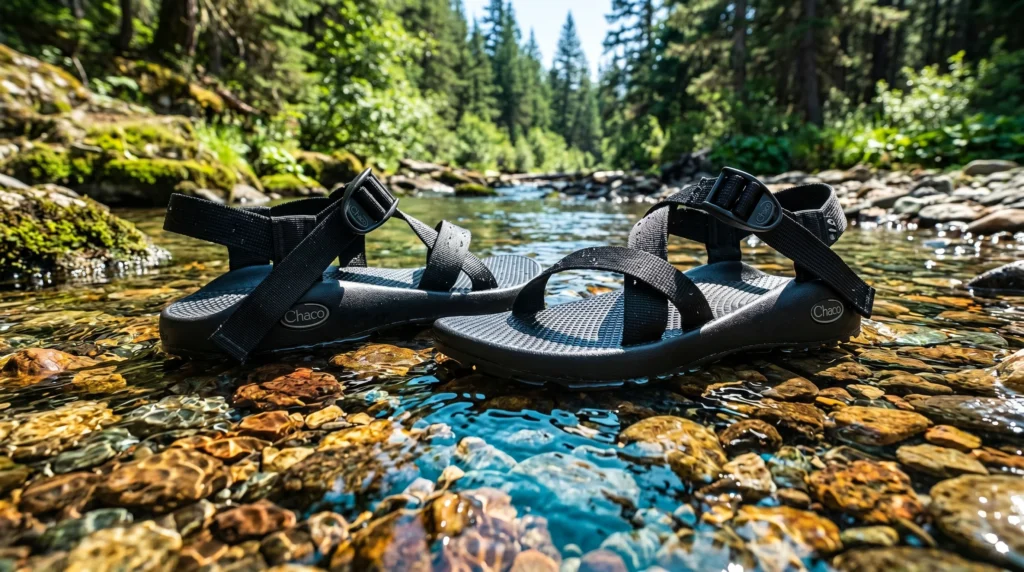
Picture this: a sandal so well-made that even if you wear it into the ground, and we mean literally, the company will fix it for a nominal fee. That’s the Chaco promise, and it’s exactly why the Z/1 Classic has earned a cult following among hikers, paddlers, and river guides for decades.
The Z/1 Classic features a continuous one-loop strap system that might look intimidating at first, but once dialed in it creates an almost custom-molded fit for virtually any foot shape. The sturdy rigid midsole protects your soles from rocks and roots, while the 3-mm outsole lugs provide serious grip across most trail surfaces. And if your pair eventually wears out, Chaco’s ReChaco repair program will bring them back to life for a fraction of the replacement cost.
✅ Pros:
- Exceptional durability built to last years
- Substantial arch support for technical terrain
- Repairable through the ReChaco program
- Available in a wide range of colorways
❌ Cons:
- Aggressive arch support may be uncomfortable for flat-footed hikers
- Traction can slip on silty or muddy surfaces
Best for : Multi-terrain hikers and paddlers who want a workhorse sandal built to last years.
4. Xero Shoes Z-Trail EV – Best Ultralight / Minimalist
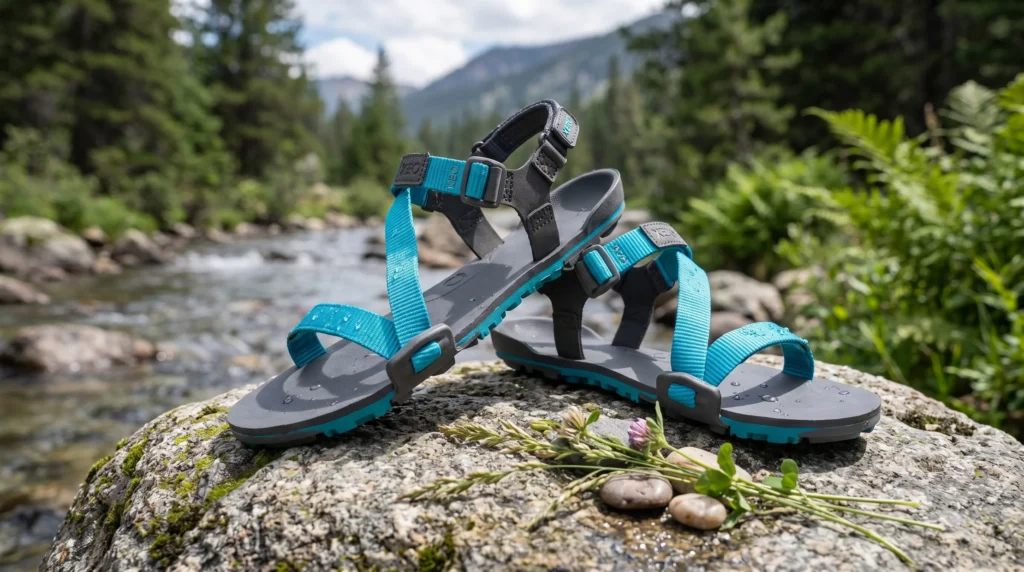
Honestly? Putting on the Xero Shoes Z-Trail EV for the first time feels a little bit like cheating. At only 8.6 oz per pair they barely register as footwear, yet they protect your feet from everything the trail throws at them.
These are barefoot-inspired sandals through and through, designed to let your feet move, flex, and grip as nature intended. The sweat-wicking footbed keeps things comfortable, the straps are soft and flexible, and the zero-drop build encourages a more natural gait. The real cherry on top is the 5,000-mile sole warranty, a serious mileage assurance for a seriously light sandal.
✅ Pros:
- Incredible ground feel and foot freedom
- Feather-light at 8.6 oz and easily packable
- Industry-leading 5,000-mile sole warranty
- Sweat-wicking footbed for all-day comfort
❌ Cons:
- Zero ankle or arch support
- Not recommended for hikers who need traditional stability
Best for : Experienced minimalist hikers; backpackers who want a barely-there backup shoe.
5. HOKA Hopara 2 – Best Hybrid (Shoe-Sandal)
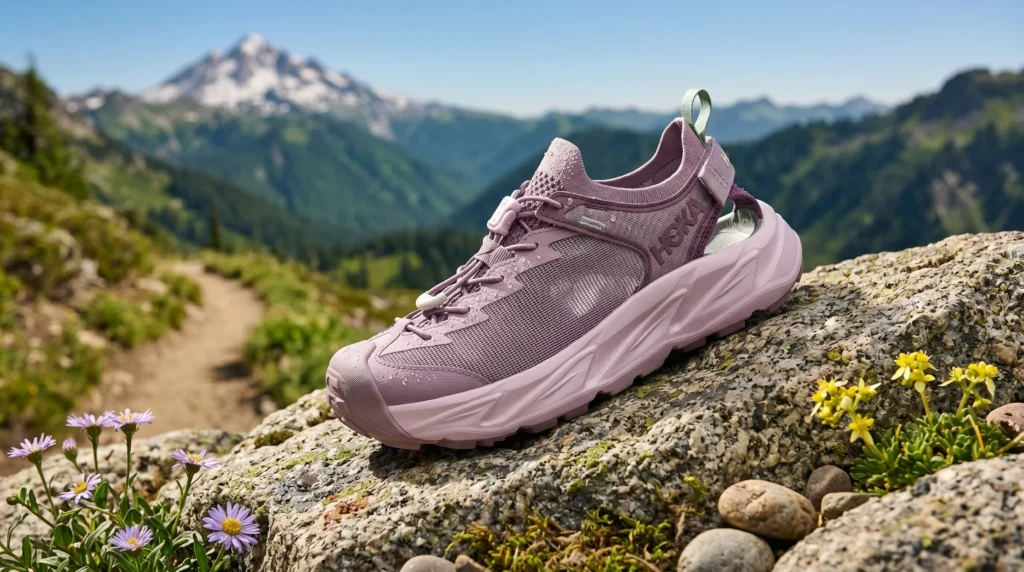
The HOKA Hopara 2 defies easy categorization. It’s not quite a sandal, not quite a trail runner, it’s the lovechild of both, and it’s spectacular. If you’ve ever wished you could conquer a rocky technical descent and wade through a creek without swapping footwear, this is your sandal.
Built around HOKA’s signature thick bouncy midsole, the Hopara 2 delivers the kind of cushioning and energy return you’d expect from a dedicated trail shoe. A protective toe cap shields your toes from rocks, a tight-knit mesh upper drains water in seconds, and the ankle collar is soft enough to wear sockless for hours. During testing the Hopara 2 excelled on dry dirt, gravel, and bare rock, only stumbling slightly on extra-silty surfaces.
✅ Pros:
- Trail-running capable with excellent stability
- Outstanding drainage for creek crossings
- Top-tier toe protection from rocky terrain
- Thick bouncy midsole for all-day cushioning
❌ Cons:
- Heaviest pick on this list at 1 lb. 4.8 oz.
- Small pebbles can sneak in and are difficult to shake out
- Too bulky for use as a packable camp shoe
Best for : Technical trail hikers; anyone who crosses water regularly and doesn’t want to carry an extra pair.
6. Ecco Yucatan – Best for Narrow Feet & Stability
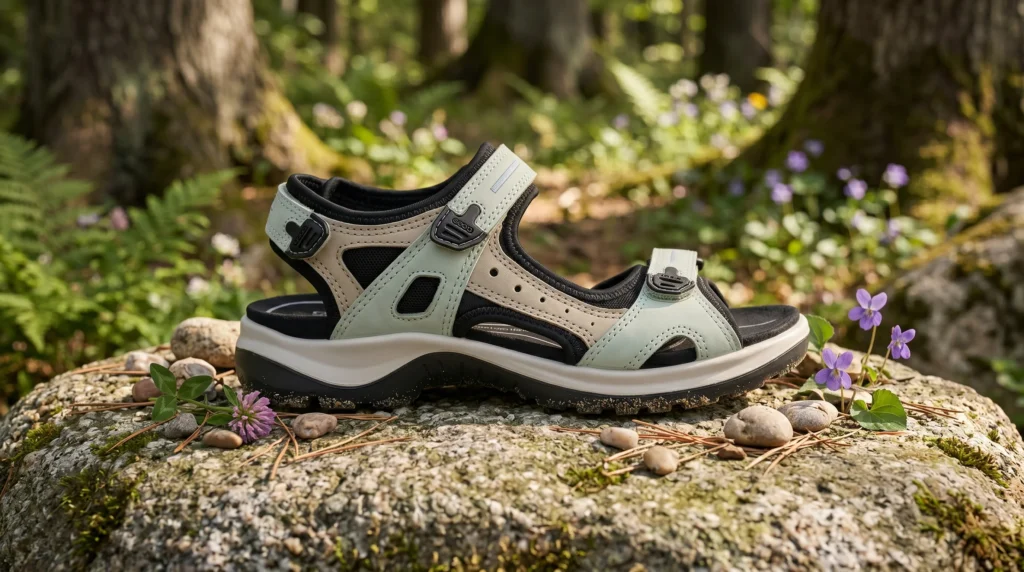
If you have narrow feet, you already know the struggle. Most “one size fits most” hiking sandals leave your foot swimming in the footbed, slipping sideways on switchbacks, and generally feeling unsupported. The Ecco Yucatan was practically made for you.
Three independently adjustable Velcro straps at the forefoot, ankle, and heel combine with a robust external sidebar to lock your foot in place at virtually any angle. The plush shock-absorbing midsole makes all-day mileage feel manageable, and the padded straps eliminate the blisters that plague lesser sandals. At $130 and nearly 1 lb. 13 oz. per pair they are the heaviest option here, and they are slow to dry, but for the right foot no sandal on this list fits quite like a Yucatan.
✅ Pros:
- Exceptional narrow-foot fit and external ankle stability
- Padded straps that prevent blisters
- Contoured arch support for long-distance comfort
- Three independent adjustment points
❌ Cons:
- Heavy and slow to dry after water crossings
- Runs very narrow — may not suit wide or neutral feet
- One of the pricier options at $130
Best for : Narrow-footed hikers who need external ankle support and a plush midsole.
7. Luna Mono Winged Edition – Best Zero-Drop for Beginners
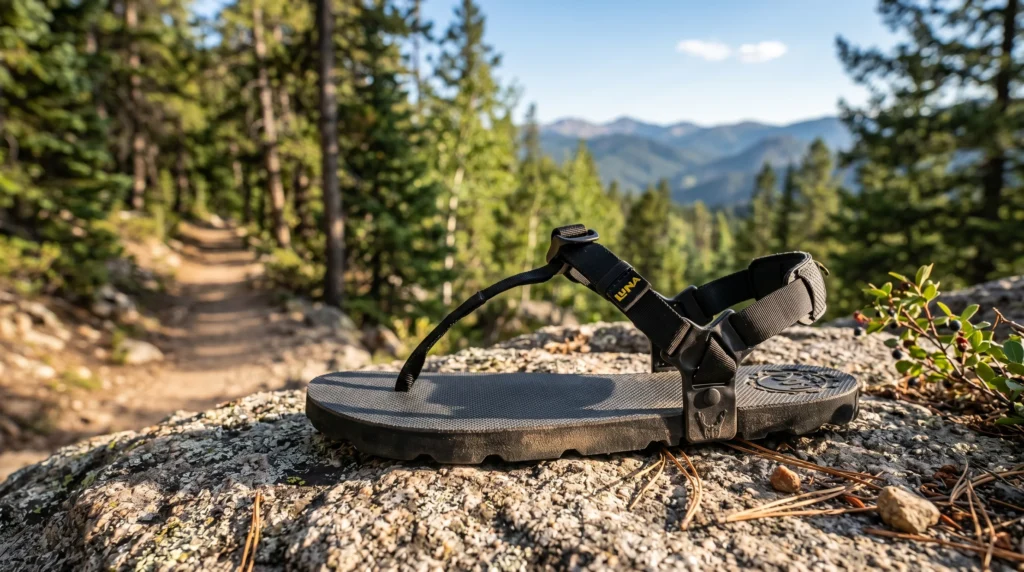
Zero-drop sandals often get a bad reputation as being “too extreme” for casual hikers. The Luna Mono Winged Edition is here to change that narrative. It bridges the gap between the barefoot world and the protected world, giving you all the natural gait benefits of a zero-drop sole with a 15-mm stack height and 4-mm deep outsole lugs that handle real terrain.
The straps are exceptionally soft and flexible, the toe thong is genuinely comfortable (a rarity in this category), and the continuous adjustment system delivers a fit that feels almost tailored once you get the hang of it. During testing the Lunas earned top marks for traction and secured their place as the ideal entry-level sandal for anyone curious about minimalist hiking.
✅ Pros:
- Zero-drop design without sacrificing trail protection
- Deep 4-mm lugs for excellent grip on varied terrain
- Soft comfortable toe thong
- Rugged outsole built for real mileage
❌ Cons:
- Adjustment system has a learning curve for new users
- Traction can slip on steep or loose grades
Best for : Beginners transitioning to minimalist footwear; zero-drop enthusiasts who still want trail-ready traction.
Buyer’s Guide : Key Factors to Consider
Straps and Adjustability
More adjustment points mean a more dialed-in fit, which matters enormously on uneven terrain. Look for at least two adjustment points and ideally three, especially if you have an unusual foot shape. Velcro closures are the easiest to manage mid-hike, while buckle systems tend to hold their position better over long miles. If you plan to wear your sandals with socks in cooler months, skip the toe-loop configurations entirely.
Midsoles and Stack Height
EVA foam midsoles like those in the Teva line are plush and responsive, great for shock absorption. Polyurethane midsoles are denser and more rigid, better for long-term support and stability, but less cushy underfoot. Stack height is the total thickness of the footbed, midsole, and outsole combined: higher stacks mean more protection and bounce while lower stacks mean better ground feel and foot flexibility.
Traction and Lug Depth
For technical trails, aim for outsole lugs of at least 3 mm. Chevron and diamond tread patterns tend to self-clean better and grip more consistently across mixed surfaces. The Chaco Z/1 Classic and Teva Hurricane XLT3 are standouts in this category.
Weight and Packability
If you’re carrying sandals as a secondary pair for water crossings or camp, keep it under 1 pound (16 oz.) per pair. The Xero Z-Trail EV at 8.6 oz, Teva Original Universal at 11 oz, and Luna Mono Winged at 10.8 oz are all excellent packable options.
Expert Tips : Maintenance and Smarter Use
Transitioning to Zero-Drop
Going straight from cushioned boots to zero-drop sandals like the Xero Z-Trail EV or Luna Mono Winged is a recipe for sore calves and an angry Achilles. Start by wearing your new zero-drop sandals for 1 to 2 miles a few times a week, gradually increasing distance over 4 to 6 weeks. Think of it as strength training for your feet, not a punishment.
Socks with Sandals (Yes, Really)
Pairing sandals with lightweight merino or synthetic socks extends your season dramatically, perfect for cool fall mornings or when your feet need blister protection on longer miles. Avoid sandals with toe loops or thongs if this is your plan. The Teva Hurricane XLT3, Ecco Yucatan, and Chaco Z/1 Classic all work beautifully with socks.
Final Recommendation
For most women hitting the trail this summer, the Teva Hurricane XLT3 is simply the most balanced choice available in 2026, versatile enough to go from creek crossing to camp to coffee shop, supportive enough for full-day hikes, and priced accessibly at $100. It’s the sandal we’d recommend to a close friend without hesitation.
That said, the best hiking sandal is ultimately the one that fits your feet and your adventures. Narrow feet? Go Ecco. Ultralight obsession? Go Xero. Technical trails and water crossings? Go HOKA. Take the comparison table above, match it to what you know about your feet, and hit the trail with confidence.